- The “Second Assassination” of the Mahatma
- The Erosion of India’s Rural Safety Net
- From Nobel-Worthy to Diluted
- The Rise and Fall of India’s Rural Safety Net
- MGNREGA: Preserving the Legacy of India’s Rural Poor
- The End of Mandatory Employment: From Rights to Discretion
- The 125-Day Mirage: A False Increase in Benefits
- Fiscal Federalism Under Strain: The 60:40 Funding Trap
- States Under Siege: Debt, Salaries, and New Impositions
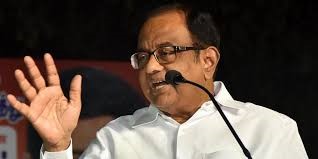
P. Chidambaram, former Union Home Minister, described dilution of Mahatma Gandhi National Rural Employment Guarantee (MGNREGA) Scheme as the second assassination of the Mahatma. The first being by Nathuram Godse in January 1948. It is a severe but apt criticism of the measure taken by the NDA government.
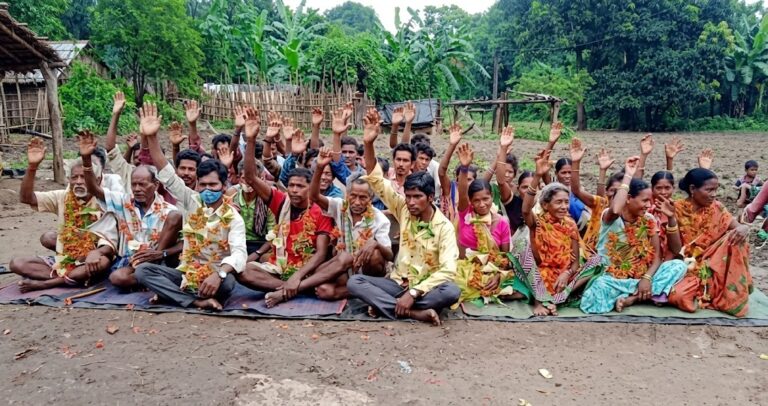
The original law came into being twenty years ago after a lot of hard work by the teams headed by Aruna Roy and Sonia Gandhi and a lot of debate in Parliament, social platforms, National Development Council and several ministries. One columnist suggested that the persons behind the move deserve a Nobel Prize. During Dr. Manmohan Singh second term as prime minister, it was reported that the scheme was working wonders. According to reports, 40 percent of those who were beneficiaries were Dalits and Tribals. Half of the beneficiaries were women. The rural wages were rising. India was an example to many developing countries in case of the welfare of the rural, agricultural poor.
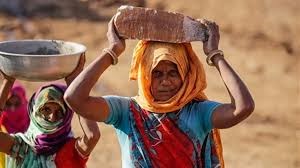
Ever since BJP came to power for the second time in 2014, the scheme has developed cold feet. The state governments were not showing interest. The Centre has not been very prompt in releasing the funds. MGNREGA funds to West Bengal were not released for three years without any consultation with the state government. The centre did not explain the reasons for its inaction in Parliament.
The new Bill passed by Rajya Sabha on Friday, Viksit Bharat Guarantee for Rozgar and Ajeevika Mission (Gramin) – VB G RAM G – is in keeping with the BJP philosophy of watering down the pro-poor measures. Removing the name of Mahatma Gandhi also is in line with the BJP-RSS philosophy of anti-Gandhi and anti-Nehru sentiments. Gandhi symbolizes secularism and he exhorted the people to live in peace with the Muslims. In the upcoming assembly elections in West Bengal, the BJP is going to play the Muslim card more vigorously in order to unite the Hindus who are fifty per cent. The Dalits, Muslims, Christians and other marginalized sections make up for the rest of 50 percent of West Bengal population. The middleclass farmers in villages are unhappy with MGNREGA since it has been strengthening the farm labourers with increased wages. Getting a worker in rural areas has become a challenge now, thanks to MGNREGA. In view of the elections in West Bengal the BJP has hastened up with the legislation to replace MGNREGA with VB-G RAM G which is a diluted version of the former.
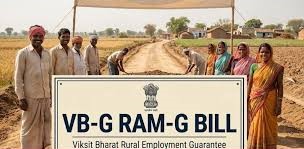
What is new in VB-G RAM G Bill 2025?
It will be a centrally sponsored scheme. The new law will have a ceiling of 125 days instead of 100 days as mandated by MGNREGA. It is the only point being highlighted by the BJP leaders. Is it really going to help the poor workers? When the expenditure has to be shared between the centre and the states in 60:40 ratio, it is almost impossible for the states to reach even one hundred days. The new Bill will levy a lot of burden on the states and there will be no obligations on the part of the centre. Instead of footing almost complete bill, the centre can escape with only 60 per cent of the expenditure. It will be the centre’s decision where and when to implement the scheme. It is not mandatory on the part of the governments to implement the scheme as it has been so far.
The centre will be imposing financial burden on the states which will be forced to provide employment guarantee failing which they have to pay unemployment allowance. This one-sided decision on the part of the centre without any consultations with the states is a burden unilaterally imposed on states which are already under a lot of debt, borrowing to pay the salaries for the employees and to fulfill the election promises. The promises made by the political parties at the time of elections not minding their monetary limitations are already showing strain on the states. Add this imposition by the centre, it will be next to impossible for states to meet the expenditure.
Tardy release of MGNREGS Funds
The MGNREGA was a very well implemented programme until 2014, is not running perfectly of late. Corruption has made its ugly entry into this service -oriented scheme. The centre has been tardy in releasing the required funds for the scheme. So much so, the guaranteed (under the old law) one hundred man-days have been realized only in case of two percent of rural households so far. When 90 per cent of the expenditure is supposed to be borne by the centre, the ceiling of the man-days could be reached only in case of two percent of the houses, how the new ceiling of 125 days could be achieved when the new ratio between the centre and the states will be 60:40. This new Bill after becoming law, will only help the centre to show states in poor light besides going for centralization as is its policy. The states are bound to fail in their duty to contribute their 40 percent. In view of the increased percentage on the part of the states, they will not be forthcoming to allot work to the poor workers. The new law is a retreat from social protection that the old law used to provide. It is not a reform. It is a retrograde step that would harm the interests of poor workers. It demotivates the states and disempowers the workers. Aruna Roy and Jean Dreze, the social activists, in their articles in the Indian Express this week, expressed their hope that the VB G RAM G Act 2025 will also be withdrawn just like the Farm Laws.

There is no structural fault with the MGNREGA scheme. Only the loopholes have to be plugged and the government should have political will to implement the scheme. Any government worth its salt should try to improve facilities provided to the poor. The NDA government is trying to weaken the measures. It has already made the Information Act redundant, Election Commission toothless and now the MGNREDGA is being buried. The NDA is abusing its majority in parliament to make good laws ineffective. Chandrababu Naidu and Nitish Kumar are only spectators. They will go down in history as selfish politicians.
Prominent Journalist
Dr. K. Ramachandra Murthy is a versatile journalist with a distinguished career. Dr. Murthy began his extensive career with Andhra Prabha of The Indian Express group in Bengaluru. He was editor of Udayam, Vaartha and Andhra Jyothy. Dr. Murthy founded and edited HMTV news channel and The Hans India, an English newspaper. He was also editorial director of the Telugu newspaper, Saakshi. He was awarded Ph. D for his research work in rural reporting. Dr. Murthy’s five decades in journalism showcases his influential roles across both print and electronic media. He wrote the political biography of NTR published by Harper Collins.
Email: murthykondubhatla@gmail.com
Mobile: 9908002211