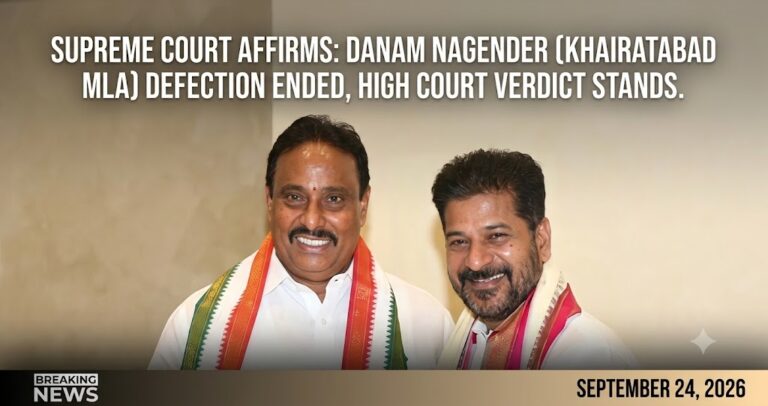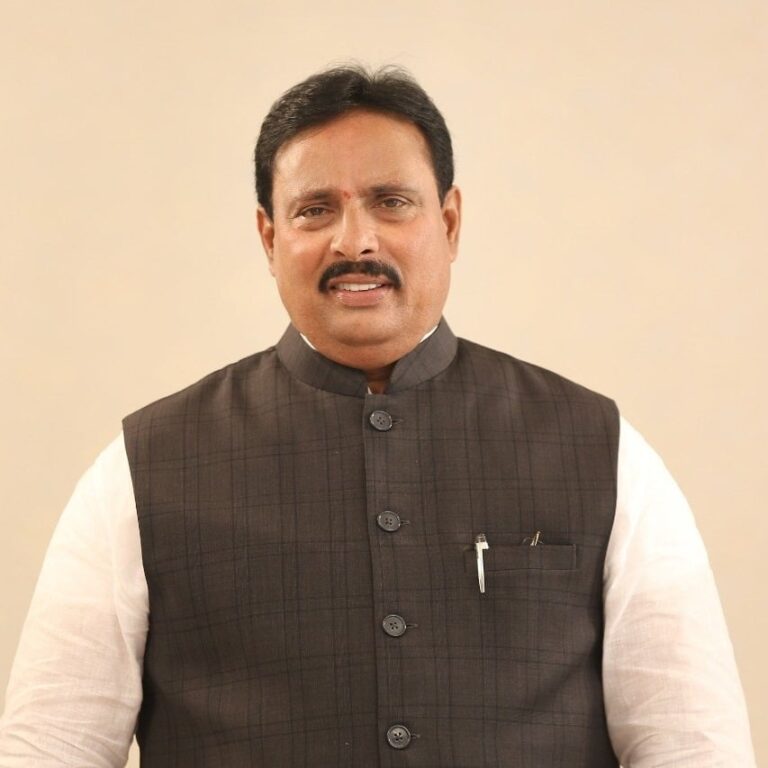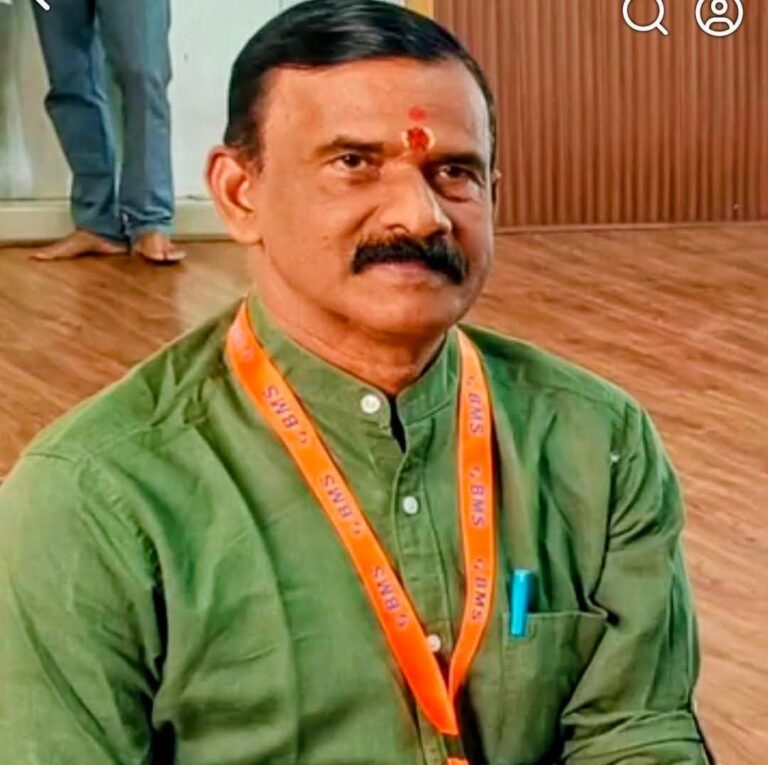
Any turncoat dispute has constitutional complications. Its essentially coloured by cheap opportunistic of legislators. The pink colour goes to tricolors and true colours should come back!
Speaker can decide ‘disqualification’, according to ‘conscience’ as per the ‘oath’ and the Constitution, to protect the‘rule of law’. The Telangana Speaker need to exercise his discretion without ‘bias’. His judgment is both a question of fact and also law, to disqualify or allow the MLA to perform her duties! The entire jurisprudence on the‘anti-defection’ law is incorporated in the 10th Schedule of the Constitution of India.
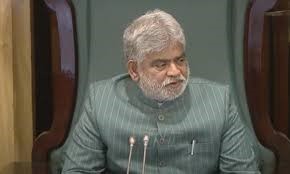
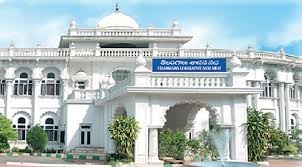
The Speaker-cum-Tribunal of the Telangana Legislative Assembly, dated December 17, 2025, pertains to the Disqualification Petition No. 2 of 2024 filed against Sri Tellam Venkata Rao (Respondent) by Sri Kuna Pandu Vivekanand (Petitioner) has held that there was no evidence to prove that defected from one party (BRS) to the other (Congress). The significant merit of the Judgment examined the case centred on whether Tellam Venkata Rao, incurred disqualification for “voluntarily giving up membership” by allegedly joining the Indian National Congress (INC).
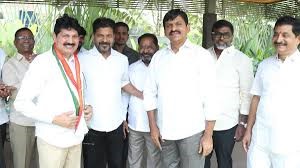
The petitioner (Mr. Rao) alleged that the respondent was a BRS candidate and elected as such on December 3, 2023. He has alleged that met the TPCC President, attended the “Telangana Jana Jathara” where the INC manifesto was released, and formally joined the INC on April 7, 2024, by wearing a party scarf. The speaker examined the evidence that petitioner relied heavily on press clippings, TV broadcasts, and social media reports to prove these acts. The Speaker, acting as a Tribunal, dismissed the petition based on the following legal and procedural grounds:
A) Lack of Locus Standi: Under Rule 3(1)(a) of the 1986 Rules, the Tribunal found that the petitioner was not the authorized representative of the BRS Legislature Party. Since he filed the petition “on behalf of the party” without authorization, he lacked the legal standing to maintain it.
B) Failure to Comply with Mandatory Rules: The Tribunal held that Rule 6 and 7 of the 1986 Rules are not mere formalities. The petitioner failed to provide specific details about the creators (printers/publishers) of the media material used as evidence, which is a mandatory requirement.
C) Inadmissibility of Hearsay Evidence: The Speaker ruled that newspaper reports and electronic media extracts are “secondary source material” and constitute hearsay. Without examining the reporters or providing a certificate under Section 65B of the Evidence Act, this material could not prove the charge of defection.
During cross-examination, the petitioner (PW-1) admitted he had no personal knowledge of the alleged events and was not a witness to the respondent joining another party. On the point of continued allegiance, the Tribunal noted that the respondent continued to pay his monthly contributions to the BRS Party fund until March 2025, which indicated he had not abandoned the party. Hence, the Disqualification Petition was dismissed, and Rao continues as a MLA.
Based on document, the Speaker-cum-Tribunal relied on Supreme Court judgments to define the powers of the Tribunal and the evidentiary standards for disqualification. Here is an analysis:
1.Constitutional Powers and the Nature of the Tribunal
The Speaker utilized several cases to establish that while acting under the Tenth Schedule, the Speaker functions as a judicial Tribunal.
Kihoto Hollohan v. Zachillhu (1992): That the Speaker, while deciding disqualification petitions, acts as a Tribunal exercising judicial power. The Speaker noted that this authority is subject to judicial review but only on limited grounds like violation of natural justice or constitutional mandates.
Raja Ram Pal v. The Hon’ble Speaker, Lok Sabha (2007): Cited to define the scope of “Power” and “Decision,” emphasizing that the process must follow the principles of natural justice and include the right of both parties to present pleadings and evidence.
Jagjit Singh v. State of Haryana (2006): Used to affirm that the principles of natural justice must be strictly observed, ensuring a fair and reasonable opportunity for a hearing to all contesting parties.
2. Hearsay
A significant portion of the judgment focused on why the petitioner’s evidence, i.e., media reports, was insufficient, relying on the following precedents:
Anvar P.V. v. P.K. Basheer (2014): The Speaker cited this to emphasize that electronic records (videos/digital files) can only be proved through the mandatory mechanism of Section 65B of the Evidence Act. Without the required certificate, such evidence is inadmissible.
Laxmi Raj Shetty v. State of Tamil Nadu (1988): This case was used to rule that newspaper reports are merely hearsay evidence. They cannot be taken as proof of facts unless the reporter is examined or the source is independently proved.
Samant N. Balakrishna v. George Fernandez (1969): Cited to reinforce that news items do not prove themselves and are, at best, “second-hand secondary evidence”.
Tukaram S. Dighole v. Manikrao Shivaji Kokate (2010): Used to demonstrate that even “public documents” like election cassettes require a stringent standard of proof regarding authenticity and accuracy.
The other view
The other strong view is that the judgment cannot ignore the voluntary giving up of membership. It is based on interpreting these judgments of the expression “Voluntarily Giving Up Membership.”
To address whether the respondent’s conduct amounted to defection, the Tribunal looked at: Ravi S. Naik v. Union of India (1994): While this case allows “voluntarily giving up membership” to be inferred from conduct, the Speaker noted it must be based on unequivocal acts and cogent evidence, not just assumptions.
G. Viswanathan v. Hon’ble Speaker, Tamil Nadu (1996): Used to clarify that the “deeming fiction” of belonging to a party remains in place unless specific pleadings and proof of abandonment are established.
Rajendra Singh Rana v. Swami Prasad Maurya (2007): The Speaker cited this to state that the question of disqualification must be decided with reference to the date of the alleged act, and subsequent events are generally irrelevant to the core adjudication.
The Hon’ble Speaker, in the chair of the tribunal, has opened the litigation further, which may go up to the Supreme Court, by the time the MLAs will complete the term of 5 years. This defeats the amendment to the Constitution to prevent jumping from one party to the other, called ‘turncoat’. Very difficult to get the final judgment to reach a conclusion within 5 years. The result is that the opportunists escape the rule of law. And one Speaker or Chairman of Rajya Sabha or Legislative Council may openly argue that their member did ‘defect’ or not ‘defected’ depending on whether the president of the tribunal belongs to the ruling party or the opposition. Unfortunate. Its sheer waste of valuable time of the judicial courts to deal with turncoat politics for more than decades. Originally the Constitution never thought of banning the defections, and described as violation of fundamental freedom of speech and expression to shift to political parties.
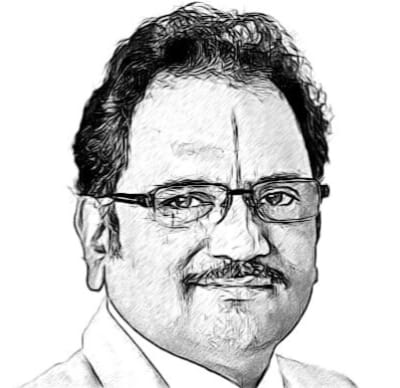
Law professor and eminent columnist
Madabhushi Sridhar Acharyulu, author of 63 books (in Telugu and English), Formerly Central Information Commissioner, Professor of NALSAR University, Bennett University (near Delhi), presently Professor and Advisor, Mahindra University, Hyderabad. Studied in Masoom Ali High School, AVV Junior College, CKM College, and Kakatiya University in Warangal. Madabhushi did LL.M., MCJ., and the highest law degree, LL.D. He won 4 Gold Medals at Kakatiya University and Osmania University.
Email: cicsridhar@gmail.com
Mobile: 8447651505