
The 30th International Film Festival of Kerala (IFFK) 2025 has become a flashpoint for a major debate on artistic freedom and diplomatic sensitivity.
While the festival initially faced a hurdle with 19 films being denied censor exemption, a specific set of six films remained blocked by the Ministry of External Affairs (MEA) due to concerns over foreign policy and national security. The MEA’s primary reason for blocking the films was not based on traditional “obscenity” or “violence,” but on national security and foreign policy considerations.
The Ministry stated that screening these specific films could adversely affect India’s diplomatic relations with certain foreign nations. Official communications warned the Kerala State Chalachitra Academy of potential “national security risks” and “legal repercussions” if the films were exhibited without proper clearance.
Socio-Political Struggles
Most of the blocked films originated from or focused on the socio-political struggles of Palestine and Egypt, areas where India maintains delicate diplomatic balancing acts. The “Censor Exemption” Protocol to understand the objection, it is important to know the legal framework. Usually, international festival films are granted “Censor Exemption” by the Ministry of Information and Broadcasting (I&B). For the first time, the Union Government insisted on a secondary political clearance from the MEA for specific titles.
Visa Complications
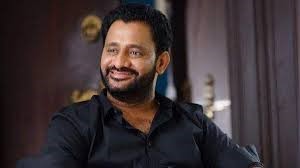
Chalana chitra Academy of Kerala Chairman Resul Pookutty noted that the Ministry of Home Affairs (MHA) also introduced a new requirement for Conference Visas for all foreign delegates (instead of the usual Business Visas), which added a layer of MEA-monitored “political clearance” to the entire event. The situation reached a boiling point when Kerala Chief Minister Pinarayi Vijayan directed the Academy to defy the Centre and screen all films. However, after receiving a strict written directive from the State Chief Secretary citing mandatory compliance with India’s external affairs policy, the Academy yielded. The Academy chairperson Resul Pookutty stated, “As a government-funded cultural organisation, we cannot take a confrontational stand against India’s external affairs policy… India comes first.”
The Six Films
1: “All That’s Left of You”, PalestineBased on Ghassan Kanafani’s novella deals with a Palestinian family during the conflict. 2: “Clash”, Egypt film, a political drama set entirely in a police van during the 2013 Egyptian protests. 3:“Yes”, Egypt/International, a narrative exploring modern Egyptian social and political dynamics. 4: “Flames”, India, An Indian film that reportedly touches on sensitive social themes, including caste. 5: “Eagles of the Republic”, Egypt, a political thriller involving an Egyptian actor pressured into state service. 6: A Poet (Unconcealed Poetry), Indonesia, a film by Garin Nugroho reflecting on historical and political upheavals.
Key Points of Contention
A significant number of the initial 19 films were related to Palestine. While some (like Once Upon a Time in Gaza) were eventually cleared, others remained blocked, leading critics like Congress MP Shashi Tharoor to call the move “bureaucratic over-cautiousness.” Many of these films, such as Clash (which won awards at previous IFFKs) and Wajib (another Palestinian film initially on the list), had been screened in India before without issue.
The Result
Despite Chief Minister Pinarayi Vijayan’s initial bold declaration that “all films will be screened,” the Academy ultimately dropped these six titles on the final days of the festival (December 18–19). The decision was described by Academy officials as a move to avoid “unnecessary tension” and ensure the festival’s overall continuity. The 2025 edition of IFFK will likely be remembered less for its Golden Crow Pheasant winner and more for the precedent it set, a new era where diplomatic alignment may take precedence over selection with intent independence in Indian film festivals.
Editor, Prime Post
Ravindra Seshu Amaravadi, is a senior journalist with 38 years of experience in Telugu, English news papers and electronic media. He worked in Udayam as a sub-editor and reporter. Later, he was associated with Andhra Pradesh Times, Gemini news, Deccan Chronicle, HMTV and The Hans India. Earlier, he was involved in the research work of All India Kisan Sabha on suicides of cotton farmers. In Deccan Chronicle, he exposed the problems of subabul and chilli farmers and malpractices that took place in various government departments.
Email: ravindraseshu7@gmail.com
Mobile: 9063718675


Good job done by MEA.