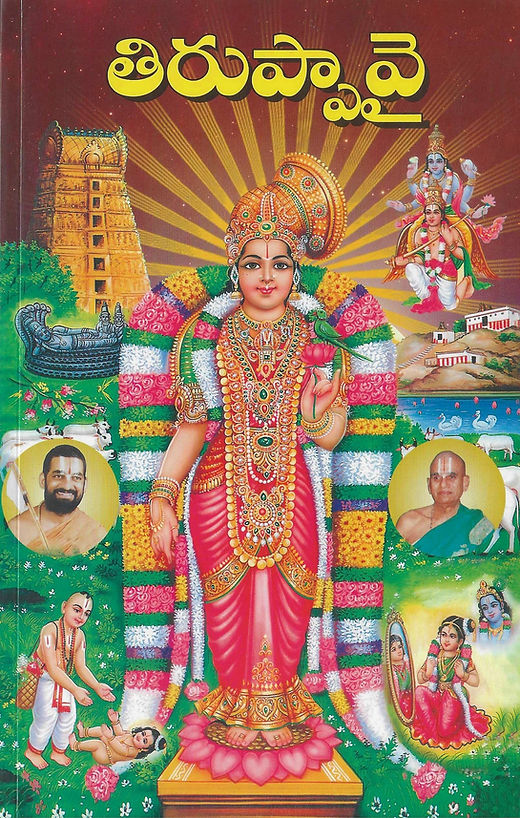
Simile in the first poem of Tiruppavai by Goda is praising Lord Krishna, calling him Lotus-eyed, young cub of a lion, Yashoda, like a dark cloud. In every one of the 30 Pashurams (poems) of eight lines filled with great meanings of Ramayana, Bharatam, and Bhagavatam, etc, in praying Lord Krishna.
In the very first pāsuram of the Tiruppāvai, one can witness marvelous poetic ornaments (alaṅkāras). Among the ornaments of meaning (arthālaṅkāras), one prominent figure is Upamālaṅkāra the figure of comparison. It is a great poetic device frequently employed by poets. In English, it is called a simile.
Upamālaṅkāra is the ornament in which the similarity between the upamāna (the object of comparison) and the upameya (the object being compared) is expressed, or in which the upameya is compared with the upamāna. In other words, describing the shared beauty or common quality between the upamāna and the upameya constitutes the ornament of upamā.
- That with which something is compared is called the upamāna.
- That which is being compared is called the upameya.
- The common attribute (samāna-dharma) is the point of resemblance between the upamāna and the upameya.
- The upamā-vācaka is the word used to indicate the comparison between the upamāna and the upameya.
With beautiful eyes (ērāranda kaṇṇi),
the son of Mother Yaśodā (Yaśodai),
like a young lion (iḷam siṅgam),
with a dark complexion (kār mēni),
with eyes resembling red lotuses (cceṅgaṇ),
radiant like the sun in brilliance (kadir),
cool like the moon (madiyam),
and possessing a face likened to both (pōl mugattān).
So many comparative expressions (upamā-vācakas) how many, not just one or two! There is no meaning without sound, and without meaning, sound has no value. Therefore, the two must always coexist. In the same way, Pārvatī and Parameśvara are eternally united. One can observe the similarity between these two ideas. Here, a parallel is drawn between word and meaning (vāg and artha) and Parameśvara. Likewise, Yaśodā’s son is described as being like a lion cub, as having a dark complexion, and as possessing eyes resembling red lotuses. On one side, he is like the sun; on the other, like the cool moon. He has a face that resembles the moon.
Gōdamma explains that when Kṛṣṇa is described as kār mēni (dark-bodied), it means he is like a cloud his form cannot be concealed. Śrī Kṛṣṇa’s radiance is cool and soothing. By deliberately using the word Nārāyaṇa, Gōdādevī proclaims with certainty that Nārāyaṇa alone is incomparable and supreme.
Annamācārya too concludes his composition by declaring: “He alone is the Supreme Lord, the white-lotus-eyed Śrī Veṅkaṭeśa,” affirming that He alone is everything.
What a beautiful thought this is! If one understands this wondrous idea contained in the pāsurams of the Tiruppāvai, there is an opportunity to grasp, at least to some extent, the essence of Śrī Kṛṣṇa. Earlier, we had already provided a brief explanation of the entire Tiruppāvai composed by Gōdamma. Now, I am attempting to praise Śrī Kṛṣṇa by highlighting these beautiful poetic ornaments, especially the upamālaṅkāra.
Goda’s Original Tamil (in English script.) 1
Margazhi Thingalmadi Nirainda Nannalal
Niradapoduvir, Podumino Nerizhaiyeer
Seermalgum Aayppadi Selva Chirumeergal
Koorvel Kodum Thozhilam Nandagopan Kumaran
Er Arndha Kanni Yasodhai Ilansingam
Karmenichengann Kadir Madiyam pol Mugathan
Naaraayanane Namakke Parai Tharuvan
Parorpugazha Ppadintdul-el or empaavaai.
English Translation by Madabhushi Sridhar
Nature shines in the moonlight of Margazhi month
Come, dear friends, let us bathe before the Sunrise
O Team of enriched and enlightened devotees of our rich village
Where Nanda wields a protective spear for his son,
Lotus-eyed young cub of a lion, Yashoda, like a dark cloud
His resplendent face with eyes shining like the Sun and Moon.
Aiming to reach the ultimate Lord Narayana
Let us commission the mission together.
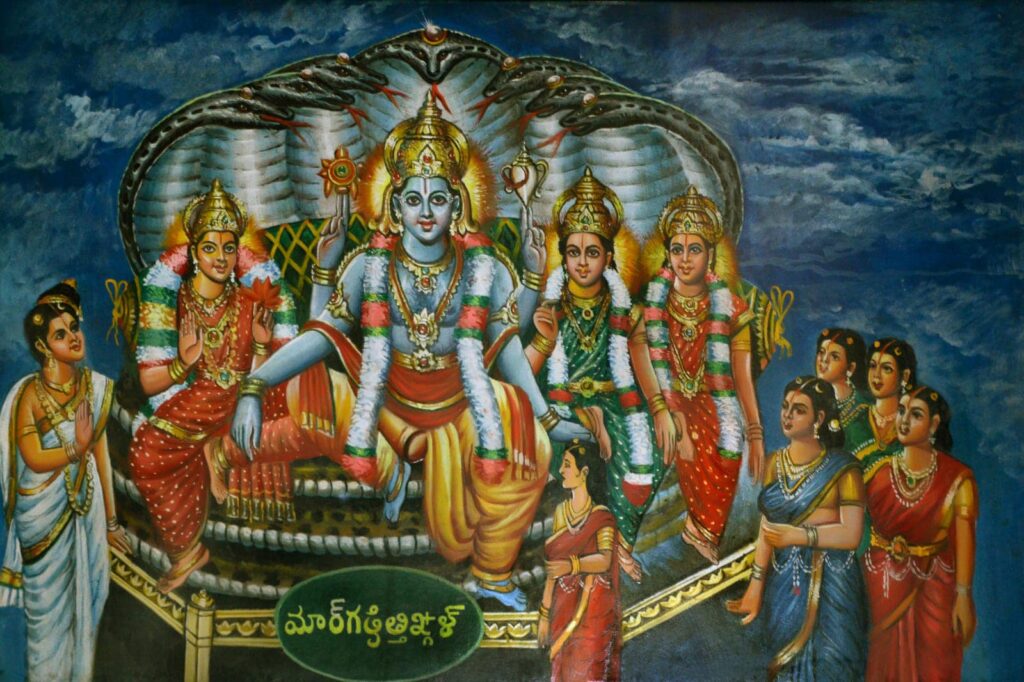
Tiruppavai – 30 Poems of Garland
When someone asked Acharya Sri Ramanuja to explain the significance of Tiruppavai, Acharya is said to have remarked that it would be difficult to find someone efficient to explain Tiruppavai. This statement shows the significance and complexity of the 30-poem Kavya of Goda Devi in praise of Lord Ranganatha, which is recited every day in Dhanurmasam – that starts in the middle of December and goes up to Bhogi on January 15. Tiruppavai explains the essence of the Vedas through examples from the divine stories of Srimad Bhagavatham and Srimad Ramayanam. One should try to understand the enormous meaning, symbolism, alankara, and in-depth concepts that form the content of the eight-line Pashuram Poem written by Goda Devi.
Marghazhi month
Goda asks her friends to wake up and join her in bathing in the light of the moon on this day of Marghazhi month, and pray to the Hero Sri Krishna, son of Yashoda and Nanda, who wears a weapon to protect all of us, whose garlands spread fragrance. He is a cub of a lion in cloud color, with sharp red eyes, whose face glows like a full moon, none other than Shriman Narayana. Let us bathe and pray together to start our Vrata for thirty days. This is the message of Goda.
Like Radha, Mirabai in the north, Goda is a devotee full of love for Sri Krishna from southern part of India. Goda was found in the Garden of Periyalwar – Vishnu Chitta. When her father collected flowers from the Garden, which were later made into a garland, Goda used to wear it and verified how it looked on her person standing before a mirror or watching her reflection in water in the well, then she used to put the garlands in a basket that was taken to Vatapatra Sai, the Lord of Sri Villiputhur. Once the father notices a piece of hair, finds that his daughter has used it. He was worried as he offered used flowers all these days. The legend says Sri Maha Vishnu appeared in a dream that he loved to wear only those that were once decorated on Goda’s person. Since then, she was called Chudi Kodutha Nachiayaar, meaning the lady who wore and gave her garland to Lord Vishnu. This is the meaning of the title of a great poem by Sri Krishna Devaraya – Amukta Malyada (one who wears and gives away garlands) in Telugu. Paavai means Vow or vratam in Telugu, or a ritual observed throughout the month of Marghazhi.
The essence of the First song
It was a nice time for starting any Vrata. On the Earth, nature is beautiful. Even God likes to come down and enjoy the breeze on the banks of the Yamuna in Brindavan. Sri Villiputtur is also transformed into Brindavan in her dreams. The quantum of one year in our world is just a day for the angels (Devathas) in a different world. Dakshinayanam (Sun swerving to south – July to January) is the night for them, and Uttarayanam (Sun tilting to north – from January to July) is the day. Even as the Sun tilts from the southern route to the northern side, the month Marga Sheersha greets us. It is counted as the pre-dawn hour. Serene morning with a fresh breeze of air and light that inspires fresh ideas and brings smiles to faces. The time is conducive to prayers and meditation. Let us all go to the river for holy bathing. When we sing in praise of Krishna and remember his good deeds, all our evils get washed off. That is the real sanctification of us. This mission is our Deeksha. The Bhagawan Naaraayana descended amongst us to elevate our lives and thoughts. He came to be with us like a simple, innocent cowherd. Krishna, the cub in the lap of Yashoda, shines like a generous cloud and rains blessings. Naaraayana is both the means and the destination. He is the Vrata and the purpose of the Vrata. He is the tool and route to reach Him. Let the mission to reach Him begin in a universally acceptable way. Let everyone recognize it. Come, let us go and invoke Him, asking for an instrument of music to sing in His praise.

Law professor and eminent columnist
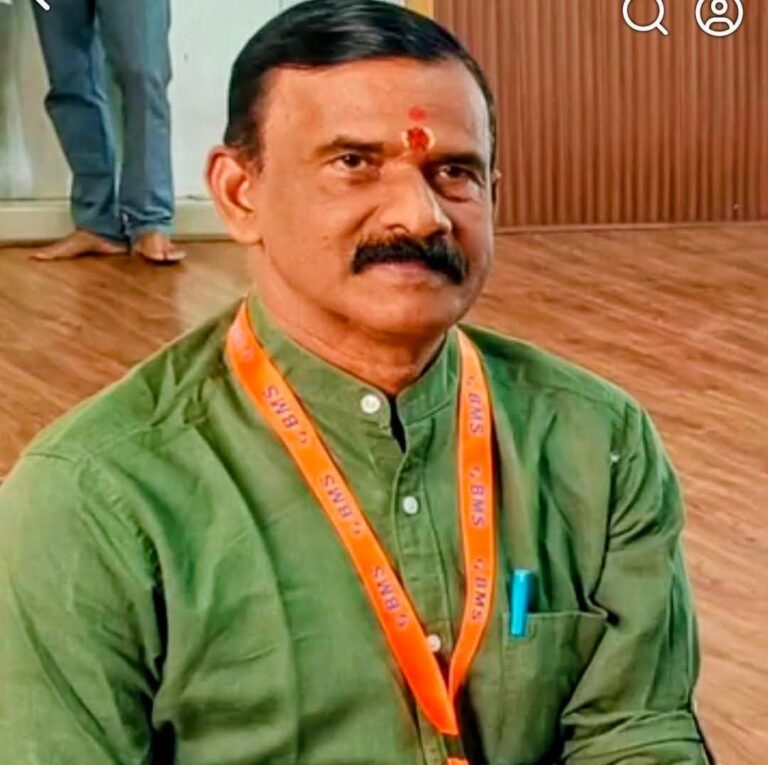
Madabhushi Sridhar Acharyulu, author of 63 books (in Telugu and English), Formerly Central Information Commissioner, Professor of NALSAR University, Bennett University (near Delhi), presently Professor and Advisor, Mahindra University, Hyderabad. Studied in Masoom Ali High School, AVV Junior College, CKM College, and Kakatiya University in Warangal. Madabhushi did LL.M., MCJ., and the highest law degree, LL.D. He won 4 Gold Medals at Kakatiya University and Osmania University.
Email: cicsridhar@gmail.com
Mobile: 8447651505