- Chief Minister Revanth Reddy released Vision Document
- Telangana Rising 2047 Vision Document Released
- Need of Involve More Female to achieve the Target
- Agriculture and Industry Growth Must
- More Mechanisation to reduce workforce in Farming
- Connectivity Implementation
- Land Acquisition for Care and Rare A Major Task
- Funds be acquired by selling HILTS Lands
- Telangana youth taken as stakeholders
Achieving one trillion dollar by 2034 and three trillion dollar by 2047 by implementing concepts of Cure, Pure and Rare model – Core Urban Region Economy (that is called Cure) – Peri Urban Region Economy (is called Pure) – Rural Agriculture Region Economy (is called Rare) is not a herculean task if the Telangana government solved the bottlenecks on the road-map. Whether it is a ‘perfect one’ is a matter of perspective, but it is certainly a logically sound and globally accepted model for addressing regional imbalances and maximizing the economic potential of different geographical areas.
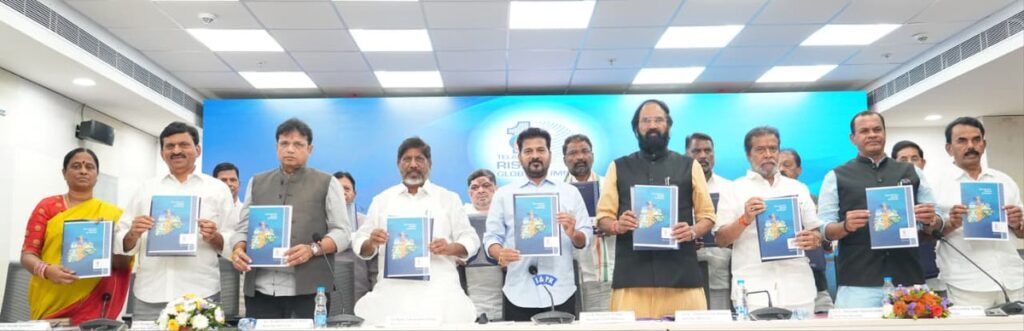
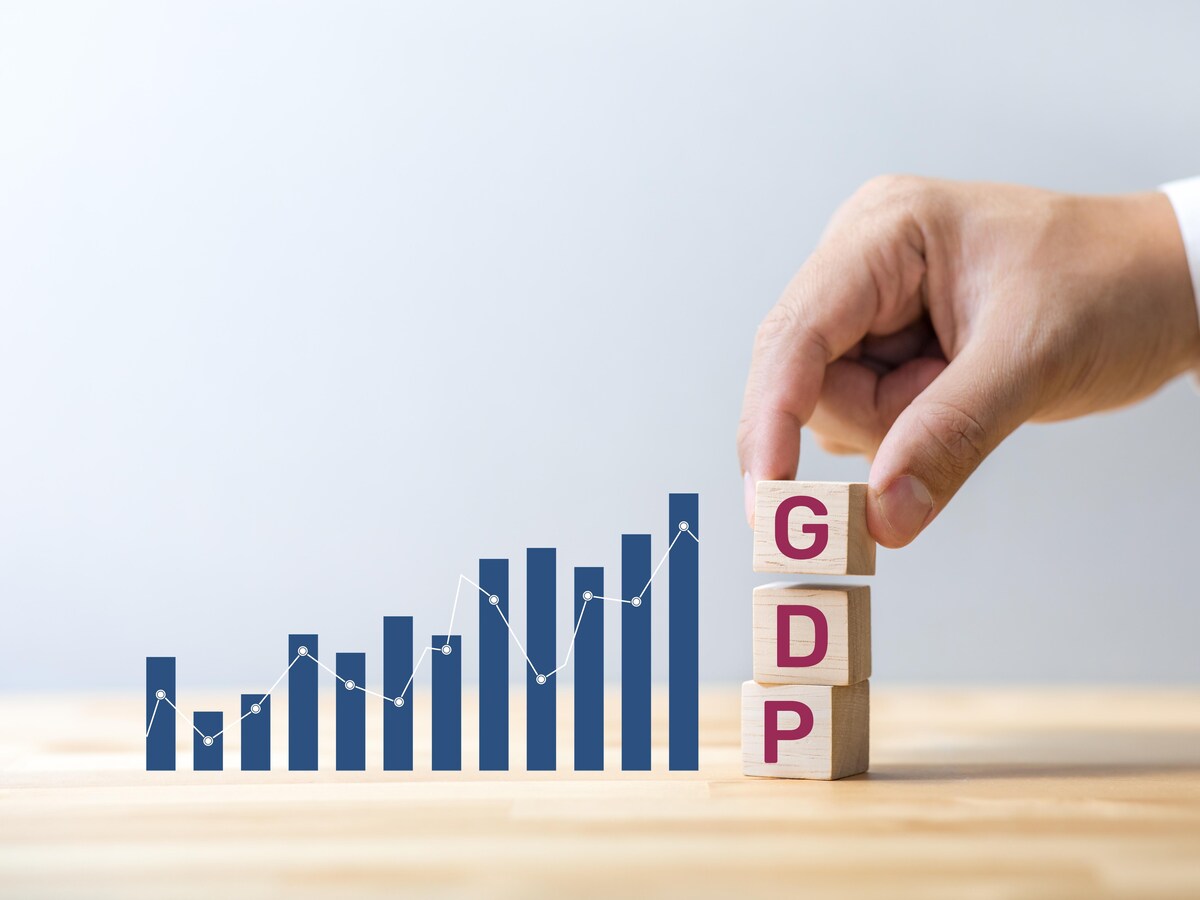
At present, Telangana’s economy, measured by its Gross State Domestic Product (GSDP), is currently estimated to be in the range of 0.18 trillion dollars to o.21 trillion USD. The State economy has to cope up to 2.79 trillion dollars to reach the target of touching three trillion dollar economy by 2047 and 0.79 trillion dollars by 2034. All the words or slogans or concepts of Cure, Pure and Rare model are targeted to achieve the goal. The projecting of one trillion dollar by 2034 and three trillion dollar by 2047, which is 100th year of Indian Independence, had any weight in the light of Telangana Hosts Rising Global Summit 2025 in Hyderabad is a valid question now. Based on recent government and economic outlook estimates for the financial year 2024-2025 and 2025-2026, the GSDP (Gross State Domestic Product) for the finaicial year is Rs 16.12 lakh (0.18 trillion dollars) and Rs 18 lakh crore (0.21 trillion USD). The Central government targeted of achieving 30 to 35 trillion dollar economy by 2047. Telangana should accomplish three trillion dollar economy and Telangana Rising 2047 Vision laid a road map for it.
Bottlenecks to Achieve a 3 Trillion Dollar Economy by 2047
The Telangana government’s “Telangana Rising 2047 Vision Document“ sets the ambitious target of reaching a 3 trillion dollar GSDP by 2047. To achieve this, the state needs a real annual growth rate of around 11%, which is significantly higher than its current trajectory (which would only reach about 1.2 trillion dollar by 2047). The bottlenecks and critical areas that need structural transformation, are highlighted by experts and the vision document itself.

Firstly, as per the ‘Vision Document’, the government planned the 66 lakh members of Self-Help Groups to one crore members. It is a good initiative. All these members should be made as stakeholders of the economy by shape them as entrepreneurs. It planned to make 2.25 lakh micro-entrepreneurs from the SHGs. For it, the government decided to encourage them to set up solar energy plants capacity of 1000 MW under Indira Mahila Sakthi Scheme. Apart from it, the government chalked out a plan to lease 600 buses to the TGSRTC through mandal-level Women’s federations. It should not be a mere statement and be materialised at any cost to achieve the goal of 2047. Not only SHG women and the other females should be involved in the dream project.
Secondly, 50 per cent of work-force is depending on agriculture should be decreased 30 per cent by encouraging further mechanisation. The government should provide all facilities to these people to increase their earnings by providing infrastructural facilities.
Thirdly, the proposed Hyderabad Pharma Green City, Bharat Future City, India’s first Net-zero Green Field Smart City, AI city, Life Sciences Hub, Health City, EV and Energy Storage System, data hub, Sports City, Education and University Hub, Advanced Manufacturing and ectronic zone should be realized without fail with the time-bound manner to achieve 2047 target.
HILTP-2025 not to be taken shape as Kancha Gachobowli
The State government is need Rs 50,000 crore immediately to address the pending bills of government employees and contractors, completion of irrigation projects and other purposes. The government will get Rs 50,000 crore at least if the Kancha Gachibowli lands dispute not arisen. Nearly Rs 30,000 crore is expected with the auctioning of the lands under Hyderabad Industrial Lands Transformation Policy(HILTP). The NDA government is trying to create hurdles to the government in every plan of the government on getting funds to meet the financial demands. The government should invite the NRIs from Telangana to invest in Hyderabad.
Energy and Infrastructure Deficits
Power Demand-Supply Gap is a major bottleneck is the rapidly increasing power demand (projected to increase by 10% annually) driven by urbanization and data centers. The state needs to aggressively push for capacity addition, particularly in green energy and storage solutions, to avoid massive economic losses from potential grid collapses. Infrastructure funding in large-scale infrastructure projects like the expansion of the Hyderabad Metro Rail and the Regional Ring Road (RRR) require massive and timely central government support and innovative state-level financing mechanisms (like using municipal bonds creatively).
Investment and Savings Gaps
The state’s savings rate is comparatively low (around 30%), much lower than the rates seen in economies that achieved similar rapid growth (like China). The burden is, therefore, heavily reliant on external investment. Sub-optimal FDI Attraction in Telangana currently attracts significantly less Foreign Direct Investment (FDI) (around 2-3 billion dollar annually) compared to states like Maharashtra (around 10-15 dollar billion). Bridging this gap is crucial to fuel the required economic expansion. There is a need to ensure that every unit of investment translates into higher output by focusing on efficient project execution and deep capital markets to increase capital productivity.
Human Capital and Productivity
The state needs to accelerateTotal Factor Productivity (TFP) to about 1.75 times its present rate to compensate for a potentially slowing population growth rate. While the state has a strong IT base, the challenge is to create a globally competitive workforce by heavily investing in high-quality education, skilling, and health. This is necessary for a shift towards high-end, knowledge-driven sectors like DeepTech, AI, and next-generation manufacturing. The state’s population growth rate is decreasing, making the acceleration of worker productivity and need to involve more females to achieve the growth.
Structural Economic Transition
While the service sector (IT, Pharma, etc.) is the largest contributor (over 65%), the state needs a successful transition where the focus in agriculture shifts from primary production to agri-food processing, exports, and agri-tech. Industry growth must be powered by high-value sectors like Life Sciences, Semiconductors, and Aerospace. Land Acquisition, farmer consent for RARE and PURE, the RRR and new industrial corridors, airports require vast tracts of land, particularly is a big task. Smooth and equitable land acquisition that benefits farmers (making them “active partners,” as envisioned) is crucial to prevent social and political resistance. The entire model relies on the seamless connectivity between the zones, particularly the completion of the Regional Ring Road (RRR) and the Hyderabad-Machilipatnam Port link. Delays in these massive projects will stall the PURE and RARE development. Let us hope the successive governments may carry forward the ‘2047 Target Plan’ for the sake of the country.
Editor, Prime Post
Ravindra Seshu Amaravadi, is a senior journalist with 38 years of experience in Telugu, English news papers and electronic media. He worked in Udayam as a sub-editor and reporter. Later, he was associated with Andhra Pradesh Times, Gemini news, Deccan Chronicle, HMTV and The Hans India. Earlier, he was involved in the research work of All India Kisan Sabha on suicides of cotton farmers. In Deccan Chronicle, he exposed the problems of subabul and chilli farmers and malpractices that took place in various government departments.
Email: ravindraseshu7@gmail.com
Mobile: 9063718675