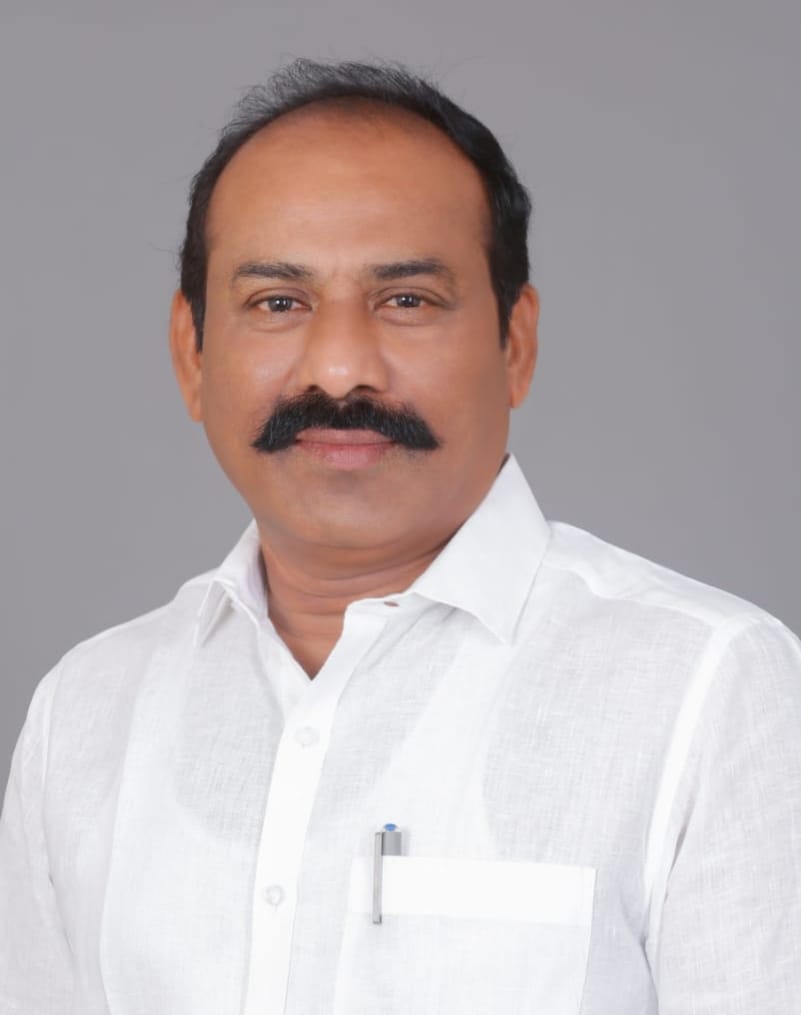
Eluri Srinivasa Rao, Telangana Gazetted Officers’ Association president and T-JAC general secretary, is a distinguished union leader known for his relentless legal battles against what he terms the harassment measures of the former BRS government. He never backed down, even as the previous administration filed various cases against him, including criminal and departmental charges. Now, he has issued a mild warning to the current Congress government over the slow pace of settling the pending issues affecting 1.5 million Telangana employees. Rao emphasized that the employees are merely seeking the return of their own money deposited with the government. These insights were shared in an interview with Prime Post, and the following are excerpts.
Prime Post: What is the total number of Gazetted Officers employed by the Government of Telangana?
Eluri Srinivasa Rao: Approximately 85,000 Gazetted Officers drive Telangana’s government, deployed across various Departments to spearhead policy implementation and execute critical field operations. Their central role in administration makes it clear that enhancing their working environment is vital for improving and sustaining high governance quality.

PP: What is the ground reality concerning the reported delays in clearing pending retirement dues for employees in Telangana?
Eluri: The delay in releasing retirement benefits constitutes an extremely serious situation. Pensionary benefits are not government gifts; they are earned employee funds, accumulated via monthly salary deductions. Core dues including Commutation, Gratuity, GPF final payments and arrears (April 2021–March 2023), Earned Leave Encashment, GIS, TGLI, and FBF must be released immediately upon retirement. Instead, retirees are forced to wait for months, even years, causing severe financial and emotional distress. Furthermore, the unacceptable delay in releasing funeral charges for deceased employees demonstrates a complete lack of urgency and respect.
PP: In detail, what are the specific financial, emotional, and social hardships retirees are experiencing due to the prolonged delays in receiving their pensionary and final settlement benefits?
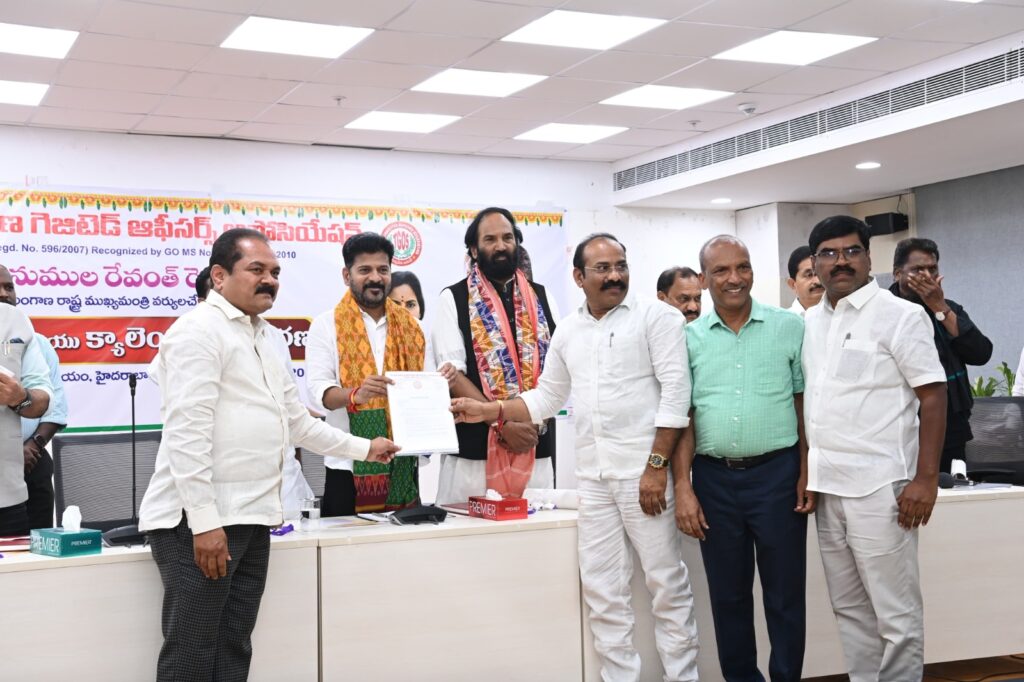
Eluri: The delayed release of retirement benefits has created a severe humanitarian crisis for former employees. Many retirees, having initiated major expenses like home construction in anticipation of timely payments like Gratuity, are now facing crushing financial burdens. This distress is compounded by heavy medical costs due to the non-implementation of the EHS Scheme, significant daughter’s marriage expenses, and existing private debts. Denied bank loans, retirees resort to borrowing from private financiers at exorbitant interest rates. When expected Gratuity and other benefits are delayed for one or two years, loan repayment becomes impossible. This prolonged financial crisis is driving many retirees into serious health issues, including depression, severe mental stress, and heart ailments. The situation has clearly escalated from a financial issue to a critical humanitarian concern.
PP: What is the ground reality regarding the financial stability and well-being of current government employees in Telangana?
Eluri: Yes, working employees are grappling with tremendous financial pressure because a vast array of critical payments has been systematically halted. This includes essential employee benefits like GPF payments/loans, CPS adjustments, surrendered leave payments, increment and AAS (6/12/18/24) arrears. The problem extends to administrative necessities, with TA claims, vehicle/fuel bills, office rents, and FAC/FTA charges all pending, alongside key social benefits like the Children School Fee Concession. Furthermore, specific allowances such as Nurses’ night duty pay, election duty honorarium, and festival advances are stuck. This comprehensive freezing of entitlements and operational funds is causing widespread financial hardship for government personnel and their families.
PP: What specific government policies, administrative decisions, or financial constraints have led to the sudden, increased financial burden on both current and retired employees in Telangana?
Eluri: The root cause of the current financial crisis stems from the previous government’s decision on March 30, 2021, to raise the retirement age from 58 to 61. While this temporarily slowed retirements for three years, the liability subsequently exploded. A massive surge is currently underway: 7,995 employees retired between April and December 2024 alone, a figure projected to exceed 10,000 by March 2025. This wave has created a backlog of more than ₹10,000 crore in pending retirement benefits. With an additional 9,630 employees set to retire in 2026, the present government faces a monumental and urgent financial challenge.
PP: What is the total financial amount the Government of Telangana requires to clear all current pending dues for retired and working employees?
Eluri: To responsibly resolve the immediate crisis of pending bills and retirement benefits, the government must double the current monthly release from ₹700 crore to at least ₹1,500 crore. Only at this increased rate can the existing backlog begin to clear quickly. For the complete and definitive resolution of all employee issues, including clearing the backlog of DA arrears, implementing the PRC, resolving all pending bill clearances, and fully operationalizing Health Cards, the total financial requirement is estimated to be approximately ₹25,000 crore.
PP: How is the widespread dissatisfaction among retired and working government employees regarding delayed payments likely to impact the current Telangana government politically?
Eluri: Yes, despite the cooperation shown by union leadership, dissatisfaction among ground-level employees is dangerously high. This is a critical political risk. Telangana’s total employee base is vast, comprising 15 lakh workers across categories including government, semi-government, Anganwadi, outsourcing, contract, EGS, temporary, part-time, Asha, Contingent, Gram Panchayat, municipal, SERP, M&H, and work-charged personnel, represented by 206 unions under the JAC. Given that employees’ “mouth publicity” has historically swayed elections and even led to the downfall of governments, the current administration must take this escalating situation with the utmost seriousness.
PP: What is the current status and key activity of the Cabinet Sub-Committee formed by the Telangana government to resolve pending employee and retiree issues?
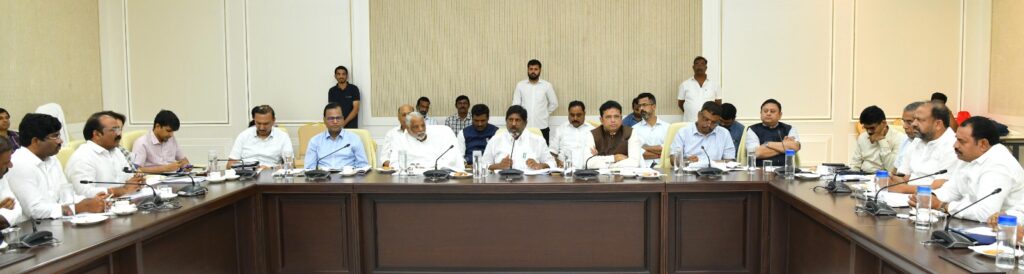
Eluri: The Cabinet Sub-Committee, led by Honorable Deputy Chief Minister Mallu Bhatti Vikramarka Garu and including Honorable Ministers Sridhar Babu and Ponnam Prabhakar and Advisor Keshava Rao, is actively engaged in discussions regarding crucial matters like DA arrears and retirement benefits. While the Ministers demonstrate clear sincerity, the resolution process is being severely hampered by non-cooperation from higher administrative officials. A prime example is the Employees’ Health Card Scheme (EHS), whose implementation is reportedly being delayed solely due to the negligence of these senior administrative officers.
PP: What is the latest status and progress report on the 63 demands put forth by the TGEJAC, particularly the key financial and welfare demands?
Eluri: The Telangana government has demonstrated positive intent since the 2023 elections, undertaking several initiatives to strengthen administration and address employee concerns, resulting in the partial resolution of 25 out of 63 demands. Noteworthy steps include the monthly release of ₹700 crore for pending bills, establishing the Joint Staff Council, ensuring timely monthly salary payments, and boosting cadre strength through DPCs and fresh recruitments. Furthermore, senior leadership and specialized committees (like the Cabinet Sub-Committee) have been actively engaged, alongside implementing major reforms (e.g., Revenue Dept. GPO system) and settling issues like compassionate appointments and general transfers. However, significant disappointment persists due to the non-fulfillment of key promises, particularly the switch from CPS to OPS. Urgent action is also required to fully resolve the continuing hardships caused by G.O. 317 for teachers and other staff. While appreciable, these positive steps are only a foundation; a complete resolution of long-standing issues remains the final goal.
PP: What specific housing scheme or proposal is currently being discussed or developed by the Telangana government for its employees?
Eluri: The key to permanently solving employee housing is the development of an integrated, modern solution, constructing high-rise residential buildings for approximately 10,000 employees within the proposed Future City (Fourth City) development. By designating specific quarters for LIG, MIG, and HIG categories, this project guarantees equitable access. Beyond employee welfare, this undertaking is expected to provide a substantial stimulus to the regional economy. We emphasize that implementing this new model will ensure professional management, thereby avoiding the past organizational challenges of smaller employee housing colonies.
PP: What is the official stand of the employee unions regarding the possible implementation of a five-day work week?
Eluri: We extend our full support for the proposed 5-day work week. This shift from the current 10:30 AM – 5:00 PM schedule to 9:30 AM – 5:30 PM will maintain operational capacity while offering substantial gains. Concerns over reduced output are unwarranted; productivity will, in fact, increase. The benefits include: mitigating the burden of peak-hour traffic congestion, reducing employee exposure to commute-related pollution, and fostering improved work-life balance. Given the demonstrated performance of Telangana’s 85,000 Gazetted Officers, we are confident that this structural change will strengthen employee morale and elevate the quality of public service delivery.
PP: What are the arguments for and against increasing the retirement age for government employees in Telangana from 61 to 63?
Eluri: Our position is very clear: If the government is interested in extending the retirement age from 61 to 63, the TGOs has no objection. But, we cannot demand or insist on extending it. Increasing the retirement age to 63, as done in some states and in central Government department also sectors, is a policy decision the government alone must evaluate based on financial and administrative feasibility. Our priority is timely settlement of pensionary benefits, not extending service years.
PP: What structural reforms do you recommend for resolving internal disputes, ensuring fair treatment, and improving the effectiveness of the current grievance mechanism for employees?
Eluri: We strongly demand implementation of Joint Staff Council (JSC) meetings at State level District level and Head of Department (HOD) level. Regular JSC meetings will resolve issues quickly at their respective levels without escalating everything to the Secretariat. Additionally, recognition of all employees’ associations must be restored. This is essential for proper representation and healthy dialogue between employees and the government.
PP: What is your final suggestion to the government concerning the critical strategic priorities for securing a sustainable and prosperous future for the next generation?
Eluri: The government’s demonstration of goodwill is acknowledged. However, the pace of implementation must be significantly accelerated. We urge the immediate resolution of all outstanding issues that do not impose any financial burden on the state. Prompt fulfillment of the remaining demands will serve to fully restore trust, substantially mitigate dissatisfaction, and foster genuinely harmonious relations between government and employees. Ultimately, this strategic action will strengthen overall governance and cultivate a positive public perception of the administration.
PP: What is the main difference between the previous BRS Government and the present Government in their mode of communication, level of engagement, and consultative process with employee associations and unions?
Eluri: The difference in administrative approach is stark and notable. During the BRS Government, employees frequently faced significant operational hardships, including the untimely release of monthly salaries and the withdrawal of official recognition from employee associations. Furthermore, union leaders often contended with administrative pressure and legal cases, which fostered an atmosphere of fear and widespread unrest across the workforce. In welcome contrast, the present Government has established a respectful and conducive atmosphere for dialogue.
There is no reported harassment of employees or unions, and the prompt crediting of salaries on the first of every month has provided immediate relief. However, confidence remains conditional. While the environment has demonstrably improved, employees feel the pace of resolving long-pending financial and administrative issues is still unsatisfactory. Large amounts related to retirement benefits, medical reimbursements, and administrative bills remain outstanding. Employees urgently expect the Government to act swiftly, prioritize the clearance of all pending dues, and demonstrate stronger administrative responsiveness through faster decision-making to fully restore confidence.

Editor, Prime Post
Ravindra Seshu Amaravadi, is a senior journalist with 38 years of experience in Telugu, English news papers and electronic media. He worked in Udayam as a sub-editor and reporter. Later, he was associated with Andhra Pradesh Times, Gemini news, Deccan Chronicle, HMTV and The Hans India. Earlier, he was involved in the research work of All India Kisan Sabha on suicides of cotton farmers. In Deccan Chronicle, he exposed the problems of subabul and chilli farmers and malpractices that took place in various government departments.
Email: ravindraseshu7@gmail.com
Mobile: 9063718675