Defence Minister Rajnath Singh recently made a big statement on November 23, 2025. He suggested that Sindh, a state in Pakistan, might come back to India one day. Mr. Singh said that borders are not permanent and “can change”. He also mentioned the deep connection felt by Indian Sindhi Hindus, like L.K. Advani, arguing that Sindh is forever a part of India’s ancient culture and history. This is why the Sindhu River is still mentioned in our National Anthem, “Jana Gana Mana.”
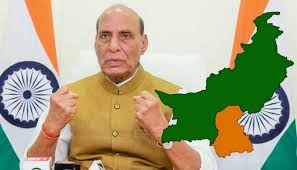
This statement highlights a strange contradiction. India sees Sindh as the birthplace of our Indus Valley Civilisation and a core part of our ancient river-based culture. But Pakistan sees Sindh as a crucial religious and political region that was key to their country’s formation as a Muslim-majority state.
Why Did Sindh Go to Pakistan?
To understand this, we need to go back to the time before Partition. In 1936, the British separated Sindh from the Bombay Presidency, making it a new, separate state. Sindh had a very large Muslim population. When India was divided in 1947, the local Muslim leaders felt that joining Pakistan would protect their religious and cultural identity better than staying in Hindu-majority India. Sindh became the first state to formally vote to join Pakistan. Because of this, many rich and influential Sindhi Hindus had to leave their homes and migrate to India, mostly settling in states like Maharashtra (Mumbai) and Gujarat. This separation left a painful memory for many Indians.
The Current Situation: Our Feeling vs. Their Reality
Even today, India feels a cultural connection. The Indus River (Sindhu) is a major geographical symbol of ancient India. The Sindhi Hindus who live here work hard to keep their language and traditions alive, remembering the land they left behind. However, for Pakistan, Sindh is extremely important today. It has their biggest city, Karachi, and their main port, which is vital for their economy. Pakistan will never agree to give up Sindh, as it is central to their survival and stability.
The Demand in Sindh: Freedom, Not India
In Sindh, there are some local groups, like the JSMM (Jeay Sindh Muttahida Mahaz), who are unhappy with the central government in Islamabad. They often complain that the Punjabi establishment controls too much and unfairly manages their water and resources. These groups usually fight for ‘Sindhudesh’ a completely independent Sindhi country, based on their language and separate ethnic identity. They are inspired by the creation of Bangladesh in 1971. So, while these groups oppose Islamabad, their main goal is not to join India.
Rajnath Singh’s comment speaks to the deep historical and cultural love Indians have for Sindh. But in terms of current politics and ground reality, there is no strong movement in Sindh to rejoin India. The state is too important to Pakistan. The Minister’s remarks are a powerful reminder of our ancient ties to the land of the Sindh.

Senior Journalist
Anand Gantela is a seasoned media professional with nearly three decades of experience across the spectrum of Indian journalism. Having worked extensively in both print and broadcast media, he has held key positions at renowned outlets such as Prajashakthi, Andhra Bhoomi, Mudra, Media India, Siti Cable, Mana Telugu, and Maa TV. From ground-level reporting to managing news bureaus and overseeing bulletin production, Anand has witnessed the evolution of news firsthand. His wealth of experience reflects a deep understanding of the dynamic and ever- evolving landscape of news reporting.
Email: gantela.anand@gmail.com
Mobile: 7893549889