Madam Honorable President, please reject this unconstitutional advice by the Constitutional Bench of the Supreme Court. The nation should understand how a bench of the SC was constitutional, and the Constitutional Bench of five judges paralyzing the governance in non-BJP states was not correct. Two SC Judges bench rightly held Governor R.N. Ravi’s delay in granting assent to 10 bills as erroneous and illegal, and it exercised its inherent powers under Article 142 to grant assent to the pending bills
The most controversial effecting the federal governance was given by a five-judge Constitution Bench led by Chief Justice B.R. Gavai J, Surya Kant J, Vikram Nath J, P.S. Narasimha J, A.S. Chandurkar J, delivered its advisory opinion on the Presidential Reference concerning the powers of Governors and the President when Bills are presented for assent. President Droupadi Murmu had issued the reference under Article 143 a month after the Court’s decision in State of Tamil Nadu v Governor of Tamil Nadu (2025). The SC in Tamil Nadu Governor had set timelines on the President and the Governor for granting assent and had deemed assent on pending bills through Article 142. Basically, it approves the point of ‘limiting’ the power of the President of India, the apex authority under the Constitution, by imposing timelines on his functioning. Though the SC raised valid constitutional concepts, the ‘letter’ is more dominant than the ‘spirit’ of the Constitution.
The Supreme Court (On 20.11.2025) unanimously ruled against imposing timelines on the President and Governors. The bench declined to answer Question 14 of the reference, which asked whether disputes between the Union and the States can be resolved outside Article 131. It held that the question was irrelevant to the nature of an Article 143 reference.
The Governor has discretion to assent, withhold assent with a reason to be communicated, or refer the Bill to the President for consideration. There will be no timelines that can be imposed by the Supreme Court, which held that the Governor has only three options under Article 200, and that prolonged, unexplained, indefinite inaction by a Governor may attract limited judicial scrutiny.
The SC, referring to Shamsher Singh v State of Punjab (1974) and Nabam Rebia v Deputy Speaker (2016), reiterated that the Constitution contemplates circumstances in which the Governor exercises discretion under Article 200. The second proviso relates to the reservation of a Bill for the President’s consideration. The Court rejected the argument that discretion is confined to only one part of Article 200, but also observed that discretion does not justify inaction.
The President’s decision under Article 201 is not justiciable and is not subject to judicially imposed timelines. The President is not required to seek an advisory opinion under Article 143 whenever a Bill is reserved; such a reference may be made only if the President independently considers it necessary.
Unfortunate Advice of SC
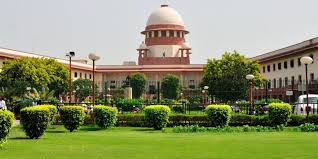
While settling the scope of the Governor’s powers, the SC, exercising advisory power, held that ‘prolonged, unexplained, indefinite inaction will invite limited judicial scrutiny’, affecting the administration. The judgment is against the constitutional scheme. For example, how the Tamil Nadu government is paralysed by the inaction, or anti-constitutional ‘action’. The two-Judge Bench of SC in the Tamil Nadu case rightly held that under Article 200, the Governor, after presentation of the Bill, must return it “as soon as possible” along with a message requesting the House to reconsider specific provisions within, or the entirety of the Bill. If the Bill were to be passed again and resent to the Governor, the Governor is obligated not to withhold it. The 12 Bills sent to the Governor between 13 January 2020 and 28 April 2023 amend legislation that established state universities in Tamil Nadu. Eight of the 12 Bills seek to empower the state government to appoint the Vice Chancellor of the universities instead of the Governor, one Bill seeks inclusion of a government nominee on a selection panel for the appointment of the Vice Chancellor, two Bills seek to grant the government the power of inspection and enquiry instead of the Chancellor of the university, three Bills seek inclusion of the Finance Secretary in the Syndicate of all Universities (except three government universities), and one Bill seeks to establish a government Ayurveda university. One Bill also seeks complete control of the state government over the appointment of Vice Chancellors of all state universities (barring the University of Madras) instead of the Governor.
Some important files from the state government, between 10 April 2022 and 15 May 2023, are pending sanction for the prosecution of public servants for various crimes involving acts of moral turpitude, under the Prevention of Corruption Act, 1988. Around 54 files on premature release of prisoners, submitted to the Governor between 24 August 2023 and 28 June 2023, have remained pending, and various proposals for the appointment of members for the Tamil Nadu Public Service Commission have remained pending. Article 316 of the Constitution states that the Chairman and other members of a State Public Service Commission are to be appointed by the Governor. On 10 November 2023, the SC Bench found that the pendency of the proposals and Bills was “a matter of serious concern.” 3
Significant points can be culled out of the judgment as follows:
- No deemed assent: There is no concept of granting deemed assent to State Bills under Article 142, as the SC cannot take over the functions of the President and Governors under Article 201 and 200, respectively.
- President’s functions not justifiable: The President’s functions under Article 201 are not justiciable, and the President cannot be bound by a timeline.
- Constitutional clarity: After hearings on the Presidential Reference, the SC clarified the Constitutional position in providing assent to Bills passed by State Assemblies, and has largely confirmed that Governors should not indefinitely withhold assent to such Bills. Addressing all 14 questions posed in the Presidential Reference, the Bench largely converged on the constitutional principles elucidated in April.
Governors are not rubber stamps.
- Not rubber stamps: The Governors are not rubber stamps. Courts cannot supplant the wisdom of the Governors. But Governors cannot stall Bills endlessly, thwarting legislative will, says the Supreme Court.
- The time factor: The Court can’t ask Governors to decide on Bills within a reasonable time limit.
- Only three options: The Constitution is clear on the options before the Governor. The Governor has three constitutional options under Article 200: assent, reserve, withhold assent, and return with reasons.
- Not Justiciable: The discharge of the Governor’s functions is not justiciable. In case of grave circumstances of inaction, unexplained and prolonged, the court cannot ask him to decide within a reasonable time limit.
- Federal point: Pronouncing the opinion advisory, CJI Gavai says: “The first provision of Article 200 initiating a conversation between the Governor and the State legislature is essential. It brings out the federalisitic (this expression is used in the Judgement) nature of governance and in the spirit of the balance. In short, the Governor cannot return Bills without saying why.”
Merits: SC can ‘limit’ the Governor.
- However, the Court can ask Governors to decide within a “reasonable time limit”.
- Great relief: The President need not consult the Supreme Court under Article 143 (advisory opinion) every time a Governor refers a State Bill to her for consideration under Article 201.
- Discretion: Ordinarily, the Governor exercises his functions with the aid and advice of the State Cabinet. Those functions in which he exercises discretion are specifically provided in the Constitution, says CJI Gavai.
A clash between the ‘spirit’ and the ‘letter’ of our Constitution
- The society thinks the judicial opinion of five of the bench cannot go wrong. It is not agreed upon constitutionally to impose timelines. As far as the President is concerned, SC justified, but it is difficult to agree with the inaction of Governors who may need to impose timelines.
- Problem is ‘Bias’: The President is the apex authority in India; it cannot be equated with the Governors, who are totally appointed, not independent, and as subordinate to the ‘constitutional office’ of the Home Minister/President. Political bias of the ruling government and bias against the opposition Chief Ministers resulting in trouble entire Government and the Assembly, that is the experience of such Governments in recent times.
- Morality: Shall we follow the strict ‘letter’ and ignore the ‘spirit’ of the Constitution? Will it not violate the Constitutional Morality?
- Convention: Why not the President follow the unwritten timelines as a Constitutional convention to use “reasonable timelines?”
- Position of Speakers: What if ‘timelines’ are imposed on the Speakers and Chairman of Rajya Sabha (or Chairmen in the legislative council)?
The SC held “…however, they will take a decision in a “reasonable time”. It is an ambiguity that may create administrative difficulties.
How long is ‘reasonable’?
- Nobody can say what is a ‘reasonable time’ in this political scenario. It is just advice, opinion, or an ethical point. It does not solve the problem generated by the political governments knowingly, deliberately put a clog on the administration and impair the working of governance, and harass the entire state.
- It promotes the imbalance between the Centre and States, and in turn affects the federal principles of the Indian Constitution.
Chief Justice of India B.R. Gavai made it clear that the Centre should not expect the apex court to “sit idle” and powerless if a constitutional authority failed to discharge its duties.
Only Advice.
- It’s again, an ethical principle or piece of advice by the apex court; it depends on the willingness of the Government of the day. When the Government deliberately rejects the advice and ignores the ‘constitutional morality’.
- May not solve the ‘Constitutional Crisis’. It may be valid that the discharge of the Governor’s functions is not justiciable. Can anybody do in case of grave circumstances of inaction, unexplained and prolonged, the court cannot ask him to decide within a reasonable time limit?
In case any state assembly way lapse or be dissolved specifically due to “inaction and delay” in its day-to-day legislative functioning in late 2024 or 2025, the dissolution of a state assembly typically happens in specific constitutional circumstances, such as: a) ahead of scheduled elections when recommended by the state Cabinet and Chief Minister to the Governor, as seen in Haryana in September 2024, b) when no stable government can be formed, or there is “horse-trading,” allowing the Governor to dissolve the assembly and pave the way for fresh elections, as occurred in Jammu and Kashmir in November 2018, c) by the Governor on the aid and advice of the cabinet at the end of the government’s tenure, as in Odisha in June 2024.
While there have been political debates and walkouts in state assemblies like Maharashtra and Rajasthan over various issues and alleged government insensitivity, these have not led to the assembly lapsing or being dissolved due to “inaction and delay” in such manner as above.
Recent Supreme Court judgments have addressed issues of gubernatorial inaction, stating that a Governor cannot indefinitely delay acting on bills passed by the assembly, but this does not automatically lead to the entire assembly lapsing. The court has clarified that while it can intervene in cases of “prolonged, unexplained and indefinite” inaction, it cannot impose rigid timelines or “deemed assent” for bills, so the legislative process itself is not automatically voided by delay.
Against the ‘doctrine of separation’
The Supreme Court Bench says drawing timelines for Governors or the President is antithetical to the doctrine of separation, as well as antithetical to the Constitution. Antithetical means: directly opposed or contrasted; mutually incompatible or using the rhetorical device of antithesis. It is the Constitutional Immorality, and Governors cannot resort to such inaction or actions.
There will be no conclusion to the consequences of such unconstitutional actions. How can we protect the Constitution of India, i.e., Bharath?
Law professor and eminent columnist
Madabhushi Sridhar Acharyulu, author of 63 books (in Telugu and English), Formerly Central Information Commissioner, Professor of NALSAR University, Bennett University (near Delhi), presently Professor and Advisor, Mahindra University, Hyderabad. Studied in Masoom Ali High School, AVV Junior College, CKM College, and Kakatiya University in Warangal. Madabhushi did LL.M., MCJ., and the highest law degree, LL.D. He won 4 Gold Medals at Kakatiya University and Osmania University.
Email: cicsridhar@gmail.com
Mobile: 8447651505