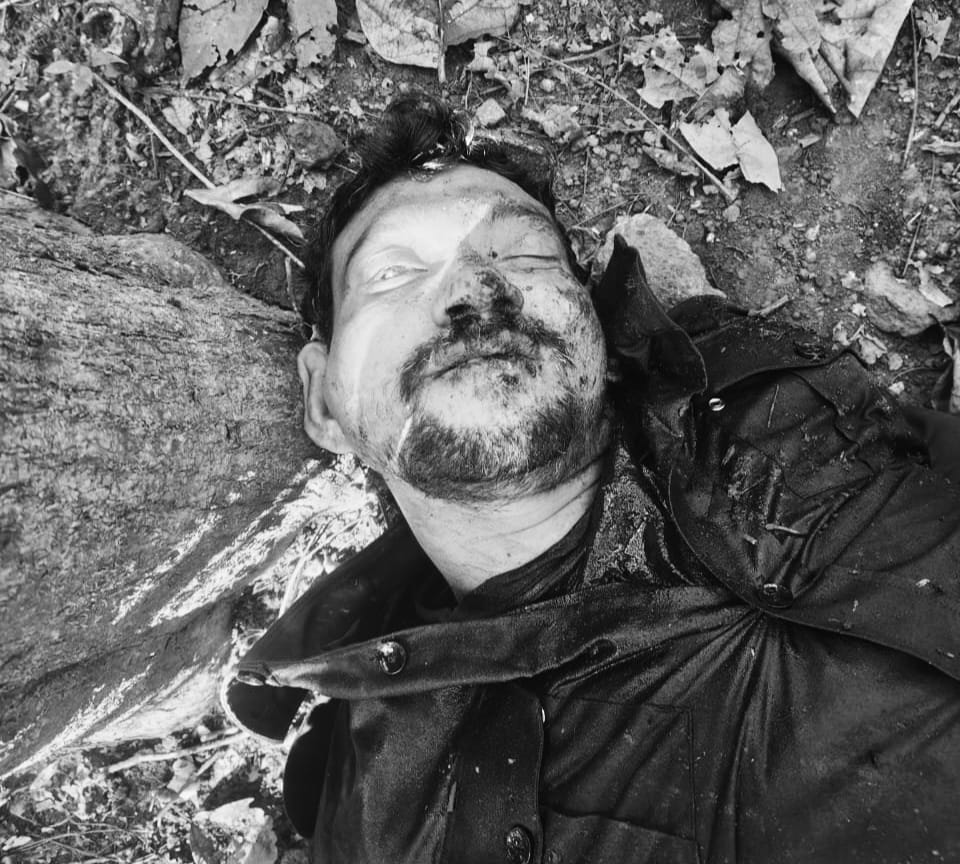
The killing of Madvi Hidma, who was one of the most wanted and powerful Maoist leaders, in a tough fight on the Andhra Pradesh-Chhattisgarh border is a massive blow to the Naxal movement. The security forces achieved this success even before the deadline set by Home Minister Amit Shah, and it shows the Naxal movement is generally getting weaker. Top leaders had surrendered just weeks earlier, showing that there are fights and unhappiness inside the group. Also, the arrest of 50 Maoists in NTR, Krishna, Kakinada, Konaseema and Eluru districts at the same time shows that their secret network in Andhra Pradesh is exposed. Because of all this, Analysts believe that Hidma and other Maoists leaving the Dandakaranya region for Andhra Pradesh led to this specific incident
Dandakaranya: His Safe Home for Years
Hidma was powerful because he controlled the Dandakaranya Special Zonal Committee (DKSZC) and the PLGA’s Battalion No. 1, especially in the thick jungles of Abujhmad and Bastar. For many years, this large forest area in Chhattisgarh, Maharashtra, and Telangana was the Naxal hub. It was a safe place because of local support, tight security layers, and the thick forest cover that protected him from police and army operations. Hidma, a tribal leader who reached the top, was like a hero for his fighters. His attacks, like the big massacres in 2010 and 2013, were all planned from this “Red Fort.”
The Reason for the Move: Too Much Pressure
However, in the last few months, things have changed a lot in Dandakaranya. The central government is running a non-stop operation using new technology like drones and better intelligence gathering, which has deeply hurt the Naxal’s old strongholds. More Naxals are giving up because they are unhappy and the pressure is too much. An important fact came out when a close aide of Hidma surrendered: Hidma was under such high pressure that he reportedly ran away from the main Bastar area and crossed into the border region with only a small group of trusted people.
The Mistake in Andhra Pradesh
Moving away from the area he knew so well in Bastar and going into the Andhra-Odisha Border (AOB) region seems like a huge tactical mistake. Though the AOB is also a difficult area, Hidma probably had less local knowledge and support there than in his own area. The intelligence that led to the shooting which the AP DGP called “specific intelligence” suggests that once he was outside his main support area, the police could track his movements easily.
This weakness was highlighted by the arrests in Andhra Pradesh, which shows they were trying to set up new safe places or links outside Chhattisgarh. Experts think the Naxals were forced to move to try and save their remaining groups or escape the intense heat. In the end, losing the home-ground advantage and relying on a small, possibly leaky, group of loyalists led to the police finding and killing the last major military strategist of the Maoists. Hidma’s death, soon after leaving his fortress, strongly suggests that this was his final, fatal mistake.

Senior Journalist
Anand Gantela is a seasoned media professional with nearly three decades of experience across the spectrum of Indian journalism. Having worked extensively in both print and broadcast media, he has held key positions at renowned outlets such as Prajashakthi, Andhra Bhoomi, Mudra, Media India, Siti Cable, Mana Telugu, and Maa TV. From ground-level reporting to managing news bureaus and overseeing bulletin production, Anand has witnessed the evolution of news firsthand. His wealth of experience reflects a deep understanding of the dynamic and ever- evolving landscape of news reporting.
Email: gantela.anand@gmail.com
Mobile: 7893549889