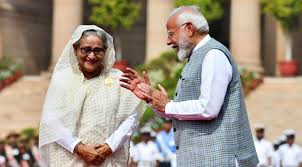
This is a massive diplomatic crisis for India, and the answer to whether New Delhi will extradite former Bangladeshi Prime Minister Sheikh Hasina is not a simple ‘yes’ or ‘no’. She has been sentenced to death by the International Crimes Tribunal-Bangladesh (ICT-BD) for alleged “crimes against humanity” stemming from the violent student crackdown last year, and the interim government in Dhaka, led by Nobel Laureate Muhammad Yunus, is now officially demanding her handover. This extradition request, citing the existing bilateral treaty, has placed India squarely in a difficult position, forcing it to choose between upholding a treaty, maintaining strategic stability with a crucial neighbor, and adhering to its own domestic legal and human rights principles. Most diplomatic experts believe that an immediate extradition is highly unlikely, pointing to multiple strong grounds for refusal under Indian law and international practice.
Legal Hurdles: Political Offence and Due Process
The first and most important factor is the political nature of the charges. The 2013 India-Bangladesh Extradition Treaty, which Dhaka is invoking, explicitly includes a clause (Article 6) allowing India to refuse extradition if the offense is considered a political one.
Sheikh Hasina and her party, the Awami League, have strongly argued that the entire trial is nothing but a “political farce” and a “vendetta” orchestrated by the new unelected interim government to sideline her and dismantle her party. While the charges leveled against her including murder and incitement to violence are typically excluded from the ‘political offence’ exemption, the Indian government, through its legal review process, has the authority under the Extradition Act, 1962, to examine the real, underlying motive of the prosecution. Given that a former head of government is being tried by a successor government installed after mass protests, the political overtones are undeniable, giving India a strong legal foundation to decline the request.
Ethical and Fairness Concerns: Due Process and the Death Penalty
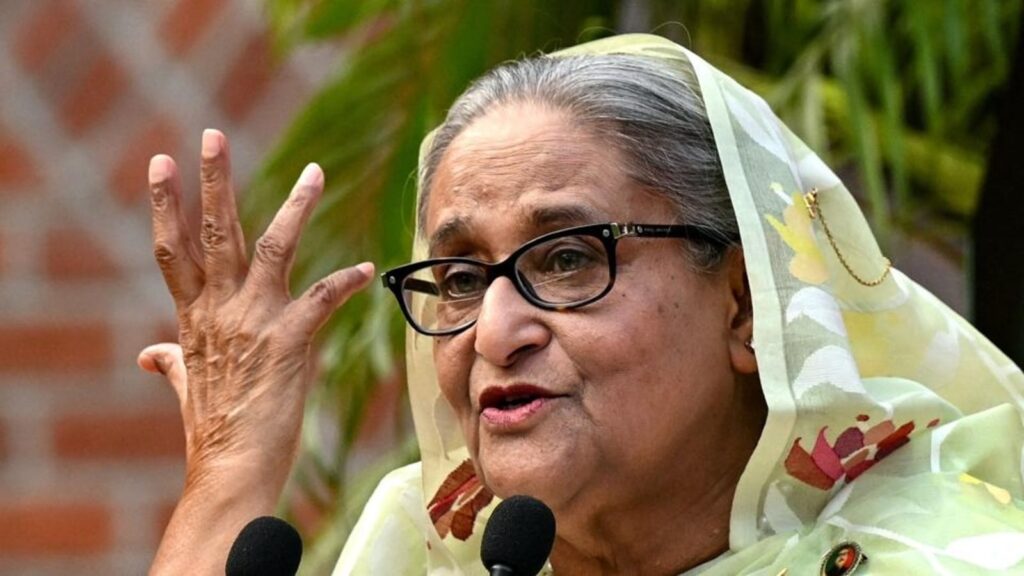
Furthermore, India must seriously consider the principles of justice and fairness. The trial of Sheikh Hasina was conducted in absentia, meaning she was not physically present to defend herself, having already fled to India for safety reasons after the student uprising in August 2024. This lack of due process raises significant questions about whether the trial adhered to international standards of fairness, especially when the penalty is death.
The India-Bangladesh Extradition Treaty (Article 8) also allows New Delhi to refuse the handover if the accusation is not made “in good faith in the interests of justice” or if it would be “unjust or oppressive” to extradite her. Considering the death sentence and the reported political turmoil and violence surrounding the court process in Bangladesh, India has a moral and legal obligation to thoroughly review whether Hasina would receive a fair trial upon her return, particularly during the appeal phase.
Geopolitical Stakes: Prioritising Regional Stability
The third major reason India will likely hold back is the geopolitical reality and regional stability. Bangladesh is the most significant country for India in South Asia, critical for India’s ‘Look East Policy,’ counter-insurgency operations in the North East, and economic engagement. Extraditing a long-time friend and ally like Sheikh Hasina, who has historically ensured a stable border and cooperative ties with India a relationship India highly values could severely damage the relationship with Dhaka’s new administration. More critically, an immediate extradition could be seen as an aggressive political act that destabilises Bangladesh further. India’s official response from the Ministry of External Affairs (MEA) was very guarded, simply stating they had “noted the verdict” and would “engage constructively” to ensure “peace, democracy, inclusion and stability.” This language is a clear signal that India’s priority is not the immediate execution of a legal treaty, but the careful management of the political crisis on its doorstep.
Calculated Delay and Diplomatic Leverage
India’s approach is expected to be one of calculated delay and diplomatic engagement, rather than quick compliance. New Delhi is not going to immediately send back a person facing execution who was also a trusted ally for years. Legal experts suggest that India could take months, if not years, to fully examine the case, using the long judicial process within India as a diplomatic tool. By refusing the extradition on legal and ethical grounds such as the political nature of the offense or concerns over the death penalty and fairness of the trial India can protect its legal integrity while also avoiding direct involvement in the turbulent internal politics of Bangladesh. While the interim government in Dhaka has called sheltering Hasina an “unfriendly act,” India will prioritize its own national interest and the necessity of regional peace, ensuring that its final decision is political and strategic, not just a matter of following a treaty blindly.

Senior Journalist
Anand Gantela is a seasoned media professional with nearly three decades of experience across the spectrum of Indian journalism. Having worked extensively in both print and broadcast media, he has held key positions at renowned outlets such as Prajashakthi, Andhra Bhoomi, Mudra, Media India, Siti Cable, Mana Telugu, and Maa TV. From ground-level reporting to managing news bureaus and overseeing bulletin production, Anand has witnessed the evolution of news firsthand. His wealth of experience reflects a deep understanding of the dynamic and ever- evolving landscape of news reporting.
Email: gantela.anand@gmail.com
Mobile: 7893549889