RSS Chief Mohan Bhagwat made a very clear statement about the relationship between the Rashtriya Swayamsevak Sangh (RSS) and political parties. on Sunday, addressing a two-day lecture series titled ‘100 Years of Sangh Journey: New Horizons’ in Bengaluru, He firmly stated that the RSS does not support any particular political party. He explained that the Sangh completely stays away from what he called “vote politics,” “current politics,” and “election politics.” The core reason for this, he said, is that the main work of the Sangh is to unite society, while politics, by its nature, tends to be divisive. Therefore, the RSS keeps itself out of the political arena.
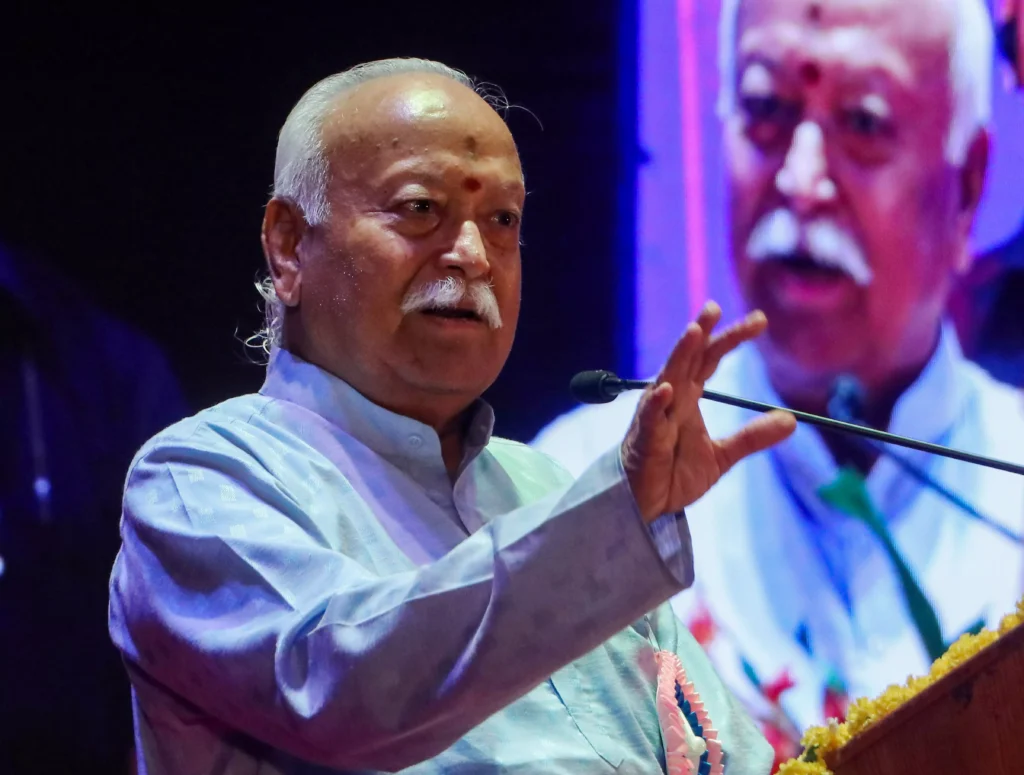
Bhagwat clarified the organization’s approach by saying, “We support policies.” He emphasized that the RSS will use its full influence to support the right policy, and not an individual person or a political party. This is a crucial distinction, suggesting that the Sangh’s support for the BJP is not an unconditional tie, but an alignment on certain issues. He stressed that the RSS does not have any “special affinity towards one party.” He pointed out, “There is no Sangh party. No party is ours and all parties are ours because they are Bharatiya parties.” This means the RSS sees all Indian parties as its own because they are working in India, but it will not become an exclusive wing or supporter of just one.
The RSS Chief offered a strong example to back up this point: the movement to build the Ram Mandir in Ayodhya. He stated that Sangh volunteers fully supported this movement, and the organization stood by the construction. He noted that the BJP was indeed there to support it, but quickly added that if the Congress or any other party had supported the temple construction, the RSS would have given them its support as well. This example was used to show that their support is purely based on the policy or the cause (in this case, the Ram Mandir), and not the party that is in power or pushing that agenda.
Peace with Pakistan and Views on Social Issues
Moving beyond politics, Mohan Bhagwat Ji also spoke about India’s relationship with Pakistan. He said that the RSS always wants peace with the neighbouring country. However, he clarified that it is Pakistan that does not desire peace with India, and as long as they get satisfaction from causing harm to Bharat, they will continue to do so. He asserted that India should never be the one to breach the peace from its side, but warned that if Pakistan tries to break the peace, they will never be successful.
He then gave a strong warning by reminding Pakistan of the consequences they had faced in the 1971 war, which resulted in the creation of Bangladesh. He stressed that if Pakistan does not change its ways, it will one day learn a serious lesson. “It is better to cooperate than to fight,” he said, but admitted that the neighbouring country might not understand any other language. Therefore, he concluded, “we have to speak the language they understand.” This means that India must always be ready to give a “befitting answer and defeat them, always, each time, causing them some loss that they will repent forever.”
On the issue of casteism in the society, Bhagwat Ji said that the real problem is not a system of casteism but rather a “caste confusion.” He believes this confusion exists mainly because of the competition for government concessions and during elections. His remedy was simple but profound: there is no need to make big efforts to completely remove or “eradicate” caste. Instead, he said, there is a simple need to make an effort to forget caste. He suggested this is an easy thing for individuals to do on their own.
Regarding the matter of ‘Love Jihad,’ the RSS chief advised people not to think too much about what others are doing. His focus was on internal action: people should instead concentrate on what they should be doing. He asked people to teach and nurture ‘Hindu Samskara’ (Hindu values and culture) within their homes to deal with such issues.
Defending the RSS’s Identity and National Symbol
In a clear response to Congress leaders, who have been criticizing the RSS for operating without any formal registration with the Congress President Mallikarjun Kharge recently suggesting that the RSS should be banned Mohan Bhagwat offered a strong defence of the organization’s legal status. He posed a sharp question to his critics: “RSS was established in 1925, so do you expect us to have registered with the British government?”
He further explained that even after India became independent, the Government of India did not make registration compulsory. He clarified that the RSS is legally categorized as a “body of individuals” and is a recognized organization. He added that the Income Tax department and courts have accepted this status, which is why the organization is exempted from income tax. To underscore the fact that the government recognizes the Sangh, he pointed out, “We were banned thrice. So government has recognised us. If we were not there, whom did they ban,” he asked. He also humorously mentioned that many things in India are not registered, remarking, “Even Hindu Dharma is not registered.”
Finally, addressing the long-standing criticism that the RSS only respects the saffron flag and not the Indian tricolour, Bhagwat Ji completely rejected the claim. He explained that while the saffron flag is treated as a Guru (teacher/revered symbol) within the RSS, the organization has very high respect for the Indian tricolour. He asserted, “We always respect, offer tribute and protect our tricolour,” putting an end to the doubts about the Sangh’s commitment to the national flag.
Senior Journalist
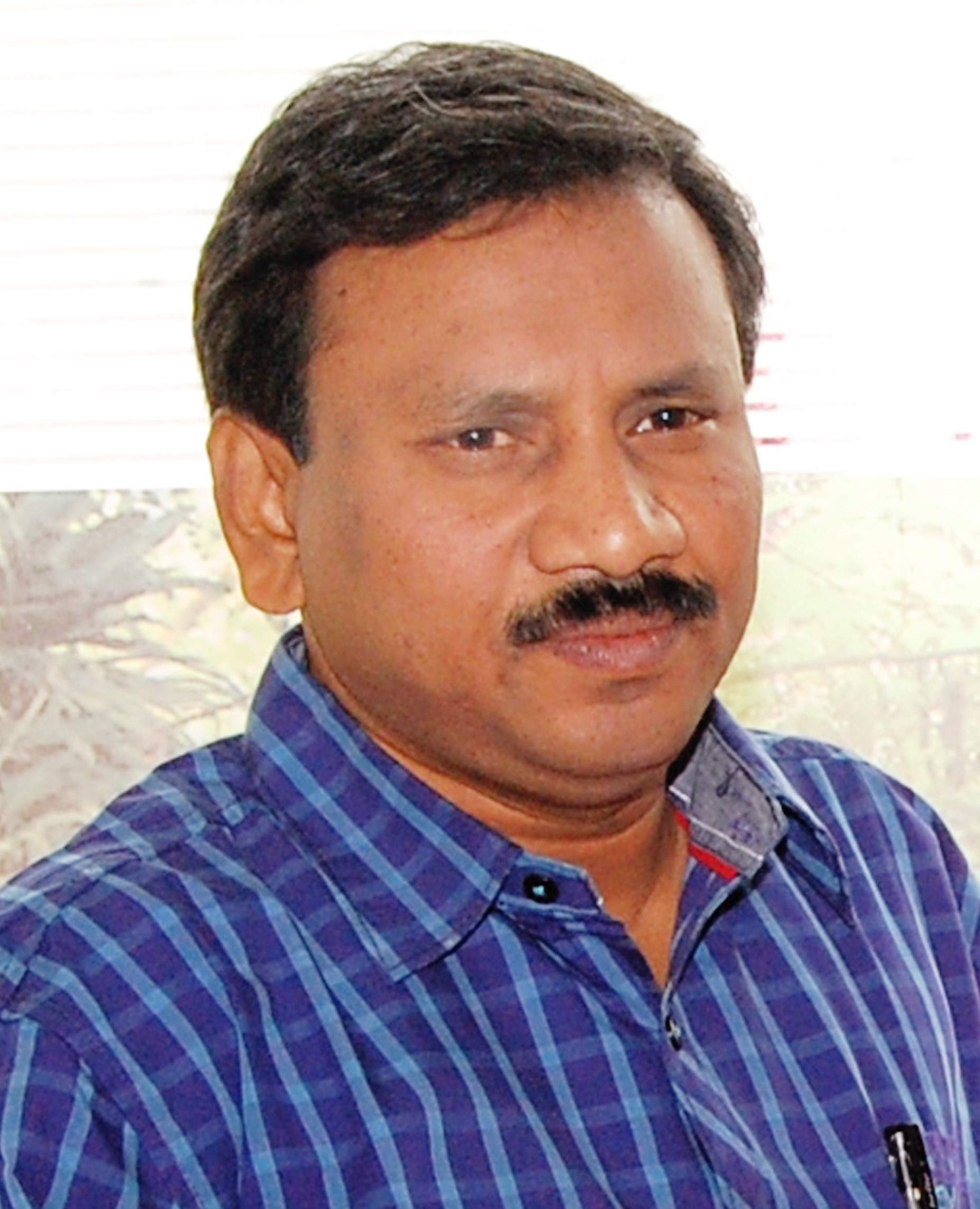
Anand Gantela is a seasoned media professional with nearly three decades of experience across the spectrum of Indian journalism. Having worked extensively in both print and broadcast media, he has held key positions at renowned outlets such as Prajashakthi, Andhra Bhoomi, Mudra, Media India, Siti Cable, Mana Telugu, and Maa TV. From ground-level reporting to managing news bureaus and overseeing bulletin production, Anand has witnessed the evolution of news firsthand. His wealth of experience reflects a deep understanding of the dynamic and ever- evolving landscape of news reporting.
Email: gantela.anand@gmail.com
Mobile: 7893549889