Intimidation, obstruction, and misuse of official machinery
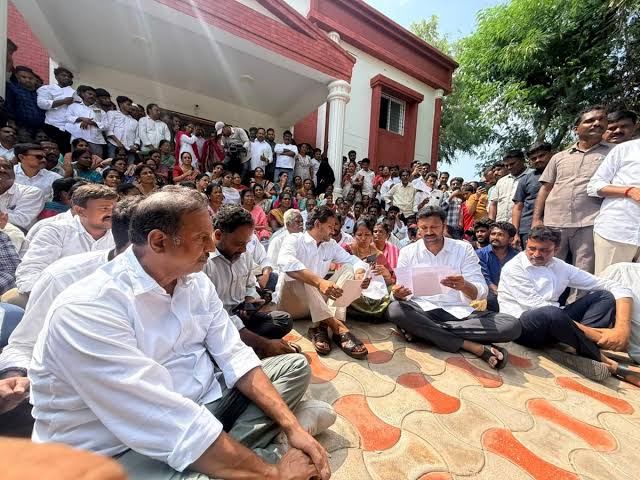
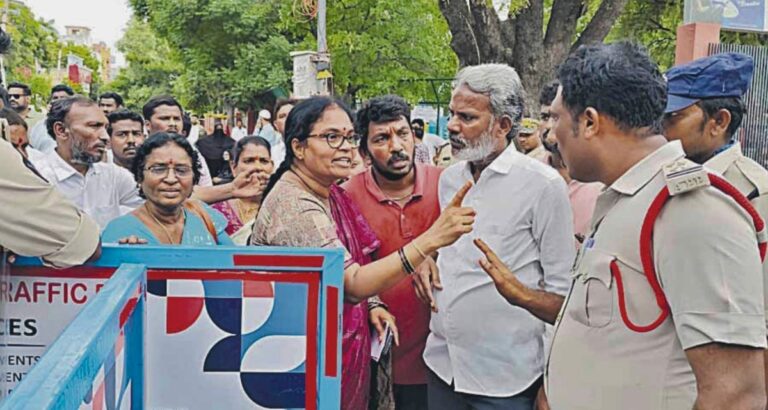
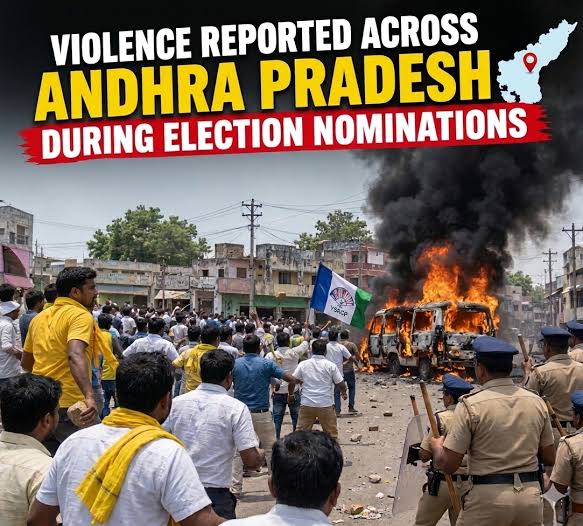
Andhra Pradesh conducted elections to its urban local bodies on Sunday, November 1, 2026. The elections attracted considerable attention because of allegations of intimidation, violence, obstruction of candidates and polling agents, and misuse of official machinery during the nomination process and polling.
The opposition, YSRCP, alleged that:
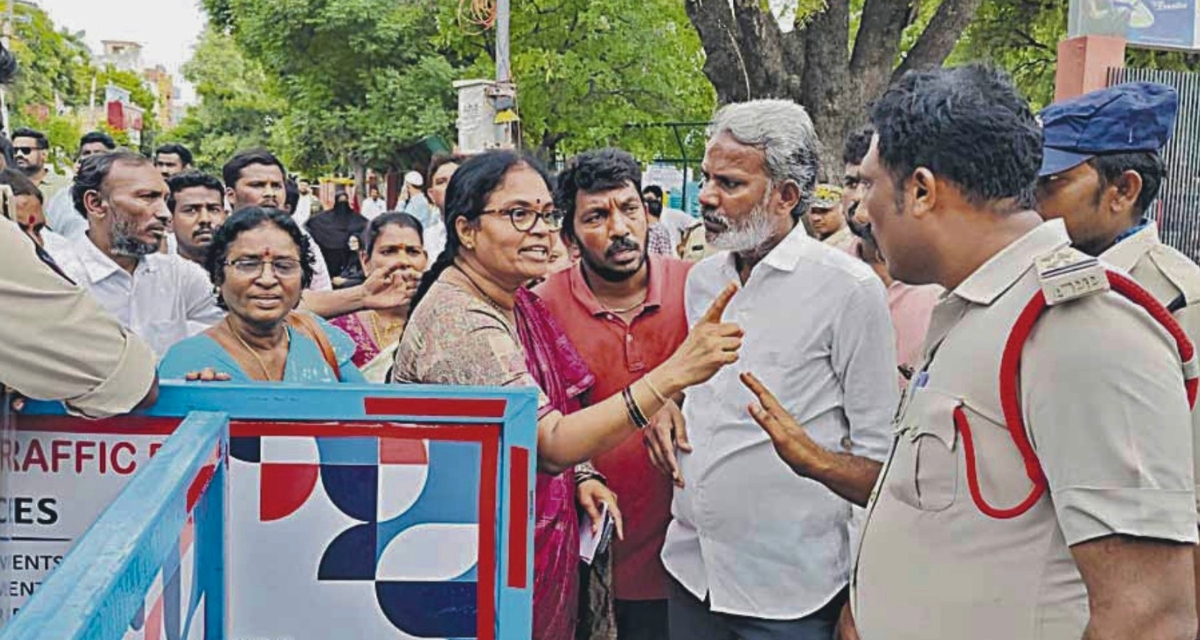
- Polling agents were prevented from entering approximately 70 of the 80 polling booths.
- Their authorisation papers were allegedly torn.
- Voters were obstructed from exercising their franchise.
- There were incidents of bohttps://primepost.news/oth capturing, bogus voting and intimidation.
- Police failed to intervene effectively.
Allegations rejected by TDP
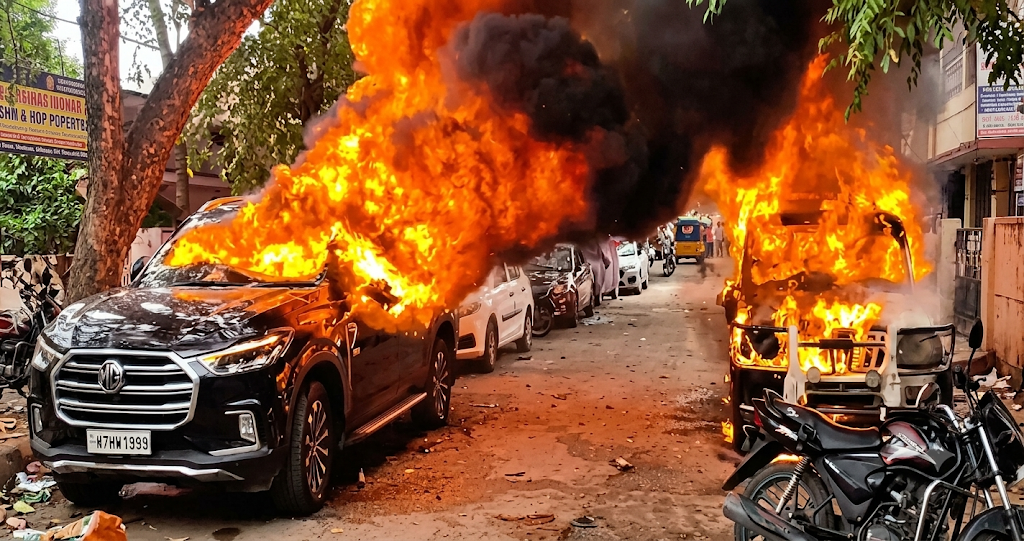
The Opposition party submitted a representation to the Returning Officer demanding cancellation of polling and repolling in all 80 booths. The TDP rejected these allegations and maintained that polling was conducted freely. According to reports from Kadapa district, TDP and YSRCP supporters clashed in Pulivendula. Stones were allegedly hurled between rival groups. The police acknowledged the clashes. Around 1,000 police personnel were deployed in Pulivendula, with CCTV cameras and drones being used for surveillance. Complaints of electoral intimidation and obstruction were also reported.
The allegations included preventing voters from casting their votes, intimidating candidates and interfering with polling agents. These are reported complaints, not findings that all the alleged offences occurred. An important development was the statement by the Inspector General of Police that approximately 40 incidents had been reported and 275 FIRs registered in connection with the elections. That candidates were intimidated, attacked or prevented from filing nominations, the Commission reopened nominations for specified wards in four civic bodies, in Kadapa, Rajampet, Tirupati and Mydupur urban bodies.
This followed Supreme Court directions concerning the nomination process. On October 31, the State Election Commissioner also sought a report from the DGP regarding allegations of police bias, inaction and electoral violence.
Violation of human rights has become an ‘order’ of the ‘law’
Violation of human rights has become an ‘order’ of the ‘law’ in local body elections, especially in Andhra Pradesh. Is it a human rights issue, or a voting process issue, such as filing nominations and the struggle to participate in elections? The Director General of Police reported 31 election-related incidents in 13 districts during nominations, including 16 instances of nomination papers being snatched, torn, or destroyed. A nomination paper is the first ballot. Before a voter can choose, a citizen must be allowed to stand. When that paper is snatched at the gate of a Mandal Parishad office, or torn in front of a Returning Officer, it is not a sheet of paper that is destroyed. It is a constitutional right. It is not possible to rely on rumours. The only sources are press releases, videos, representations, and memorandums. Officially, one can only rely on statements of the Government.
Unanimity is not a crime. Sometimes a party simply has no candidate. But when (unanimous) ekagreevam grows exactly where violence was recorded, it begins to look like ekapaksham, a one-sided affair. Unanimous problems are ended with the beginning of the polls.
Constitutional and legal significance
These developments raise important questions concerning the constitutional guarantee of free and fair elections. The following provisions and principles deserve attention:
- Article 243ZA: Superintendence, direction and control of municipal elections vest in the State Election Commission.
- Article 14: Equality before the law and protection against arbitrary State action.
- Article 19(1)(a): Freedom of political expression.
- Article 21: Protection of life and personal liberty, relevant where intimidation and violence threaten citizens.
- Representation of the People Act and applicable State municipal election laws: Electoral offences, corrupt practices and procedural safeguards must be examined under the provisions actually applicable to these elections.
The Supreme Court has repeatedly emphasised the importance of free and fair elections as an essential feature of democracy. The most important question is not merely which political party secured more votes. It is whether every eligible voter could vote freely, every candidate could contest without intimidation, every authorised polling agent could discharge his or her duty, and the police and election authorities acted impartially.
The allegations of booth obstruction, destruction of authorisation papers, intimidation and police inaction require independent verification. Equally, the allegations made against opposition cadres must be investigated without political discrimination.
To the Apex Court and back
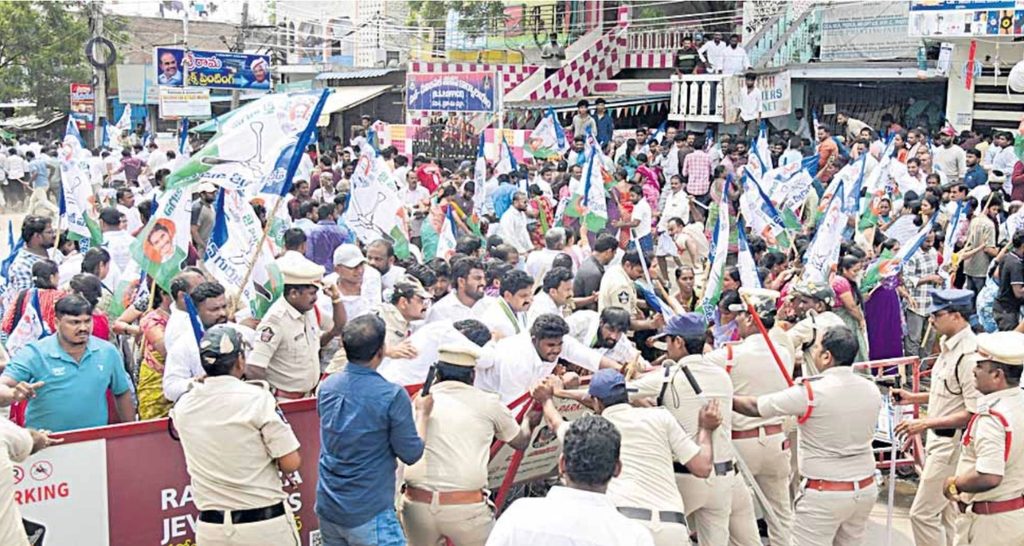
The Supreme Court, by order dated 21.10.2026 in SLP (C) No. 37476/2026, directed the SEC to consider extending the time for nominations wherever candidates could not file them because of law-and-order problems. The order and the SEC’s compliance are recorded in the SEC’s own Notification No. 905/SEC-B1/2026 dated 28.10.2026. The Court observed that free and fair elections are part of the basic structure of the Constitution.
Pursuant to that order, the State Election Commission issued a notification on 22.10.2026 extending the time for filing nominations by two days, to 23.10.2026 and 24.10.2026, in four Urban Local Bodies.
The SEC has relieved police officers of duty for misconduct. Its Press Note dated 28.10.2026 records that the Inspector and a Sub-Inspector of Police at Molakalacheruvu were relieved “for their negligence and partisan attitude in discharging election-related duties”. A Sub-Inspector at Chilakaluripet was also relieved. The complaint concerns only the conduct of public servants of different designations, about violations of the rights to life, liberty, equality and dignity, and negligence in preventing them, which fall within Section 12(a) of the Protection of Human Rights Act, 1993.
The incidents are set out in three categories: (A) conduct of public servants confirmed by official action; (B) incidents recorded by the police or reported with video evidence; and (C) allegations that require independent investigation, prior to polling.
Conduct of public servants confirmed by official action
- Molakalacheruvu (Annamayya district), MPTC/ZPTC nominations. By its Press Note dated 28.10.2026, the SEC recorded that the Inspector of Police, Molakalacheruvu Circle, and the Sub-Inspector of Police, Molakalacheruvu Police Station, were relieved from their duties on 24.10.2026 “for their negligence and partisan attitude in discharging election-related duties” (Annexure A-2; Annexure A-3, item 17). This is an official finding of partisan conduct by public servants during the nomination process.
- Chilakaluripet (Palnadu district), 23.10.2026. A former woman Minister, who was under house arrest, was allegedly pushed to the ground at her residence by the Sub-Inspector of Police, Chilakaluripet Rural, when a ZPTC nominee came to collect the party form required for his nomination. The SEC took a serious view of the incident, ordered disciplinary action, directed that the officer be relieved of election-related and regular duties, and called for a report on disciplinary action from the Superintendent of Police, Palnadu, by 05.11.2026. The use of force by a police officer against a woman in police restraint engages Articles 14 and 21 of the Constitution and Section 74 of the Bharatiya Nyaya Sanhita, 2023 (BNS).
- Pulivendula (Kadapa district), 18.10.2026. On the last day of urban nominations, a woman candidate for the post of Chairperson of Pulivendula Municipality stated that the police restricted her from going to the nomination centre for the entire day, citing law and order. The post was reserved for women. The Superintendent of Police, Kadapa, confirmed clashes and alleged stone-pelting at Pulivendula and the imposition of restrictions under Section 163 of the Bharatiya Nagarik Suraksha Sanhita, 2023. Preventing a woman candidate from reaching the nomination centre until the deadline expired, without any order of detention, defeats the reservation for women under Article 243T and calls for inquiry. Twenty of the forty wards of Pulivendula were later declared won unopposed.
Plight of Women candidates. On the second day of MPTC/ZPTC nominations, women candidates were attacked, and their nomination papers were snatched and torn at several centres despite police deployment. The house of a woman candidate for the post of Mayor of Kadapa, which is also reserved for women, was attacked by unidentified men who allegedly threw knives and glass bottles on the night of 19.10.2026, hours after the scrutiny of nominations. These acts attract Sections 74, 79 and 351 of the BNS; police inaction in the face of such acts is negligence in preventing violations. A video that circulated widely shows a sitting legislator from Tirupati district, speaking at a private marriage hall in Kaluvoya, urging his cadres to “break the legs” of persons coming to file nominations. The complainant is not aware of any FIR having been registered and requests the Commission to ascertain this and to recommend registration and investigation if none has been registered.
A 1975 Judgment
The Supreme Court said long back, in Indira Nehru Gandhi v. Raj Narain (1975), that free and fair elections are part of the basic structure of our Constitution. Recently, on October 21, 2026, the Supreme Court said it again, this time in Andhra Pradesh, holding that the right to participate in an election by filing a nomination is a facet of that basic structure, and proper, fair and free polling process including counting votes.
In Kishansing Tomar v. Municipal Corporation of Ahmedabad (2006), a Constitution Bench held that State Election Commissions must be independent of State governments. In State of Goa v. Fouziya Imtiaz Shaikh (2021), the Supreme Court said that independence cannot be compromised. That independence must be real, not ornamental.
Honesty demands one more admission. This is not new. In 2020–21, under the previous government, the then State Election Commissioner told the High Court that 126 ZPTC and 2,363 MPTC unanimous results were extraordinary compared with the past, and cited complaints of threats and temptations. Several of the same towns reported many complaints or videos in the media. The roles have reversed. The method has not.
Human rights violated in State Elections
Articles 243-O and 243ZG of the Constitution bar courts from interfering in local body elections except through an election petition. On October 27, the Supreme Court closed the case and said that disputed questions of fact belong in election petitions. An election petition can unseat a winner. It cannot discipline a Sub-Inspector who stood by while papers were torn. It cannot compensate an injured constable. It cannot ask why no FIR was registered. That is the space the law gives to the NHRC. Section 12(a) of the Act empowers the Commission to inquire into a violation of human rights, or negligence in preventing it, by a public servant. Section 2(1)(d) defines human rights as the rights relating to life, liberty, equality and dignity guaranteed by the Constitution. A woman candidate kept indoors until the deadline expires has lost her liberty. A torn paper denies equality before the law under Article 14. An obstructed woman candidate defeats the reservation that Articles 243D and 243T promise.
The citizens, an opposition party, or someone on behalf of voters, have been careful about what they did not ask. Under the NHRC, one cannot ask to set aside a single election. Whereas the Human Rights Commission can call for reports from the Chief Secretary and the DGP under Section 17; order a spot inquiry by its own Investigation Division under Section 14; see that FIRs are registered under the Bharatiya Nyaya Sanhita and investigated by officers from outside the districts concerned; have CCTV and video footage of nomination centres preserved; secure protection for candidates, especially women, during polling on November 1 and November 5 and during counting; and, after inquiry, recommend disciplinary action and compensation under Section 18.
Section 12 allows a complaint by a victim “or any person on his behalf”. Human rights do not carry State passports. Many victims fear reprisal and will not come forward. Somebody has to speak for them, and the Commission can act even on its own.
The Constitution and the Human Rights
“Human rights” under Section 2(1)(d) of the Protection of Human Rights Act, 1993 means the rights relating to life, liberty, equality and dignity guaranteed by the Constitution or embodied in the International Covenants and enforceable by courts in India. The facts above disclose violations of:
- Article 21: the right to life and personal liberty, including freedom from unlawful restraint and the right to live with dignity;
- Article 14: equality before law and equal protection of the laws, violated by partisan policing, as the SEC itself has found;
- Article 19(1)(a): freedom of expression. In PUCL v. Union of India (2013) 10 SCC 1, the Supreme Court held that voting is an expression of choice; that choice is denied to voters where candidates are prevented from contesting;
- Articles 243D and 243T: the constitutional reservation for women in Panchayats and Municipalities, defeated where women candidates are obstructed;
- Free and fair elections as part of the basic structure: Indira Nehru Gandhi v. Raj Narain (1975) and Kihoto Hollohan v. Zachillhu (1992);
- Article 25 of the International Covenant on Civil and Political Rights: the right of every citizen to be elected at genuine periodic elections without unreasonable restrictions. India is a party to the Covenant. Article 7 of CEDAW likewise secures women’s right to stand for election.
What must change
Every nomination centre must be under video recording, and the footage must be preserved by law. Candidates must have the right to file at the Collectorate or online when the local office becomes a battlefield. Wherever unanimous results cross a reasonable threshold, or papers are torn, a retired judge must find the facts before results are declared. That is what happened in Punjab, where the Supreme Court set aside elections in 50 municipal wards in October 2026 after a commission found that candidates had been obstructed. Gram Swaraj was meant to take democracy to the doorstep of the citizen. A democracy that cannot protect a woman walking to a Mandal office with a nomination paper in her hand cannot claim to protect anything larger.
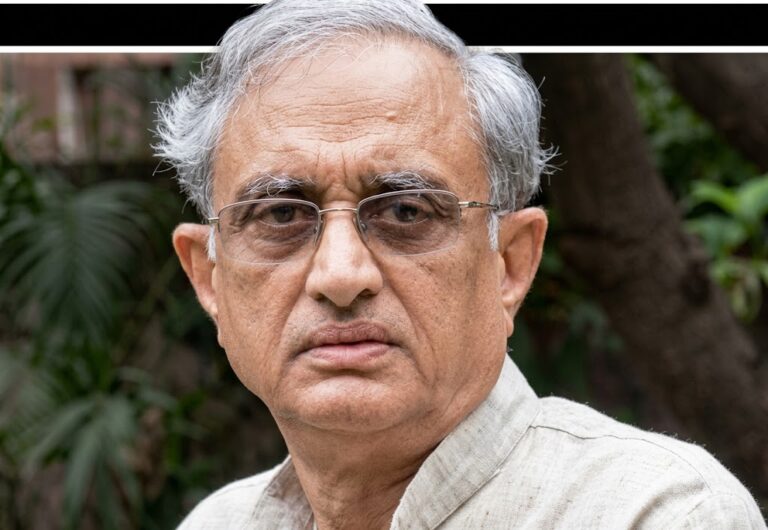
Law professor and eminent columnist
Madabhushi Sridhar Acharyulu, author of 63 books (in Telugu and English), Formerly Central Information Commissioner, Professor of NALSAR University, Bennett University (near Delhi), presently Professor and Advisor, Mahindra University, Hyderabad. Studied in Masoom Ali High School, AVV Junior College, CKM College, and Kakatiya University in Warangal. Madabhushi did LL.M., MCJ., and the highest law degree, LL.D. He won 4 Gold Medals at Kakatiya University and Osmania University.
Email: cicsridhar@gmail.com
Mobile: 8447651505