From Hunger to Ānanda — The Moral Test of Civilisation
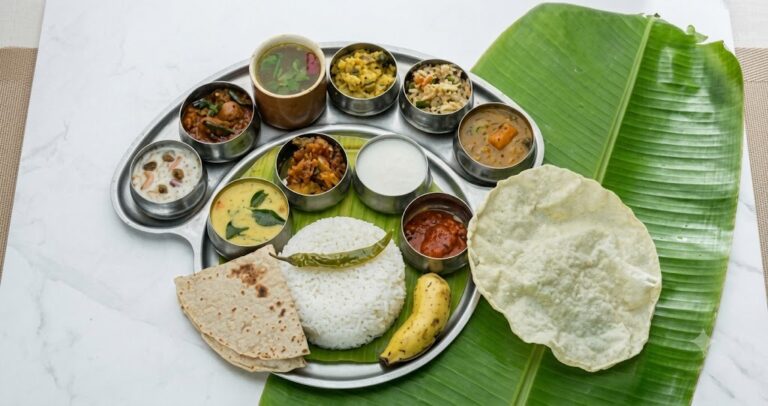
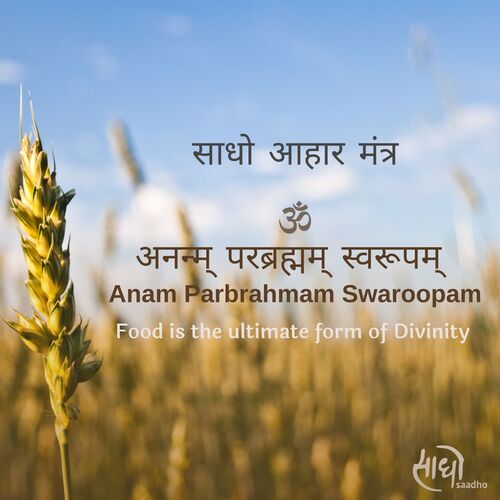
Before man knew the name of God, he knew hunger. Before theology and metaphysics, there was the elemental demand of the body: food. The cry of a hungry child may well be humanity’s first prayer; the first morsel offered by a mother, its earliest sacrament. It is against this primordial truth that the Indian civilisational insight “Annam Parabrahma Swarupam” must be understood—not merely as the sanctification of food, but as a recognition that the journey towards the highest cannot begin by neglecting the material foundation of life.
The Taittirīya Upaniṣad, through Bhṛgu’s enquiry into Brahman, gives this insight its philosophical depth. Asked to discover that from which beings arise, by which they live and into which they return, Bhṛgu first realises: “Annam Brahmeti Vyajānāt”—he realised Food as Brahman. Yet the enquiry proceeds beyond Anna, through Prāṇa, Manas and Vijñāna, towards Ānanda. Food is therefore the first gateway of the enquiry, not its exhaustive conclusion. The movement is from nourishment to life, from life to consciousness, from consciousness to knowledge and from knowledge to bliss. (vedicheritage.gov.in)
The Upanishad then returns this lofty enquiry to practical human conduct: “Annam na nindyāt”—let food not be despised; and “Annam bahu kurvīta”—let food be made abundant. Food is to be honoured, produced, protected and shared. Thus metaphysics becomes ethics: a civilisation that reveres the sacred while permitting the hungry to remain invisible has understood ritual more readily than Dharma. (upanishads.org.in)
Every meal is a miniature history of civilisation. Behind a single grain stand earth, water, sunlight, season, farmer, labourer, transport, markets and countless unseen hands. No person, however prosperous, produces his food entirely by himself. Yet the very hands that nourish society may themselves remain insecure. The farmer may produce abundance without possessing security; the labourer may build prosperity without sharing adequately in it.
Nature makes hunger universal; society makes access unequal.
Hunger is universal; the banquet is hierarchical.
This contradiction carries the question from agriculture into economics and politics. Surplus becomes property; property becomes wealth; wealth becomes power. Food, originally the foundation of life, thus becomes entangled with ownership, privilege and authority. Modern civilisation has vastly increased its capacity to produce food, yet abundance beside deprivation remains a moral contradiction. A full granary beside an empty stomach is not merely an economic problem; it is a question of justice.
The measure of prosperity, therefore, cannot be production alone. It must also be access, dignity and security. The question is not simply how much wealth a society creates, but whether that wealth enables its weakest members to live without the humiliation of hunger.
Religion cannot evade this test. Across traditions, annadāna, compassion, langar, zakāt, ṣadaqah, charity and hospitality express a common moral intuition: the hungry human being cannot be made invisible by doctrine. Yet history has witnessed the tragic paradox of men fighting in the name of God while forgetting man. The problem is not faith itself, but the human tendency to appropriate the sacred for the purposes of ego, identity and power.
The same danger appears in political culture. When the image of a mortal leader becomes larger than the ideal or the sacred symbol invoked in his name, public service can degenerate into personality worship. The Divine is invoked; the human ego is enlarged. The medium may change—from stone inscriptions to giant political flexis—but the ancient human temptation remains: to make oneself the centre.
Here lies the distinction between intelligence and wisdom. Intelligence discovers means; wisdom determines ends. Knowledge can multiply power, but only wisdom can restrain its misuse. A civilisation may possess extraordinary technology, wealth and military capability and yet remain ethically immature if knowledge is divorced from compassion and power from responsibility.
War exposes this failure with particular cruelty. Fields are destroyed, supply systems collapse and food becomes scarce. The victorious commander may ask, “Who has won?” The hungry child asks the more fundamental question: “Where is my food?” One question belongs to power; the other belongs to life.
The true measure of civilisation must therefore be simpler than its towers, technology or wealth: Can it nourish the vulnerable? Can it protect the dignity of those who sustain its prosperity? Can abundance be translated into access? Can knowledge become wisdom and compassion become justice?
The Upanishadic journey from Anna to Ānanda offers the essential direction. Food sustains life; life awakens consciousness; consciousness seeks knowledge; knowledge seeks truth. But truth, if genuinely realised, must become compassion, and compassion must become justice. Justice must finally reach the human being whose immediate need is nourishment.
Thus the inward journey of the seeker must have an outward consequence for society.
Anna must sustain Prāṇa;
Prāṇa must awaken consciousness;
knowledge must discern truth;
truth must flower into compassion;
and compassion must become justice.
The ultimate test is therefore not how eloquently we speak of God, how magnificently we build temples, how much wealth we accumulate or how powerful our institutions become. A hungry human being standing before civilisation asks only:
“Will you give me food?”
That question tests religion, wealth, politics, knowledge and culture alike.
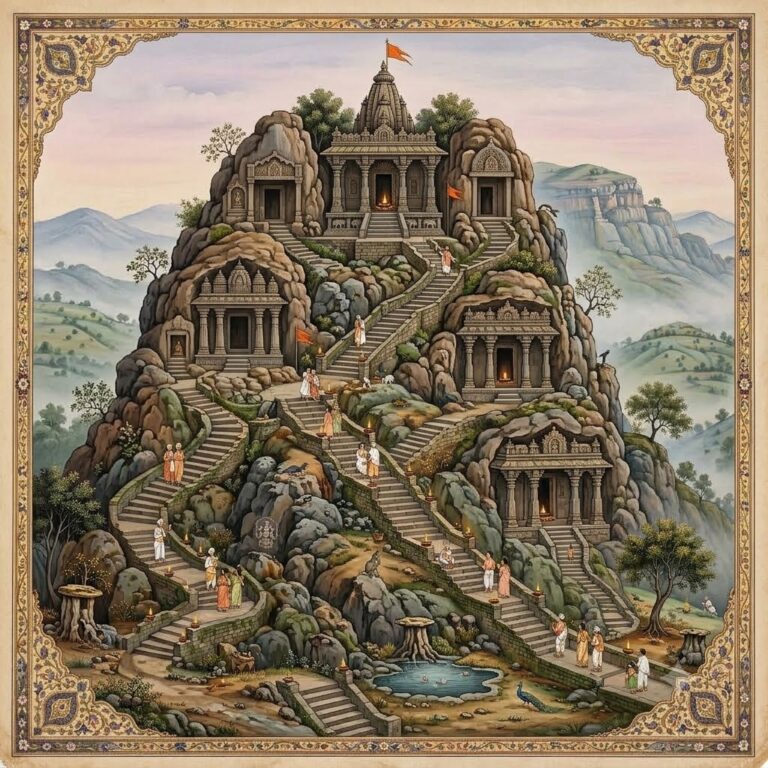
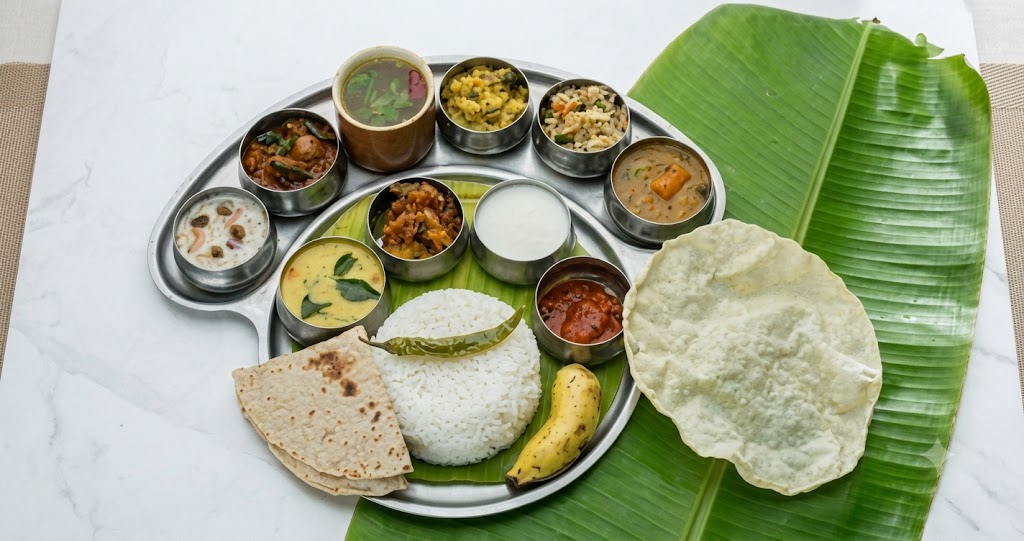
A civilisation may reach the heavens with its temples, towers and technology; but if it cannot place a vessel of food before a hungry human being, its material splendour remains morally incomplete.
The deepest meaning of “Annam Parabrahma Swarupam” is therefore not merely that food is sacred. It is that life is sacred, nourishment is a responsibility, abundance creates an obligation, and spiritual knowledge must ultimately reveal itself in human compassion and justice.
To fold one’s hands before God may indeed be worship.
But to extend one’s hands towards the hungry human being is what gives that worship its truth.
And therein lies the unfinished journey of civilisation—from Anna to Prāṇa, from Prāṇa to Vijñāna, from Vijñāna to Ānanda; and from hunger, through compassion and justice, towards the realisation of our common humanity.
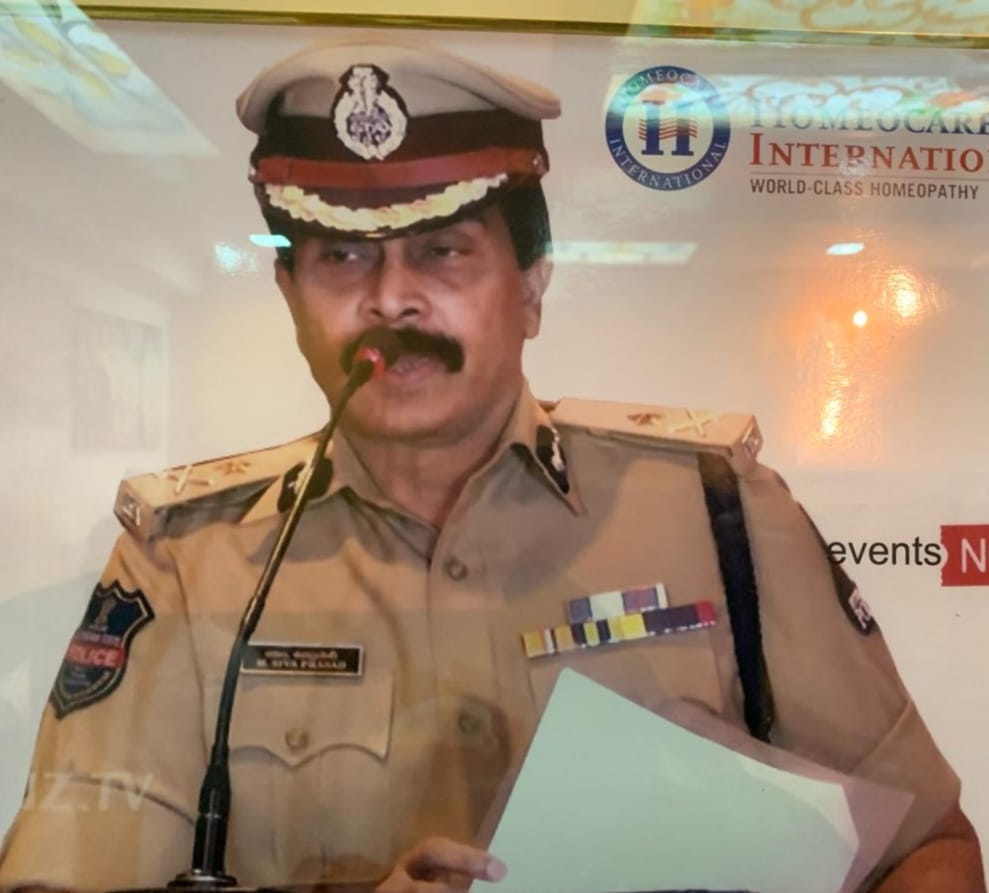
M. Shiva Prasad, IPS (Rtd.) is a dedicated law enforcement professional who served the combined Andhra Pradesh cadre before opting for the Telangana cadre. Though a native of Andhra Pradesh, he considers himself a true Hyderabadi with an abiding love for the Telugu people. Driven by sincerity, fearlessness, and a lifelong fight against inequality and injustice, his ultimate strengths remain his goodwill and deep affection for the public and the police force. Today, he continues his mission by writing snippets and articles true to his conscience.
Email: Shivareach@yahoo.com
Mobile: 98480 38774