- Intra-State Delimitation, Without Inter-State Readjustment
Supreme Court Advocate & MP Menaka Guruswamy said:“When we discuss the health of the Indian Constitution in contemporary times, polite diplomatic language fails to capture the gravity of the moment. If you ask me plainly whether our Constitution is endangered, my answer is direct: you bet it is”.
Constitutions do not deteriorate solely through sudden, dramatic disruptions. They unravel when the deliberative habits, institutional checks, and foundational courtesies that sustain everyday democratic life are systematically abandoned. A constitution is endangered when parliamentary traditions of rigorous debate are silenced; when foundational institutions, including our judiciary, become increasingly politicized; and when citizens and political adversaries lose the basic democratic capacity to sit in the same room, disagree sharply, and still engage in a reasoned, productive exchange, she explained.
Among all our founding guarantees, the single constitutional principle that Indian lawyers, legal scholars, and students are currently in the gravest danger of taking for granted, and which has been profoundly sidelined, is fraternity. We have forgotten that we constitute one single community. Liberty and equality cannot survive in an environment where the bond of common fraternity has been broken.
The Imperative of Opposition and Principled Politics
She said: In conversations across the country, I am frequently confronted with the critique of partisan politics—particularly my choice to associate with an opposition party like the All India Trinamool Congress—alongside claims that both sides of the aisle engage in similar parliamentary transgressions, stifle discussions, or perpetuate misrule.
To those who raise this critique, I say: you are entirely entitled to your opinion, and I will vigorously safeguard your right to hold and voice it. However, we must be intellectually honest about the distinctions that define this political moment. There is a fundamental, non-negotiable difference between political forces that uphold secularism and those that reject it; between those who speak for a single community alone and those who endeavor to speak for all Indians; between those who actively stifle a free press and those who do not.
Furthermore, the assertion that political resistance or state leadership in places like West Bengal has achieved nothing ignores the ground realities of political contestation. There is no perfect political party. What exists in a constitutional democracy is a choice: whether to stand aside or to stand with those who actively oppose when authoritarians govern. If you believe that secularism, human dignity, substantive equality, and fraternity are non-negotiable constitutional values, then today you have an ethical obligation to be part of the opposition in India.
From Transformative Promises to Mere Self-Defense
When young advocates ask for literature to guide their legal journey, I point them back to Jawaharlal Nehru’s The Discovery of India. Written while Nehru was incarcerated—the story goes that his jailers rationed his paper and ink, and the text draws to a close simply because he ran out of ink—the work culminates in an impassioned defense of substantive equality. It remains an essential reminder of our founding ambition.
Historically, the Indian constitutional project was conceived as transformative. Yet today, we have drifted perilously far from transforming lives; the Constitution has instead been reduced to a defensive shield that citizens desperately invoke just to protect themselves against state excess.
Transformative constitutionalism cannot be reduced to civil and political rights alone. While civil liberties are vital, the beating heart of any genuine transformation lies in socio-economic rights. Consider public education, guaranteed as a fundamental right. When government policy systematically abdicates public education to privatized institutions, leaving ordinary citizens entirely to their own devices, no life is being transformed. In a country marked by surging, structural economic inequality, where does that leave the constitutional promise that every Indian can realize their full human potential?
Simultaneously, the mechanics of judicial appointments have come under critical scrutiny. The collegium system—where sitting judges select and appoint their own colleagues—finds no basis in the text of the Constitution. It is an arrangement created entirely by judicial precedent across three landmark cases. It remains unique to India, and its insularity raises pressing questions about institutional accountability and representative justice.
On an earlier occasion, she gave a lecture: “Menaka Guruswamy – India: My Constitution’s Country” at the ‘Wissenschaftskolleg zu Berlin – Institute for Advanced Study’. Recently, on 29.8.2026, delivering the S. Jaipal Reddy Memorial Foundation lecture on ‘Indian Constitution and Its Protection’ in Hyderabad, she discussed the interpretation of constitutional protections and state power in modern India. She said Indian families have long been taught a simple formula for upward mobility: study hard, get a degree, get a job, build a better life, etc.
The Decay of Deliberation in Parliament
India’s parliamentary democracy is organized around political parties. But after spending months within the walls of Parliament, the sharpest contrast I have observed is between the deliberative discipline of a courtroom and the current functioning of the legislature.
In an adversarial courtroom, opposing counsel make their cases, every party is heard, and the judge adjudicates. Parliament, by contrast, has largely ceased to be a venue for genuine conversation. The ruling party routinely bypasses meaningful debate, pushing major legislative changes through voice votes.
This erosion extends directly into parliamentary committees:
- The Suppression of Legislative Dissent: As a member of a committee examining corporate law amendment bills—technical, commercial legislation where I have direct professional expertise—I discovered that even exercising the basic statutory right to dissent requires an exhausting battle. Because the opposition is massively outnumbered, committee majorities fight to suppress dissent notes from being recorded in the official reports submitted to the House.
- The Erasure of Factual Records: During my interventions, when I placed empirical, non-partisan data on record regarding judicial representation—pointing out that Scheduled Castes constitute approximately 2.3%, OBCs about 10%, and women roughly 10% of judicial appointments, meaning nearly 75% of the bench remains dominated by traditional groups—the Speaker ruled that these facts could not remain on the official record. When I observed that the government appears intent on appointing only those who subscribe to its ideological worldview, that observation was expunged as well.
- Executive Unaccountability: Ministers routinely avoid legislative scrutiny. When key issues regarding state crackdowns on civic protests are raised, senior ministers, including the Union Home Minister, can absent themselves from the floor of the House for two consecutive weeks without accountability. Asking questions has been treated as an impermissible transgression, often accompanied by the looming threat of retaliatory investigations by central enforcement agencies like the ED.
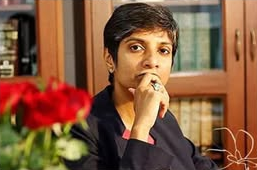
Guruswamy explained that India’s foundational social contract is failing on two fronts: economic security for youth and federal representation for southern states, referring to the Delimitations. Guruswamy linked widespread protests (in Delhi, Bihar, and Jharkhand) over exam paper leaks (such as NEET) and an unpredictable job market to a breach of the foundational pledge Jawaharlal Nehru articulated in 1947. For middle- and lower-middle-class families, failed entrance exams represent not just policy oversights, but catastrophic losses of personal capital and lost years.
Distrust: A job market
She highlighted the compounding crisis of a stagnant job market, and argued that failing to safeguard ‘meritocracy’ and secure ‘employment squanders India’s demographic dividend’ and ‘breaks foundational constitutional promises to the youth’. Guruswamy frames competitive entrance tests and constitutional obligations tied to equal opportunity and social justice. By contrasting rigid household obligations (“The EMI arrives on time”) with systemic failure (“the job may not arrive on time”), she pinpoints how examination compromises break the implicit social pact that hard work guarantees socioeconomic advancement.
Vulnerable Youth
Youth is now very vulnerable. This serious problem stems from the government and its governance within the socio-political landscape. On the other hand, constitutional federalism issues are affecting all human beings in India. It’s a warning to democracy.
Centralizing legislative powers through proposed delimitation exercises poses dangers. Merely increasing Lok Sabha representation disproportionately based on population risks penalizing southern states for effective population control, potentially creating severe political imbalance and eroding trust between the Union and the States.
850 MPs in UP and 26 of Telangana
Expanding the Lok Sabha to 850 seats based strictly on population without safeguards disproportionately concentrates political power in heavily populated northern states (e.g., Uttar Pradesh reaching an estimated 120 seats), while marginalizing states like Telangana (at 26 seats). Strictly adhering to population-based representation punishes southern states that successfully implemented national population control and socio-economic development policies over recent decades.
Republican Equality
State Reorganization (Splitting Large States) is needed. Dividing massive states like Uttar Pradesh, Bihar, and Maharashtra into smaller administrative units. This mitigates the risk of a single state or regional bloc dominating national coalition arithmetic.
Understand the deepening of the 73rd/74th Constitutional Amendments. Devolving fiscal and legislative powers from the Union List to the State and Concurrent Lists, ensuring that a more centralized Lok Sabha has reduced authority over regional socioeconomic policies.
The tension in India’s delimitation debate stems from a clash between two core constitutional principles: republican equality (one citizen, one vote, one value under Article 81) and cooperative federalism (preventing demographic marginalization of states that succeeded in national population control policies).
Senior advocate and Member of Parliament Dr. Menaka Guruswamy has outlined a two-pronged critique of India’s current governance and social issues, focusing on youth vulnerability and constitutional federalism issues. The broader philosophy of the Constitution needs to be explored within democratic frameworks. Her analysis of the delimitation debate highlights an acute constitutional tension. Guruswamy argues that expanding seat tallies without federal balancing mechanisms risks institutionalizing a structural geographic bias. It allows national coalitions to ignore regional concerns outside a few high-population northern states.
Rajya Sabha: On the US Senate or Australian Senate, granting equal seat quotas
Under Article 80, the Rajya Sabha is allocated seats based roughly on population, unlike classical federations where the upper chamber balances regional power. Look at the possibility of equal or capped State Representation. Model the Rajya Sabha on the US Senate or Australian Senate, granting equal or tiered seat quotas to all states regardless of population. If the Lok Sabha shifts toward strictly demographic representation, a reformed Rajya Sabha acts as an institutional veto for smaller and southern states.
Another possibility is strengthening Upper House Veto Powers. Eliminate or constrain the joint session mechanism under Article 108. When the Lok Sabha expands significantly (e.g., to ~850 seats) while the Rajya Sabha stays at 250, the numerical dominance of the lower house in joint sittings renders the upper chamber ineffective.
We need to restore Domicile Requirements. Mandating that Rajya Sabha members must be genuine residents of the state they represent to ensure authentic regional representation rather than central party nominations. This table explains the factors and the purpose. Instead of allocating parliamentary seats strictly on raw population ($P$), India could adopt a multi-variable formula analogous to the Finance Commission’s devolution criteria:
- The purpose is to reward states that successfully lowered Total Fertility Rates (TFR) below the replacement level ($2.1$), offsetting population losses.
- Factoring in GSDP share, tax generation, and HDI to balance democratic headcounts with governance performance.
- Degressive Proportionality (Cambridge Compromise) is used in the European Parliament: larger populations receive more seats in absolute numbers, but smaller populations receive higher per-capita representation (a minimum seat floor + non-linear population scaling).
Redistricting within states only is fine. Allow periodic boundary adjustments within each state based on the latest census data to correct internal rural-to-urban population shifts, while freezing the inter-state seat quotas. Expanding State Legislative Assemblies should not destabilize. Expand state assemblies (Vidhan Sabhas) under Article 170 to improve representative-to-citizen ratios at the local level without destabilizing the national parliamentary balance.
- Guarantee that no state sees a reduction in its absolute number of Lok Sabha seats.
- While high-growth northern states gain seats to bridge massive constituent-to-MP ratios (which exceed 2.5–3 million per MP), southern and eastern states receive proportional compensatory seats to ensure their aggregate national vote share does not drop below a critical threshold (e.g., maintaining a minimum 30–35% share for southern states).
Entering the Courtroom: Why Representation Matters
Young Law students suggested to: For law students facing the curtailment of academic freedom, institutional intimidation, and the slapping of First Information Reports (FIRs), realities currently pressing upon campuses like Osmania University, the courtroom remains a critical battleground.
My own transition from corporate legal practice in the United States to active litigation in Indian courtrooms was driven by a simple realization: courtrooms are the most exhilarating, vital spaces in public life. If the legal process excites you, enter the bar. The intellectual, personal, and societal returns of a life dedicated to litigation are unparalleled.
However, our courtrooms cannot remain monolithic. They must evolve into truly diverse, representative institutions. We urgently need more women, religious minorities, Dalit senior advocates, and OBC senior advocates leading arguments at the bar. We need a higher bench that includes Scheduled Caste judges, Scheduled Tribe judges, women judges, and openly gay judges. The Indian judiciary must mirror the vast, diverse population of the republic it is sworn to serve.
When the Streets Awaken the Republic
When parliamentary doors are closed to debate, when executive oversight is nullified, and when political parties fail to do enough, the vital energy of constitutional defense shifts outward.
The widespread public protests led by India’s youth demonstrated precisely how constitutional values are defended. The youth took the conversation out of insular party backrooms and onto the streets. Through incisive poetry, courageous satire, evocative slogans, and resilience, young citizens demonstrated what a healthy democracy actually looks like. Comprising nearly a third of the nation’s population, they proved that democratic consciousness is not dead.
Most importantly, these movements forced the national discourse away from divisive, manufactured non-issues—what a citizen sings, what they wear, what they eat, or whom they choose to love—and anchored it squarely upon the real questions that govern human survival: jobs, quality education, examination transparency, safety, and dignified livelihoods.
When institutional deliberation breaks down, it is this civic courage—the refusal of the young to surrender the promise of substantive justice—that preserves the life of the Constitution.
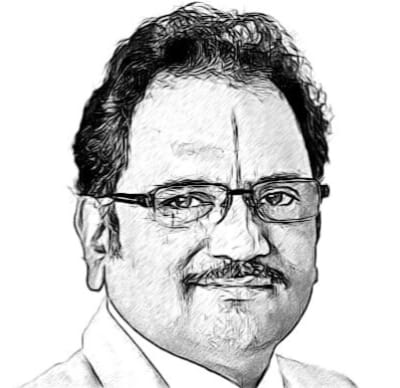
Law professor and eminent columnist
Madabhushi Sridhar Acharyulu, author of 63 books (in Telugu and English), Formerly Central Information Commissioner, Professor of NALSAR University, Bennett University (near Delhi), presently Professor and Advisor, Mahindra University, Hyderabad. Studied in Masoom Ali High School, AVV Junior College, CKM College, and Kakatiya University in Warangal. Madabhushi did LL.M., MCJ., and the highest law degree, LL.D. He won 4 Gold Medals at Kakatiya University and Osmania University.
Email: cicsridhar@gmail.com
Mobile: 8447651505