Broader Policy Impact and Future Exam Security
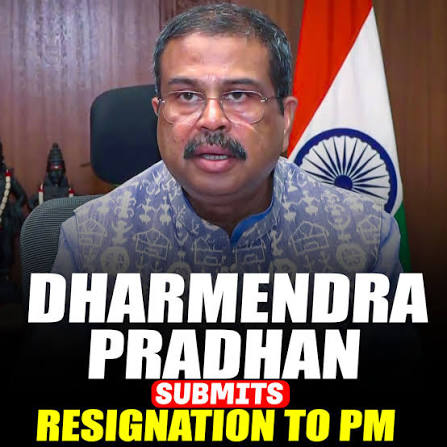
In a dramatic political development, Union Education Minister Dharmendra Pradhan tendered his resignation from the Council of Ministers on July 25, 2026. The resignation comes after weeks of intense, nationwide student agitation and growing political outrage surrounding widespread paper leaks and administrative irregularities in the NEET-UG 2026 examination. He tendered his resignation before 3.0 talks between the Union Ministers and CJP represebntatives on Saturday.
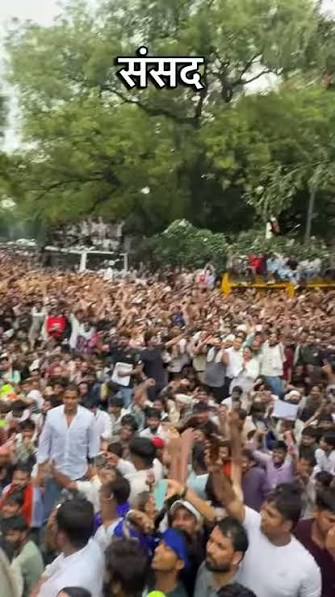
The move represents a major concession by the central government, which had faced relentless public pressure, hunger strikes, and demonstrations led by student groups and youth organizations at New Delhi’s Jantar Mantar.
Rising Pressure and Public Outrage
The crisis erupted following serious allegations of systemic flaws, compromised paper security, and administrative mismanagement during the NEET-UG exam held on May 3, 2026. Although the government initiated a Central Bureau of Investigation (CBI) probe, dismissed several officials from the National Testing Agency (NTA), and re-conducted affected tests, public dissatisfaction continued to grow. For nearly a month, thousands of students, parents, and youth activists camped at Jantar Mantar, demanding structural reforms within national testing bodies, fair compensation for affected candidates, and Pradhan’s immediate resignation as a mark of ministerial accountability.
In the wake of Dharmendra Pradhan’s exit, the Union government is moving rapidly to restore public trust in the national examination framework before upcoming academic sessions. The administration is set to table stringent anti-paper leak legislation in Parliament, proposing the establishment of Special Fast-Track Courts and a dedicated Special Task Force (STF) to investigate and penalize examination malpractices severely. Furthermore, the Ministry of Education has reaffirmed its commitment to transitioning high-stakes tests—including NEET-UG—to a fully Computer-Based Test (CBT) model starting in 2027, alongside implementing comprehensive administrative restructuring within the National Testing Agency (NTA).
Pradhan’s Statement and Rationale
Announcing his decision on social media platform X and in an open letter addressed to the youth of India, Pradhan stated that he submitted his resignation to Prime Minister Narendra Modi to prevent further division and protect the interests of students. “To ensure that anti-national elements do not benefit from the situation at Jantar Mantar and across the country, that national unity remains intact, and that our young students do not get entangled in legal complexities, I have tendered my resignation,” Pradhan wrote in his letter.
Pradhan emphasized his four-decade commitment to educational reform, defending the government’s prompt action following the initial leaks while taking moral responsibility for the overall crisis. He expressed hope that stepping aside would allow students to focus on their academic pursuits without being drawn into prolonged political disputes.
Political Impact and Next Steps
Pradhan’s exit marks one of the most high-profile ministerial resignations in recent years. Protesting student bodies hailed the step as a significant triumph for democratic resistance, though many groups affirmed that demonstrations would persist until comprehensive institutional overhauls of the NTA are fully implemented. The central government is expected to announce interim arrangements for the Ministry of Education shortly, with key focus directed toward rebuilding trust in public examination systems and finalizing transition plans for computer-based testing models in future academic years.

With a journalistic long journey, we bring you https://primepost.news, a dynamic platform committed to unraveling the intricate tapestry of Indian politics, particularly delving deep into the heart of Telangana and Andhra Pradesh. Our blog is not just a source of news; it’s a reservoir of insights, analysis, and thought-provoking reviews.