Reporters Face Heat from Angry Public
People in general are utterly unhappy with the so-called mainstream media in India, the world’s largest democracy. In public speech and public writing, the mainstream media, referred to as Godi Media, is heckled. The reason being the Godi Media is out and out pro-Modi and anti-Opposition.
Prominent journalist Ravish Kumar, winner of Magsaysay Award, considered as Asia’s Nobel Prize, had coined the word Godi Media which sounds like Modi media. Ravish Kumar was editor of Hindi NDTV when Adani purchased it. He had quit the channel the moment Adani had taken the channel over from Prannoy Roy. Ravish has established his own YouTube channels which are doing excellently. His brainchild Godi Media has become very popular and true to his imagination most of the mainstream media channels owned by business tycoons invariably flatter Modi and his cohorts. The anchors and other senior journalists shamelessly indulge in the pro-Modi hype. They just don’t care that the people of the country are laughing at them calling them as sold-out performers.
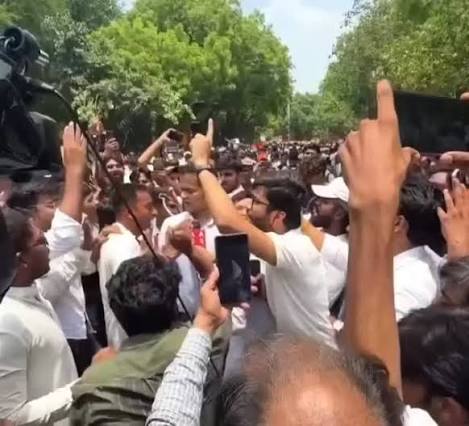
But for the first time, a representative of Times Now, part of Godi Media, Dev Kotak, who went to Jantar Mantar in Delhi to cover the protest movement on July 20, was beaten up by some of the youth. However unhappy were some people with wholesome praise of Modi government indulged in by some of the senior media personnel working for Godi Media, they were heckled and berated but never beaten up.
Media Outlets Confront Rising Public Backlash
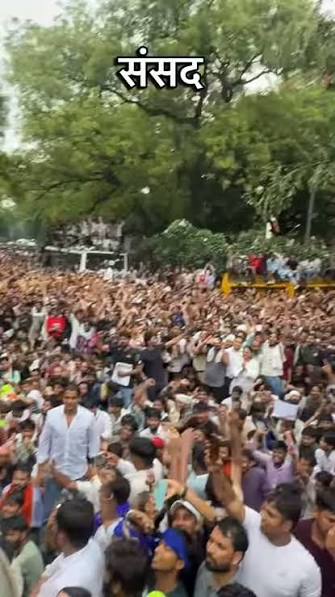
The physical attack on Kotak was unusual but through the protests, which gained momentum through the last week, people have abused the crews from almost all of India’s mainstream television channels calling them pro-government and sold out.
“The mob might have actually killed me. There was a seething anger among them because they felt the media did not report their side of the story,” said 36 year old Kotak who is a general news reporter for Times Now. “There were slaps, kicks, punches and water bottles being thrown. I was very scared and feared for my life; I just wanted to get out alive,” quipped Kotak. Students’ anger has boiled over especially since a police crackdown on tens of thousands of protesters marching on parliament on Monday injured many students. Many were wounded by pallets fired by the CRP men at Connaught Place, heart of New Delhi, the heart of the country. People kept shouting that we hadn’t shown their side of the story, Kotak said. ‘That is simply not true-I have reported injuries on both sides.
Times Now Editor-in-Chief Navika Kumar declined to comment on the story. Generally, Navika is considered as number two only after Arnab Goswamy, Editor-in-Chief of Republic TV in one-sided brash comments holding Modi and his government in high esteem and opposition in contempt.
The Cockroach Janata Party (CJP) has apologized after journalist Dev Kotak was allegedly assaulted by a group of protesters. CJP spokesperson Saurav Das condemned the incident, saying such behavior goes against the movement’s values and extended an apology to the journalist.
Four days after a young NDTV reporter covered the CJP protest at Jantar Mantar, her mother was surrounded in a park by young people demanding to know why her daughter had lied. They had watched a viral video of the journalist and asked the mother: “Why did your daughter lie? She is a lier, Godi media.” By then the concerned reporter had witnessed hell. She was called a pimp, pig and many other abuses. Online, she received rape and death threats. She has taken leave from work and she started wearing a mask when she goes out so that she is not recognized.
Shambhavi Srivastava, a principal correspondent with Republic TV, was hit
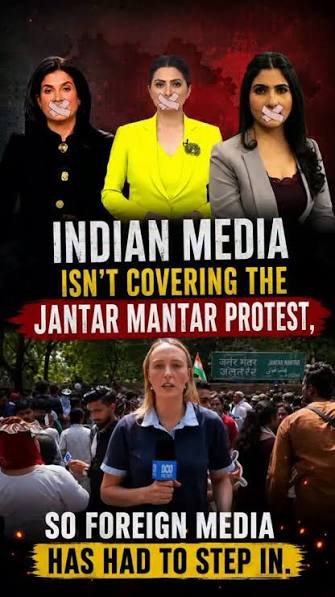
Shambhavi Srivastava, a principal correspondent with Republic TV, was hit during the July 20 protest march.”They hit me on my chest, they hit me on my arm and people deliberately stormed on my feet with their heels and shoes,” she said on the channel. “And there was one person who was particularly not happy with the media house that I am working with and he had some sort of sharp object-a pen or something-and he managed to stab me with it,” she said.
TV reporter Varun Bhasin was surrounded at Jantar Mantar by some youngsters. He was rudely asked, “Why did you come now? It is too late. Why don’t you show our side of the story?” NDTV journalist Ravish Ranjan Shukla was heckled and abused by the angry protesters. NDTV’s Anshka Garg, Times Now’s Safali Nigam and Jyoti Mishra were also among the reporters of the mainstream media who were harassed at the venue of the protest.
Times Now has said, “The manner in which some persons chose to express their disagreement through violence can have a chilling effect on the free movement and functioning of journalists across India, which is not in the interests of democracy. We may differ in views, but we cannot take the law into our own hands.”
The physical attacks and mouthful abuses is a problem the television industry has so far refused to confront. The public anger was not taken into account by the presenters and their bosses. Some journalists wrote, “years of slanted prime-time reporting has created anger among the people who are taking it out on the field reporters who have little say in what is presented on the screen.”
A worried reporter said: “I have covered the farmers’ protest as well, and I was called Godi Media because of the news organizations I work for, including Zee, Times Now and ABP. But this protest felt different. Reporters from TV channels were facing what looked like lynching type attacks, and that is deeply worrying. Reporters are the people on the ground and in my experience, 90 percent of them report the facts accurately. It is the people sitting in the newsroom, the owners, editors and prime-time anchors who decide the editorial line and shape the narratives.”
Between Public Ire and Institutional Erosion: The Crisis of Media Independence in India
The Editors Guild of India condemned what it called ire being “directed at representatives of the media outlets considered close to the government and the ruling party. But the Guild also commented: “Flawed and biased reporting not only makes a bad situation worse, but has more serious and longer-lasting consequences which impact the fabric of our society and also weaken the media’s position as one of the key pillars of a functional democracy.” The Guild was unhappy with the state of reporting and coverage by the Godi Media but did not like the youngsters attacking the representatives of such media.
This biased attitude of the mainstream media has adversely affected the freedom of the media in the most populous democracy. India’s ranking in the Reporters Without Borders’ World Press Freedom Index deteriorated over the past decade. The country was ranked at 122 in 2010 (during Dr. Manmohan Singh’s UPA dispensation) and fell to 157 out of 180 countries in 2026, the twelfth year of Modi’s rule. The Paris-based media rights watchdog has attributed the decline to violence against the journalists, concentration of media ownership in business houses which are aligned with the government and growing political polarization.
In other words, the media in India is mostly with Ambani, Adani and other corporate houses. While the national media is owned by the government friendly business houses, the vernacular press is divided along the political and caste lines. The happenings at Jantar Mantar and elsewhere during the recent protests should put some sense and fear in the hearts of owners and journalists about public anger. The media has to be fair.
Prominent Journalist
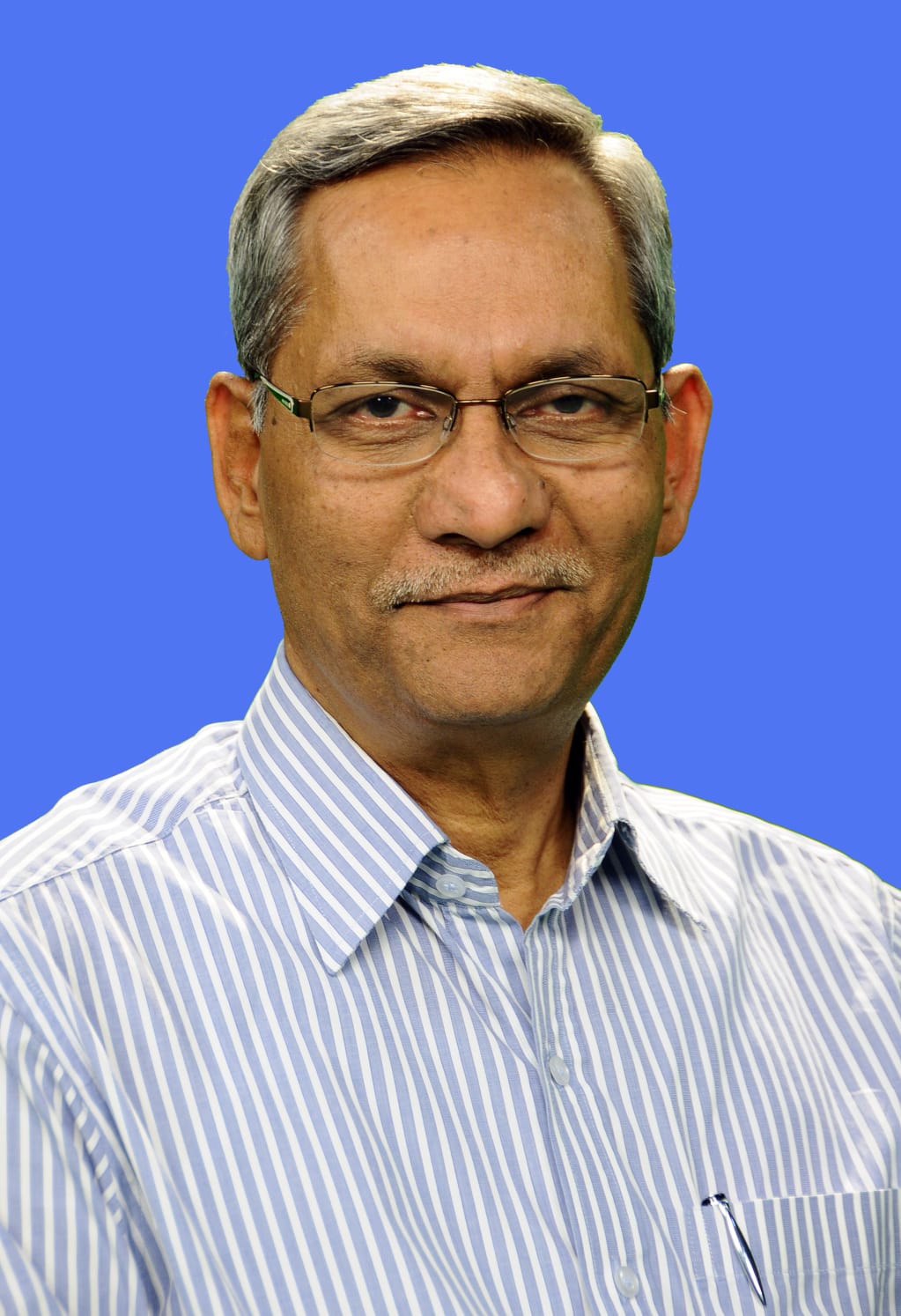
Dr. K. Ramachandra Murthy is a versatile journalist with a distinguished career. Dr. Murthy began his extensive career with Andhra Prabha of The Indian Express group in Bengaluru. He was editor of Udayam, Vaartha and Andhra Jyothy. Dr. Murthy founded and edited HMTV news channel and The Hans India, an English newspaper. He was also editorial director of the Telugu newspaper, Saakshi. He was awarded Ph. D for his research work in rural reporting. Dr. Murthy’s five decades in journalism showcases his influential roles across both print and electronic media. He wrote the political biography of NTR published by Harper Collins.
Email: murthykondubhatla@gmail.com
Mobile: 9908002211
Sir, Good read
Sir, Good read, and the report reflects the ground situation.
Sir, Good read. The report reflects the ground situation.