Emergency 1975: A Constitutional Failure
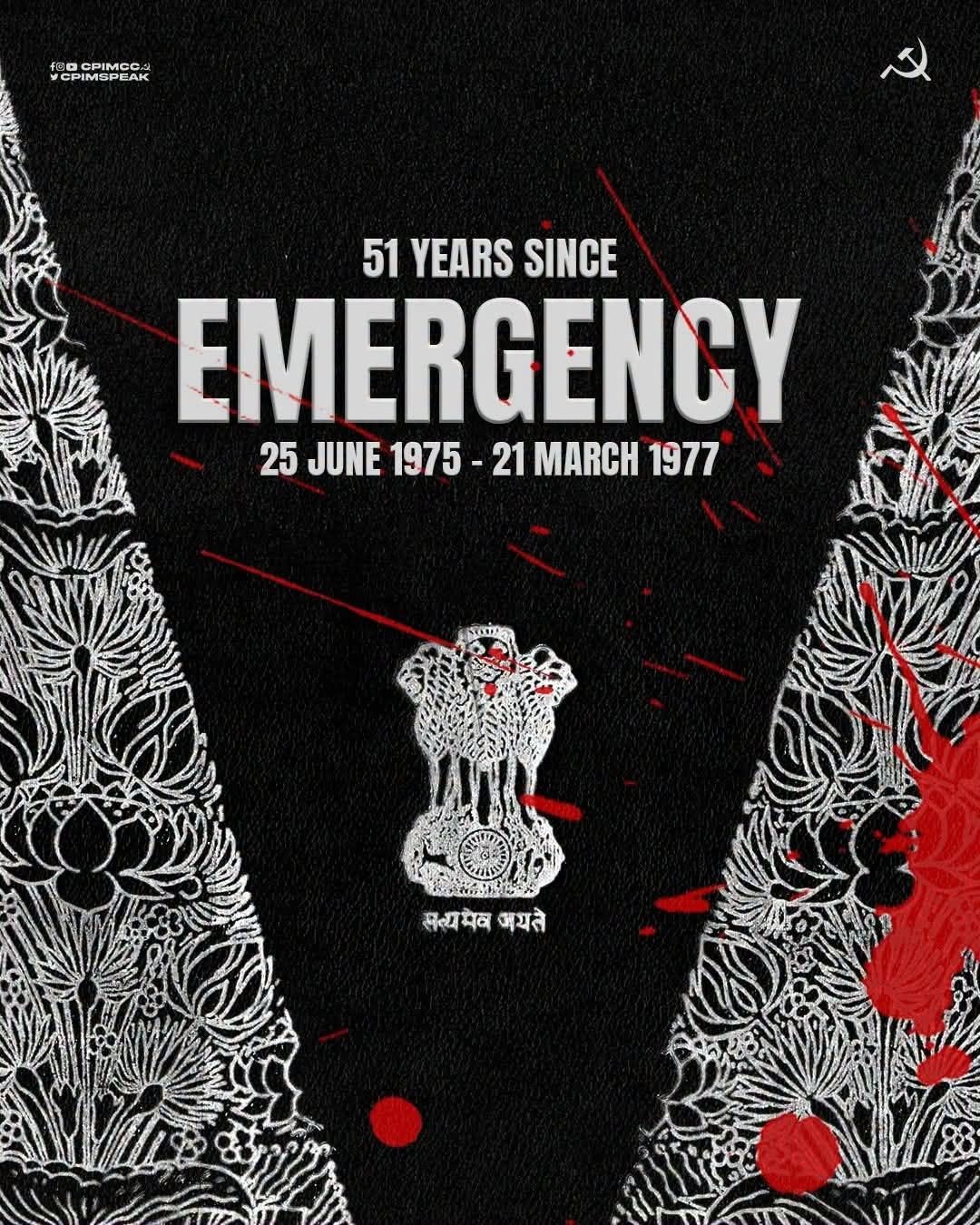
Fifty-one years after the proclamation of the Emergency on June 25–26, 1975, India must revisit one of the darkest chapters in its democratic history, not merely as a historical event, but as a constitutional lesson for future generations. Several such chapters are staring into the deep dark, unless the people question. That is a legitimate constitutional question, but it requires a careful distinction between “Emergency-like tendencies” and an actual constitutional Emergency. However, many constitutional scholars, journalists, retired judges, civil liberties groups, and political commentators have expressed concerns about certain developments that they believe could create conditions resembling features of the Emergency era.
The Emergency was not simply a political decision. It represented the concentration of power in a single individual, the suppression of civil liberties, the subordination of constitutional institutions, and the silencing of democratic dissent. More importantly, it exposed how constitutional safeguards can collapse when those entrusted with protecting them fail in their duty. We should do everything we can to prevent the recurrence of dark chapters.
The principal lesson of 1975 is simple yet profound: the Constitution can survive only when every constitutional authority, every public servant, and every citizen remains vigilant in its defense.
Either God or conscience may save!
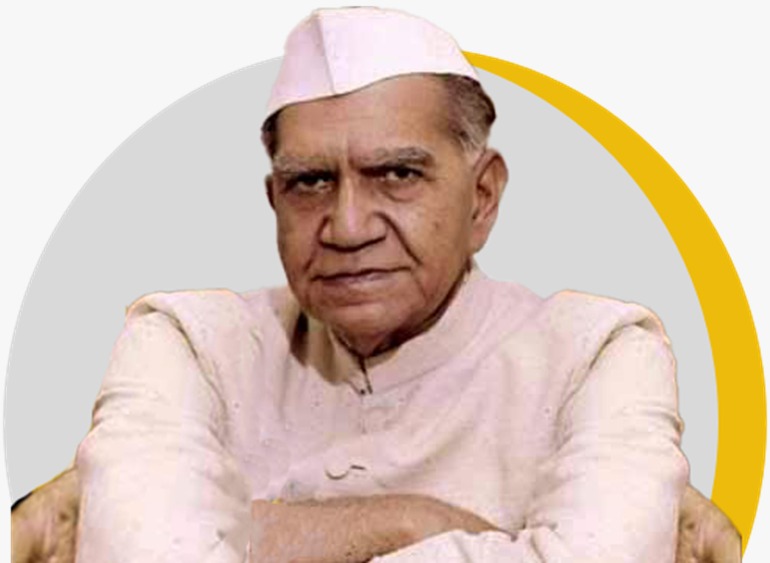
At the center of this constitutional tragedy stands President Fakhruddin Ali Ahmed. History records him as a respected freedom fighter, an educated lawyer, and an experienced public servant. He studied in Delhi and at Cambridge University, practiced law in Lahore and Guwahati, served as Assam’s Finance Minister in 1939, and later became a Union Cabinet Minister in 1966. Yet despite such distinguished credentials, his legacy remains inseparable from a single act—the signing of the Emergency Proclamation.
The Constitution of India assigns a unique responsibility to the President through Article 60. The Presidential oath is not merely an oath of office. It specifically requires the President:
“To preserve, protect, and defend the Constitution and the law.”
This language is significantly different from the oaths administered to ministers and other public officials, who merely swear allegiance to the Constitution. The President alone is entrusted with the explicit responsibility of protecting and defending it. When that responsibility is forgotten, constitutional democracy itself is endangered.
The Night Democracy Went Dark
On the night of June 25, 1975, Prime Minister Indira Gandhi sought the proclamation of an Emergency. The immediate political background was the judgment of the Allahabad High Court on June 12, 1975, which invalidated her election to Parliament on grounds of electoral malpractice. On June 24, Justice V.R. Krishna Iyer of the Supreme Court granted a conditional stay, allowing her to continue as Prime Minister but restricting her parliamentary privileges pending appeal. The political crisis deepened.
Meanwhile, veteran opposition leader Jayaprakash Narayan called upon citizens and public officials to resist unconstitutional orders. The government portrayed these developments as threats to national stability. The following night, an Emergency was declared on the grounds of “internal disturbances.” The question remains: Was the constitutional process followed?
Cabinet Advice Was Missing
Article 74 of the Constitution required the President to act on the advice of the Council of Ministers. The Constitution did not authorize the Prime Minister alone to advise the President on such a grave matter. Yet, according to historical accounts, including those discussed by historian Gyan Prakash in Emergency Chronicles: Indira Gandhi and Democracy’s Turning Point, the full Cabinet had not formally considered the proclamation before it was signed.
Instead, the Prime Minister communicated directly with the President, indicating that Cabinet consultation would follow.
- The Cabinet met only after the proclamation had already been signed.
- Thus, a constitutional mechanism intended to ensure collective deliberation was bypassed.
- The framers of the Constitution did not vest emergency powers in a single individual. They required collective ministerial responsibility precisely to prevent arbitrary rule.
What Does “President’s Satisfaction” Mean?
The Emergency provisions under Article 352 referred to the “satisfaction” of the President. However, constitutional practice makes clear that presidential satisfaction is not a personal opinion. It is the satisfaction of the Council of Ministers expressed through constitutional advice. The President is not expected to act as an independent ruler, but neither is he expected to function as a mere rubber stamp.
The constitutional expectation is that he verifies whether the required process has been followed before exercising extraordinary powers. On that critical night in June 1975, this distinction disappeared. The constitutional requirement of collective satisfaction was effectively reduced to the personal approval of a single individual acting on the request of another.
The consequences were devastating.
- Fundamental rights were suspended.
- Opposition leaders were arrested.
- Newspapers were censored.
- Political dissent became a crime.
- Thousands of citizens were imprisoned.
- The right to life and personal liberty under Article 21 was rendered virtually unenforceable.
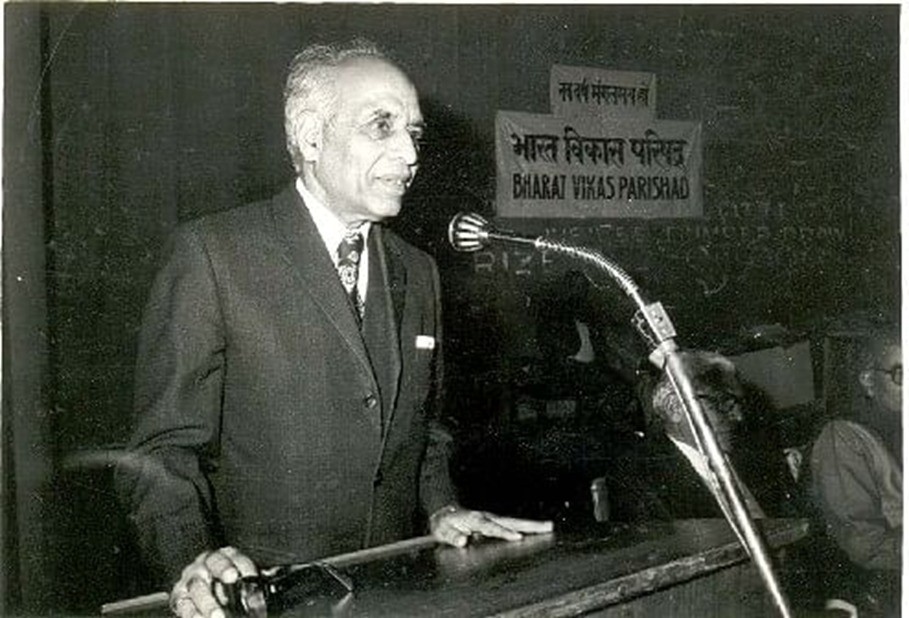
The darkest judicial moment came in the infamous ADM Jabalpur v. Shivkant Shukla case, where the Supreme Court majority held that during the Emergency, citizens could not seek judicial enforcement of their fundamental rights. The lone dissenter was Justice H.R. Khanna.
Khanna courageously held that the right to life could not disappear merely because an Emergency had been proclaimed. He knew that his dissent would cost him the position of Chief Justice of India. It did. Yet history remembers Khanna as a defender of constitutional liberty, while many who occupied higher offices have faded into obscurity. Positions come and go. Constitutional courage endures.
The Constitutional Truth:
Whether the citizens of India have the right to approach the court for the enforcement of their Fundamental Rights during the declaration of Emergency? The Fundamental Right in question was primarily the Right to Life secured under Article 21 of the Indian Constitution.
Justice H R Khanna, greater than most CJIs
Could the President Have Been Impeached?
Article 61 of the Constitution permits the impeachment of a President for violating the Constitution. If constitutional accountability were taken seriously, the actions surrounding the Emergency would have invited scrutiny under this provision.
Why did impeachment never occur?
- The answer lies in political reality.
- The ruling party possessed overwhelming parliamentary strength.
- The media had been silenced.
- The opposition was imprisoned.
- The judiciary was largely deferential.
- Under such circumstances, constitutional remedies remained theoretical.
- The Constitution provided accountability mechanisms, but the political environment prevented their use.
Nearly five decades later, Parliament itself acknowledged the gravity of the Emergency. In commemorating its victims, critics described the Emergency as a “dark chapter” in India’s democratic history. The recognition is important, but remembrance alone is insufficient.
Democracies survive not because constitutions exist on paper, but because constitutional actors respect their limits.
The Emergency teaches several enduring lessons:
- Constitutional offices must never become ceremonial rubber stamps.
- Extraordinary powers require extraordinary scrutiny.
- Collective decision-making cannot be replaced by personal authority.
- Judicial independence is indispensable to democracy.
- Citizens themselves are the final guardians of constitutional liberty.
The President’s oath is not a ritual. It is a constitutional trust. When a President promises to “preserve, protect and defend the Constitution,” those words must guide action during moments of crisis, not merely adorn ceremonial occasions. Had the proclamation not been signed on that night in June 1975, Indian history might have followed a very different course.
For twenty-one months, democracy was placed in chains. The Emergency remains a warning that constitutional collapse does not always begin with tanks on the streets. Sometimes it begins with a signature on a piece of paper.
That is why India must remember 1975, not to reopen old political battles, but to ensure that no future President, Prime Minister, Parliament, Court, or citizen ever allows constitutional democracy to be placed in such peril again. The Constitution survives only when those entrusted with its protection dare to defend it, as we see the present unconstitutional problems.
1. Concentration of Power
One recurring criticism is the increasing concentration of political authority in the Prime Minister’s Office. Critics argue that cabinet government, parliamentary deliberation, and institutional autonomy may become weaker when decision-making becomes highly centralized. Supporters of the government respond that strong leadership is necessary for efficient governance and national development.
2. Investigative Agencies
Questions are often raised about the use of agencies such as the Enforcement Directorate, Central Bureau of Investigation, and Income Tax authorities against opposition leaders. Critics see this as selective enforcement. The government maintains that anti-corruption investigations cannot stop merely because political figures are involved.
3. Media Independence
Some observers argue that sections of mainstream media have become excessively supportive of the government, reducing critical scrutiny. Others point out that India still possesses a large and active independent digital media ecosystem, which regularly criticizes those in power.
4. Parliamentary Functioning
There have been debates over the speed of legislation, limited discussion on important bills, and suspension of opposition members. Critics see these as weakening parliamentary accountability. Supporters argue that legislative efficiency should not be confused with democratic decline.
5. Civil Liberties and Dissent
There have been concerns regarding sedition laws (before their suspension), anti-terror legislation, internet shutdowns, arrests of activists, and restrictions on protests. Civil liberties organizations view these developments as warning signs. Governments at both central and state levels often justify such actions on grounds of security, public order, or law enforcement.
6. Judicial Independence
Questions are occasionally raised regarding judicial appointments, post-retirement positions, and delays in hearing politically sensitive matters. At the same time, courts have also delivered judgments against governments, demonstrating that judicial independence continues to exist.
The Constitution survives when institutions exercise independent judgment and when citizens remain vigilant. As Justice H. R. Khanna demonstrated during the Emergency, the real test of constitutionalism is not how institutions behave in ordinary times, but how they act when power seeks to override liberty.

Law professor and eminent columnist
Madabhushi Sridhar Acharyulu, author of 63 books (in Telugu and English), Formerly Central Information Commissioner, Professor of NALSAR University, Bennett University (near Delhi), presently Professor and Advisor, Mahindra University, Hyderabad. Studied in Masoom Ali High School, AVV Junior College, CKM College, and Kakatiya University in Warangal. Madabhushi did LL.M., MCJ., and the highest law degree, LL.D. He won 4 Gold Medals at Kakatiya University and Osmania University.
Email: cicsridhar@gmail.com
Mobile: 8447651505