Echoes of Swadeshi-Charting India’s Journey from Colonial Resistance to Economic Independence
How History Shaped India’s Drive for Self-Sufficiency
In today’s volatile global economy, self-reliance has become more important than ever. Whether for an individual, a family, or an entire nation, the ability to depend on one’s own resources provides vital stability. India, one of the world’s oldest civilizations, offers a perfect historical blueprint for this kind of economic independence.
The “Little Republics” of Ancient India
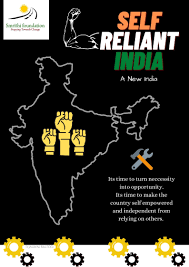
For centuries, Indian villages operated as highly decentralized, robust economic units. A single village rarely depended on neighboring hamlets for goods or services. These communities were largely self-governing, producing their own food and crafting the items required for daily life. Farmers easily sourced agricultural tools within their own village, while local artisans found all their raw materials nearby. Because communities relied on the barter system, families did not need to travel elsewhere for food or essential goods.
This perfect balance of agriculture and local handicrafts made Indian villages wealthy by the global standards of that era. India was a global powerhouse, leading the world in the production and export of textiles, spices, and manufactured goods. In the 1830s, Sir Charles Metcalfe, a British colonial administrator, famously documented this social structure. He described Indian villages as autonomous “little republics” that were self-sufficient and independent of external political influences.
Through an interdependent system of local trades—where blacksmiths, potters, and weavers worked together—the village produced everything it needed. While empires rose and fell and dynastic wars raged around them, the internal economy of these villages remained completely unaffected.
Resilience of Culture and Knowledge
This self-reliance extended far beyond economics; it protected India’s intellectual and cultural heritage. Even when the British rule intentionally flooded the market with cheap, machine-made textiles, traditional Indian weavers continued to produce high-quality cloth using handlooms.
Over the last forty centuries, India faced numerous foreign invasions and wars, yet its core identity remained unbroken. Invaders failed to destroy the country’s deep-rooted culture. Systems of medicine like Ayurveda, spiritual practices like Yoga, and foundational scientific knowledge stayed completely intact. Today, countries worldwide have adopted Yoga to achieve healthier lifestyles.
Education also thrived under this self-reliant model. The ancient Gurukul system boasted exceptional teachers. This historic legacy of academic excellence continues today, as thousands of Indian professors, lecturers, and educators teach in universities all over the contemporary world.
The Modern Global Economy and the World Bank
The value of historic self-reliance becomes obvious when we look at today’s fragile global economy. The World Bank is currently operating under a highly tightened global outlook. Global economic growth is projected to slow to 2.5%, largely driven by conflicts in the Gulf and Middle East. These geopolitical tensions have caused energy prices to surge, resulting in steeper inflation and rising interest rates worldwide.
Currently, the World Bank faces criticism, with some viewing it as a low-profile institution whose impact in several developing countries has fallen to zero. Emerging markets are navigating high sovereign debt and tightening credit lines. To support its partner nations during this crisis, the World Bank is trying to expand its lending capabilities and increase its risk-management footprint. It is actively trying to fund structural reforms and boost private-sector job creation.
However, as international institutions struggle to manage these global financial pressures, the timeless lesson of India’s history remains clear: building independent, self-reliant local economies is the best shield against global instability.

With a journalistic long journey, we bring you https://primepost.news, a dynamic platform committed to unraveling the intricate tapestry of Indian politics, particularly delving deep into the heart of Telangana and Andhra Pradesh. Our blog is not just a source of news; it’s a reservoir of insights, analysis, and thought-provoking reviews.