- The TVK Factor: Vijay’s Impact on Traditional Vote Banks
- The BJP’s “Tamil Pride” Gambit and 2026 Strategic Goals
The political landscape in Tamil Nadu is currently at a fever pitch as the state moves toward polling on April 23, 2026. The entry of actor-turned-politician Vijay and his party, Tamilaga Vettri Kazhagam (TVK), has turned a traditionally bipolar contest into a volatile multi-cornered fight.
TVK’s Impact: Whose Votes Will Vijay Grab?
Vijay’s TVK is the “X-factor” of this election. While he has avoided formal alliances, his presence is expected to disrupt the vote banks of both major Dravidian parties. Vijay’s primary base is the massive “Thalapathy” fan network. He is successfully tapping into younger voters who feel disconnected from legacy politics.
The DMK’s “Anti-Incumbency” Slice
Historical patterns show that new celebrity entrants often peel away voters who are dissatisfied with the ruling party but aren’t ready to switch to the traditional opposition. Neutral/Centrist Voters: By positioning TVK as a “clean break” from the DMK-AIADMK duopoly, Vijay is attracting middle-class and urban voters who previously gravitated toward Kamal Haasan’s MNM or Seeman’s NTK.
The Fate of the DMK
Despite five years in power, the DMK-led Secular Progressive Alliance remains a formidable force. Strengths: Chief Minister M.K. Stalin’s personal popularity remains high, bolstered by welfare schemes like the Kalaignar Magalir Urimai Thogai (monthly aid for women). Their alliance with Congress and the Left provides a solid arithmetic advantage.
Challenges: The party is battling “anti-incumbency” fatigue, allegations of family rule, and issues like drug trafficking and law-and-order concerns highlighted by the opposition. Analysts suggest that while they lead in many pre-poll surveys, their margin of victory may shrink significantly due to vote fragmentation caused by TVK and NTK.
Is Palaniswami’s AIADMK in the Race?
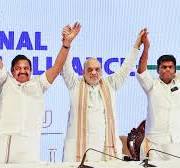
Absolutely his party is in the race. Under Edappadi K. Palaniswami (EPS), the AIADMK has successfully consolidated its position as the primary challenger to the DMK.Coalition Strategy: EPS has finalized a significant seat-sharing deal within the NDA, contesting 178 seats while allotting 27 to the BJP and others to PMK and AMMK.
Grassroots Strength: Unlike newer parties, AIADMK retains a massive, disciplined cadre base, particularly in the Western (“Kongu”) belt. EPS is campaigning on the “failures” of the DMK government, focusing on inflation and unmet poll promises.
The BJP’s Perspective and Strategy
The BJP is viewing this election as their most serious bid for relevance in Tamil Nadu. The “Lotus Promise” Manifesto: Union Minister J.P. Nadda recently launched the party’s state manifesto, promising a “New Era.” The BJP is shifting focus from purely religious narratives to Tamil pride (highlighting the Sengol and *Kashi Tamil Sangamam) and economic development.
The Strategic Alliance: By partnering with AIADMK, the BJP aims to piggyback on traditional Dravidian machinery while pitching itself as the “central power” that can bring massive infrastructure funds to the state. They are aggressively targeting the DMK’s “dynasty” politics to appeal to aspirational voters.
Key Issues & April 23 Polling Patterns
As of April 22, 2026, the atmosphere is characterized by a “wait and watch” sentiment among neutral voters. Major Election Issues:
Welfare vs. Debt: The sustainability of the DMK’s “freebie” model against the rising state debt. Drugs and Law & Order: A central campaign pillar for the opposition, following high-profile drug seizures. Youth Unemployment: Vijay’s TVK has made this a central theme to lure the under-30 demographic. Cultural Identity: The “National vs. Regional” debate remains a sensitive trigger for Tamil voters.
Polling Patterns (April 23)

The “Silent” Voter: Many rural voters are remaining tight-lipped, which historically suggests a potential shift in sentiment. High Turnout Expected: Given the four-way competition (DMK+, AIADMK+, TVK, and NTK), analysts expect a surge in voter turnout, especially among the youth.
Money Power: The Election Commission has already reported record-breaking seizures (crossing ₹1,000 crore), indicating an extremely high-stakes battle.
The outcome will likely hinge on whether Vijay can convert his screen popularity into a “silent wave” or if the DMK-AIADMK machinery can hold its ground through traditional booth-level management.
Editor, Prime Post
Ravindra Seshu Amaravadi, is a senior journalist with 38 years of experience in Telugu, English news papers and electronic media. He worked in Udayam as a sub-editor and reporter. Later, he was associated with Andhra Pradesh Times, Gemini news, Deccan Chronicle, HMTV and The Hans India. Earlier, he was involved in the research work of All India Kisan Sabha on suicides of cotton farmers. In Deccan Chronicle, he exposed the problems of subabul and chilli farmers and malpractices that took place in various government departments.
Email: ravindraseshu7@gmail.com
Mobile: 9063718675
In South it is common practice that “family rule” will take place as we see in A P also since decades. It is their trend. I believe that Stalin will become C M again as per public behavior there. And welfare schemes implemented by Stalin Government is an advantage for Stalin. Being film star Vijay also has 50/50 chances. In South people are mad after film stars. We see nowhere in the country. This is a different attitude we see in South. Let us see how it will workout.