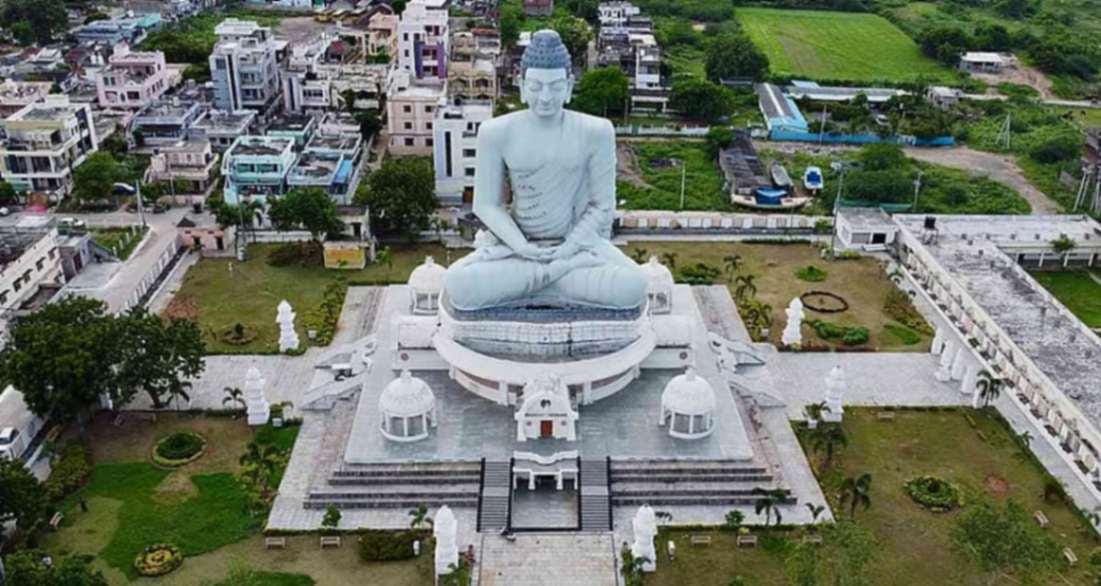
The Inefficiency of the TDP and Janasena Duo!
It appears as though some sage has cursed the capital of Andhra Pradesh. It continues to struggle in endless confusion and uncertainty. Criticizing the Andhra Pradesh Reorganisation Act, 2014, has become routine. It would have been far better if the Act had been comprehensively amended when revisions were made. The inability to do anything beyond declaring Amaravati as the capital through a Parliamentary Act is nothing short of incompetence. Even now, the “coronation” of Amaravati as the functional capital has not taken place. Had the law specified what would be done and which parts would be completed within how many years, it would have instilled confidence in the farmers and the people of Amaravati.
Sacred Soil and Sudden Acts
Suddenly, through the Andhra Pradesh Reorganisation (Amendment) Act, 2026, Parliament has declared Amaravati as the capital. Will this “legal status” actually strengthen the city? Previously, bringing sacred water and soil from fertile lands like the Ganga and Yamuna was a wonderful symbolic gesture. Fine. But is that enough? There are no details on how funds will be mobilized. What is the use of assuming Amaravati has “arrived” just because a law exists, without any financial backing?
By amending the 2014 Act, Parliament has designated Amaravati as the sole, permanent capital of Andhra Pradesh. This Act applies retrospectively from the date the tenure of Hyderabad as the joint capital ended (June 2, 2024). In 2014, the freedom to choose a capital was supposed to lie with the new Andhra Pradesh Legislative Assembly and Government. Now, the name “Amaravati” has been explicitly mentioned in the Act.
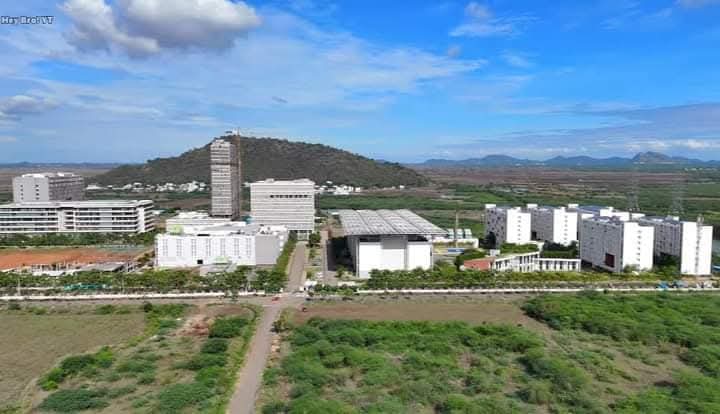
Amaravati Alone Must Be the Capital!
In the past, the law merely stated that “AP will have a new capital,” but it did not define what or where it would be. In reality, such a definition wasn’t even necessary. Now, the law mandates that “The capital of AP must be in Amaravati.” Let us assume the primary intention behind this change is to end the chaos that followed the 2014 division, specifically the confusion caused by the 2020 ‘Three Capitals’ proposal. One could also assume that the goal is to prevent future state governments from easily changing the capital at their political whim. Since the status of the capital now depends on a Parliamentary Act rather than a state-level political decision, I hope this brings the necessary legal stability to Amaravati. Whether this holds true or not, only the coming days will tell.
This amendment to the AP Reorganisation Act has abolished the “Three Capitals” concept. The idea of having Visakhapatnam (Executive), Amaravati (Legislative), and Kurnool (Judicial) capitals is gone. This means that for the past 12 years, the state has been searching for proper administrative stability. This is the “efficiency” of our rulers. Merely identifying a single capital solves nothing. Furthermore, this central law initiates a new long-term constitutional dispute. A Parliamentary Act is, after all, an ordinary law. If the Act is amended again, this status will vanish. If laws are changed whenever parties change or attitudes shift, when will this story end? People feel the need for a strong, stable capital city that transcends party lines.
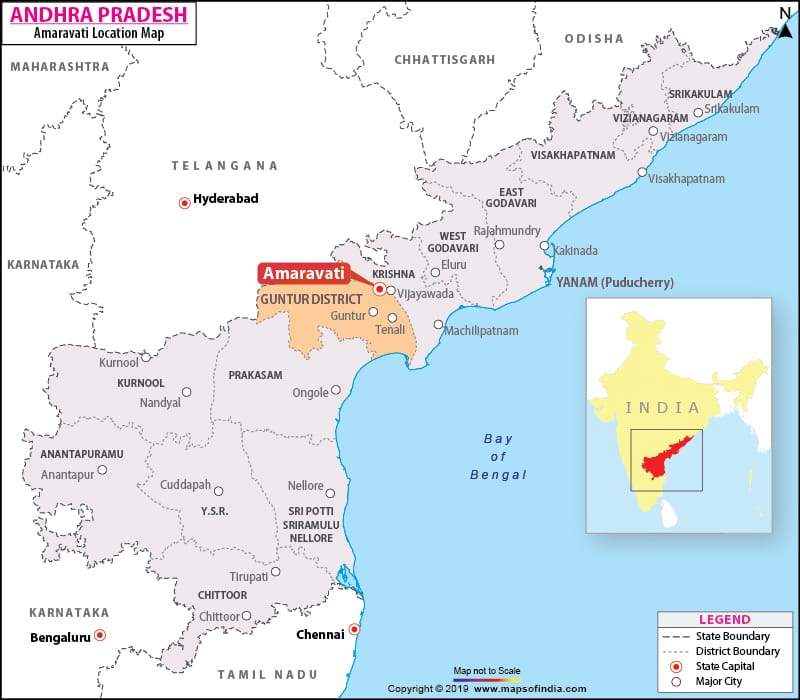
Andhra Assembly vs Parliament
Even with all this, does this law guarantee the grand success of Amaravati? We must understand the constitutional reality. The selection of a capital does not fall within the jurisdiction of Parliament under the federal system. This could lead to another dispute. The location of a capital city is not in the Union List; it generally falls under the executive purview of the State Government. Can Parliament permanently control a state’s right to choose its capital? Would this constitute a legislative overreach? This might lead to constitutional challenges in the future—or it might not. What is the benefit to the people from this “Capital Status”, which can be amended again if the government changes? Parliament’s interference in this manner is a matter of debate regarding Article 246 and the Basic Structure of Federalism. Passing this without adequate public debate is a major test for Indian Constitutional Law.
Criticism has arisen that this ‘Parliamentary Amaravati Act’ was brought in suddenly and almost secretly, without sufficient discussion in the AP Assembly or Council. There was no transparency and no consultation with the people. According to official reports, there is a perception that this legal backing will accelerate development works worth over ₹50,000 crore and increase confidence among private investors. However, YSR Congress members staged a walkout during the passage of this bill. There is another controversy that not everyone walked out. It is a state of anarchy and instability—what is said is one thing, but the underlying intentions are different.
During the Rajya Sabha session, Chairman C.P. Radhakrishnan stated, “The entire country aspires for a beautiful capital, Amaravati, to be built for the people of Andhra.” Minister Nara Lokesh witnessed this historic moment from the visitors’ gallery. While Chief Minister Chandrababu Naidu described it as a victory for the people’s aspirations, Lokesh posted that the “eclipse haunting Amaravati has cleared.”
Valuable Time Wasted
Who is truly responsible for this delay and poor governance? The last 12 years have seen Chandrababu’s previous tenure, Jagan Mohan Reddy’s rule with the three-capital idea, and now Chandrababu returning as Chief Minister. No one knows who will do what. But the expected development hasn’t happened. Leaving the city aside, they haven’t even been able to complete a permanent Secretariat. The cycle of mutual blaming (using useless language and insults) between parties continues. State Minister Nara Lokesh recently mentioned that tenders have been invited for ₹50,000 crore worth of works and that the Center has released ₹18,000 crore. He expressed hope that the Secretariat, Assembly, and High Court would be completed within two years. But even in 2026, the people are still waiting. There was no need to wait this long.
The Sacrifice of Farmers
It is a moral responsibility to recognize the sacrifice of farmers who gave over 33,000 acres of land. However, political recognition does not guarantee that the capital project will be completed on time. Amaravati requires massive investment and long-term planning. Celebrating merely because “legal status” has been achieved is premature. After all, legality doesn’t lay the bricks of a city, does it?
What is AP’s ‘Status’?
During the 2014 state division, then-opposition leader Venkaiah Naidu fought for Special Category Status (SCS). Even after the new Modi government took over and Venkaiah Naidu became the Minister for Urban Development, there was no opportunity to do anything for our Amaravati’s urban development. Although Venkaiah Naidu fought for SCS, it remained an oral promise not included in the 2014 Reorganisation Act. Because it lacked legal backing, the Center did not implement it. When the same parties were in power at both the Center and the State, they did not carry out the necessary works for the capital, nor did they grant status or funds. They only perform grand inaugurations. Now, they might hold more inaugurations by declaring the old name Amaravati as the new capital. In 2016, without receiving any status, the Chandrababu government agreed to a “Special Assistance Measure.” That too changed.
A political eclipse arrived. Chief Minister Chandrababu Naidu, who came to power with a three-party coalition, got entangled in disputes with Prime Minister Modi. As public anger mounted, Naidu exited the NDA in 2018 and launched the “Dharma Porata Deeksha.” There was neither justice (Dharma) nor a real struggle (Porata). In 2019, the YSR Party won a landslide victory with the slogan that they would definitely achieve Special Category Status. However, since the BJP had a full majority at the Center, Chief Minister Jagan Mohan Reddy clearly stated that AP could only “ask” but not “dictate.” The issue fizzled out.
If both parties are truly sincere about the state’s development, why aren’t they fighting together for Special Category Status or an equivalent financial package? History has proven that a mere promise, an election campaign, or a law passed in Parliament cannot build a city. What is needed are guaranteed funds. Legal status is only a beginning—but if we think that itself is our capital city, it is not. Is this efficiency or inefficiency?

Law professor and eminent columnist
Madabhushi Sridhar Acharyulu, author of 63 books (in Telugu and English), Formerly Central Information Commissioner, Professor of NALSAR University, Bennett University (near Delhi), presently Professor and Advisor, Mahindra University, Hyderabad. Studied in Masoom Ali High School, AVV Junior College, CKM College, and Kakatiya University in Warangal. Madabhushi did LL.M., MCJ., and the highest law degree, LL.D. He won 4 Gold Medals at Kakatiya University and Osmania University.
Email: cicsridhar@gmail.com
Mobile: 8447651505




It is true that the decission taken by Chandrababu Naidu Amaravathy as Capital to safeguard the interests his community people. He does everything for his community people interests. And we watch. This is the scenario going on. This is all bull shit making Andhra like Singapore. Fed up. No one can save. This is our choice.
Come out of that community ramp up… Grow big, think big…
We are living in a society.. Many religions and communities, sects will be in our neighborhood…
Any facts and figures with you… put it on paper.. Don’t give vague statements….
Bluffing, agony on one community will not serve any purpose to us. We need a progreasive state and not a Ganja and rowdyGuns state..
Bill is to protect from evil minded rulers (if any) in the future. About progress… Firat 3 years.. Only to settle dow , movi g emplouees, relocation happened… Land pooling kind of a great exercise done. Buildings like secretariat, high court… Completed to start operations from thwre. Many works were in progress… That time… Came Mavigun Reddy era… reversing everything… Halted and stopped… The progress only one area improved… That is drugs and ganja spread in the state… And liquor and sand mafia. Table tilted now it is Tdp Janasena Bjp govt.. Two years initiated all the stopped activities.. Tried to rebuilt confidence with industrialists.. Now things are moving…
Ofcourse you know all these things… Only thing MaviGun Reddy followers, disciple’s ignoring is.. All the People in AP are not Goats… Most of the people have brains.. People have common sense, people have interest in their and future generations.. Life, prosperity…Empathy…
True