
- S. R. Sankaran’s Legacy: A Model of Humility and Service
- 15th Sankaran Memorial Lecture
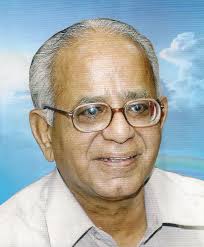
S.R. Sankaran, a retired IAS officer, who passed away in 2010, was a great human being. He did a lot for Dalits in undivided Andhra Pradesh. He was also responsible for nationalization of coal mines when he was secretary to Kumaramangalam in the union government. He led the team of the Concerned Citizens to organize talks between the AP government headed by YS Rajasekhara Reddy and the leaders of Naxalites in 2004. He was crestfallen as the talks failed. He did not recover from the pain of the failure till his end.
The Refusal of Honour: S. R. Sankaran and the Padma Bhushan
I met him several times. When someone told me he was offered Padma Bhushan by the central government and he promptly refused the honour, I went to his residence and had a long talk. He spoke at length on Maoists, police and other related things. The role played by Pothuri Venkateswara Rao, a veteran journalist and Prof. Haragopal, academician and civil rights activist, was vividly narrated by him. But he refused to talk about the Padma award. When I told him that I want to write about it to tell my readers that the Padma Bhushan was sought to be given to him and he rejected it, he persuaded me not to write a word about it. He said it was not an important issue to be published. He was very particular that nothing should go on record. That is only an indication of absolute humility.
The People’s IAS Officer: A Life of Commitment and Humility
Prof. Satyanarayana and his wife visited Sankaran at his residence once. Sankaran, who is a bachelor, prepared tea and served them. After finishing the tea, the couple routinely kept their cups on a table. The retired IAS officer took the cups to a sink and started washing them when Prof. Satyanarayana and his wife objected and tried to grab the cups from his hands. He refused to budge and said “it was only proper that I was washing the cups since a lot of injustice has been done to your community (Dalits) for ages and any amount of service by him or others would not compensate it.”
The Final Tribute: The Community’s Farewell
When Sankaran breathed his last, his friends wanted to cremate him the same day. But Mallepalli Laxmaiah convinced them to wait for one day. Soon after, Laxmaiah sent messages to all the Dalit groups in AP. It took four hours to place Sankaran’s body from his residence in Panjagutta to the cemetery on road number 3 in Banjara Hills which was not more than three kilometers. The Dalits who came in thousands from all over the State moved slowly giving slogans like ‘Dalit bandhu Sankaran Amar Rahe,’ ‘Sankaran Zindabad,’ ‘Sankaran, the greatest human being, Johar.’
I watched the first Sankaran memorial lecture delivered by BD Sharma in 2011 on ‘Sankaran, the man’ and the lecture last year by Koppula Raju, a retired IAS officer who is in Congress party as an aide of Rahul Gandhi, on caste census. I was fortunate to be invited to deliver the 15th Sankaran Memorial Lecture on the topic, “People’s welfare and the role of media, then and now.” What is welfare of the people? It means the well-being of the people, physical and mental happiness of the people and their prosperity. It also means there would be less of exploitation and discrimination against the poor and disabled. It indirectly means that the people’s welfare is taken care of when their rights are implements, inequalities in society are reduced and the poor and downtrodden have the minimum facilities to live comfortably.
Media’s Golden Age: A Commitment to the People (1970s – 1990s)
After completing my bachelor of journalism degree from Osmania University in 1973, I did not get a job immediately. I joined as agrade-2 clerk in Singareni Collieries at Godavari Khani. After working there for one year, I was invited to join as a sub-editor in Andhra Prabha of Indian Express Group in Bengaluru. While I was paid Rs. 750 per month at Godavari Khani, the stipend paid by Andhra Prabha for a sub-editor trainee was Rs. 200. Since I was very much interested in journalism, I joined for far less pay. I joined at Andhra Prabha on February 5, 1976.
The Emergency was more than seven months old. I used to report news while working at the desk. There is no separate reporters’ bureau for Andhra Prabha in Bengaluru. Assistant Editor Nagaraju and News Editor Pullaiah used to depute me to do reporting assignments. Chief of Indian Express Bureau Subbarao used to like me very much. I used to discuss with him about the Emergency regime and the travails of reporters. Along with him I also used to work for Arun Shourie whenever he visited Bengaluru. The Indian Express Group used to fight against the Emergency though the rules and regulations imposed by Indira Gandhi government were followed. While all other newspapers were subdued, Indian Express and Statesman were taking liberties with the system and publish article critical of the regime. We knew we were walking on the knife edge. After the Emergency was lifted, the employees of the Indian Express group went on a protest against the management demanding more pay and allowances. “Goenkanige Dhikkaara” (Defiance against Goenka) was the slogan. One Ranganath used to lead the demonstration within the compound. We used to participate in it. We were the first to fight for the rights of the citizen and also the rights of the employees.
In all the newspapers those days a lot of importance was given to the rural news and developmental news. If the government’s welfare measures are not implemented by officials properly, it was immediately published on the first page. The governments would take note of the issue and take remedial action. News on agriculture, seeds, fertilizers, selling of grains got reported on regular basis. Those days, the letters used to be composed by hand. There was no cell phone or teleprinter. The reporters wrote in their long hand and file the stories. The desk would edit them and send for composing.
In Udayam, the roving reporters were filing wonderful items on every aspect of life. Rural stories were also duly covered. While in Vaartha, Mallepalli Laxmaiah stayed in a village on the last night of the millennium, on 31 December 1999 and wrote a piece on his experience there. It was truly a wonderful piece of reporting. Likewise, Aruna Attaluri, a senior reporter at HMTV, covered the tribals and food security programme being implemented by Prof Rama Melkote and others. We used to cover the activities of Mamidipudi Venkatarangaiah Foundation headed by Shanta Sinha. They were working for rural men and women. Reporter such as Saibaba (now editor of Vaartha) and Sridhar (now professor of law at Mahendra University), Nimmakayala Ranganath, Bhogadi Venkata Rayudu, Annaji Rao, SSR Anjaneyulu, Nandiraju Radhakrishna and Rangaiah Naidu were doing miracles for Udayam daily.
The Decline of Mainstream Media: Corporatization and Polarization
About this time MBAs used to join the newspaper managements. Their advice for the management was to know their readers and cater to them. The poor, the farmers and the artisans were not among the readers. So the content that would help the poor and under developed would be cut out and the space thus saved would be used to fill with film gossip and other non-serious matters. The space given earlier to rural news, welfare and developmental programmes got shrunk slowly but steadily. Even the district tabloids introduced by Eenadu, Udayam and other newspaper way back in 1988 all over undivided Andhra Pradesh used to carry news about the district and its development. They used to give priority to political and business news, but not to welfare news.
The new development that engulfed both print and electronic media had pushed out rural news altogether. The social media has both positive and negative points. The takeover of the so called mainstream media by the corporate sector proved to be a death-knell for the media houses. The Covid had done in part in reducing the pages of newspapers and their circulations. Almost all the newspapers have done away with the district tabloids. The rich and the power entered the media, the so called fourth estate as they entered the legislatures. Earlier an MP or a minister or an MLA used to hesitate to be seen in public on the side of a rich businessman or an industrialist. Today most of the legislators are businessmen or industrialists. This transformation took place during Manmohan Singh’s era although he did not have anything to do with it.
The ‘Godi Media’ Phenomenon and Political Loyalty
Come 2014 and the Narendra Modi phenomenon, the change was complete. The so called mainstream media in the country is being called by persons like Ravish Kumar, a Magsaysay award winning journalist, as Godi media. Godh in Hindi means lap. He means the mainstream newspapers and news channels are on the lap of Prime Minister Narendra Modi. In other words the mainstream media is the lapdog of Modi. Ravish Kumar was in charge of Hindi version of NDTV owned by Prannoy and Radhika Roy. On the whole NDTV was being run on professional lines by being pro-people, pro-democracy advocating human rights. When Adani, the businessman who was extremely close to Modi, took over NDTV from Roys, Ravish Kumar had quit the channel which he used to run with a lot of dedication. “When a businessman who thrived on the contracts given by the governments takes over the channel it is evident that it is not going to be pro-people or pro-human rights or critical of governments. It is going to be out and out pro-government. Then how can I stay in such a channel?” Ravish asked. He quit and launched a YouTube channel called Ravish Kumar Official. Its viewership today is more that 14 million. Another YouTuber who made it very big is Dhruv Rathi who has more than 30 million views.
Recently, one senior reporter by name Rammurthy, who worked in Deccan Chronicle wrote on, The Day My Newspaper Disowned My Story. He reported one event to Deccan Chronicle as per the instructions of Editor LD Natarajan. It was against the interests of KLN Prasad, a owner of a rival newspaper and also a leader of ruling Congress party. Prasad was livid with anger the day Rammurthy’s story appeared. The owner of DC, Chandrasekhar Reddy was on a foreign jaunt. His son Venkatramireddy had to intervene and insist that the version of KLN Prasad be published. The editor had to oblige his owner’s son and console the reporter by saying “proprietors always protect their interests. Media is only a business to them.”
The corporatization of the media means corporate giants running the media with their ‘yes’ men working as editors and chief reporters. The corporate interests are paramount. If a newspaper is loyal not to its readers but to its corporate owners and the political parties they recommend, there is no way that the people’s welfare would be one of the considerations. At the national level it is to Narendra Modi and the BJP that the mainstream media is one hundred percent loyal to. There are instances when the so called loyal media proved to be loyal than the king himself. For instance, when Modi government engaged Pakistan in a five-day was as part of Operation Sindoor which was waged to teach Pakistan a lesson for helping the terrorists in killing 26 unarmed Indian tourists at Baisaran in Pahalgam on 22 April 2025, channels of Godi media started claiming that the Indian armed forces have occupied Karchi and proceeding towards Lahore. The fact of the matter is that the government itself was making it clear that they had no intention to occupy Pakistani territory and would confine itself to bombing the nine terrorist bases in Pakistan. The aircraft of the Indian Air Force had duly bombarded the terrorist bases and reportedly caused heavy human loss. Indian government had claimed that more than one hundred terrorists were killed in their attack. But the channels which were blindly loyal to the government declared that Karachi was already occupied and the Indian army was about to occupy Lahore. The channels which gave wrong and exaggerated news have shown no sense of shame and did not apologize for the fake news put out by them. The Godi media question Rahul Gandhi, the opposition leader, for visiting Manipur for third time in a year but do not question Prime Minister Modi for not visiting the northeastern State for more than two years after a civil war like situation was responsible for the death of more than 200 persons.
The mainstream media does not publish stories on Umar Khalid, JNU student leader, who was arrested in 2020 under UAPA (Unlawful Activities Prevention Act) that was made in 1967 but amended and made lethal in 2019 by Modi’s dispensation. For more than five years there was no FIR filed in Khalid’s case nor have the court proceedings started. The case of an arrest of a Malayali journalist Siddique Kappan, working for a Malayalam channel in Delhi, in 2020 was another case of atrocity. He was going on a reporting assignment to Hathras in Uttar Pradesh where a dalit girl of 19 years was gang raped and killed. Kappan was released after two years of jail. Veteran poet and scholar Vara Vara Rao was not allowed by Mumbai court to visit his eye specialist in Hyderabad. He was not supposed to move out Mumbai. The fact that many habeas corpus petitions filed by the Kashmiris are pending before the Supreme Court is not reported by the mainstream media.
In States like Telangana and Andhra Pradesh, the newspapers and news channels either belong to the political party or support political parties based on the loyalty of the proprietors of the media houses. I need not name any newspaper or news channel. It is public knowledge. One item which appears as banner in one newspaper is not found in any other newspaper. Some items pertaining to some political parties or leaders are given good display by certain newspapers where as other newspapers publish it rather insignificantly.
The Path Forward: Rebuilding a Responsible Media
It thus becomes imperative for the social media to thrive because it is giving truth which is hidden by Godi media. There are, of course, a number of complaints against the social media which needs to be regulated. So far the social media has been free of any regulation doing whatever it likes. Self-regulation is not possible as it comprises individuals who handle YouTube channels and websites. What is the answer to the questions posed by corporate media houses and the media supporting political parties? Where to get the truthful news? What should responsible persons in society and the media do to help clear the mess? The only way-out, it appears, is for the decent journalists to own and run social media platform. For that some investment is needed. People who are concerned with the polarized media and doctored media will have to come forward to invest in healthy and decent media by engaging with journalists with proven record. There are good journalists and bad journalist just as there are good investors and bad investors. It is for the society to encourage good journalists and good investors to come together to improve the media scene.
The Imperative for Change: Investment in Decent Journalism
Any media that is healthy and ideal would give the space for news and views regarding the welfare of the people. The times ahead have to emulate the old media as far as people’s welfare is concerned. With the people’s welfare at heart and the developing technology in hand, one can do wonders. The purpose for which media is established would be served better by going for welfare and developmental news.
(Summary of S R Sankaran Memorial Lecture delivered on 28 October, 2025)
Prominent Journalist
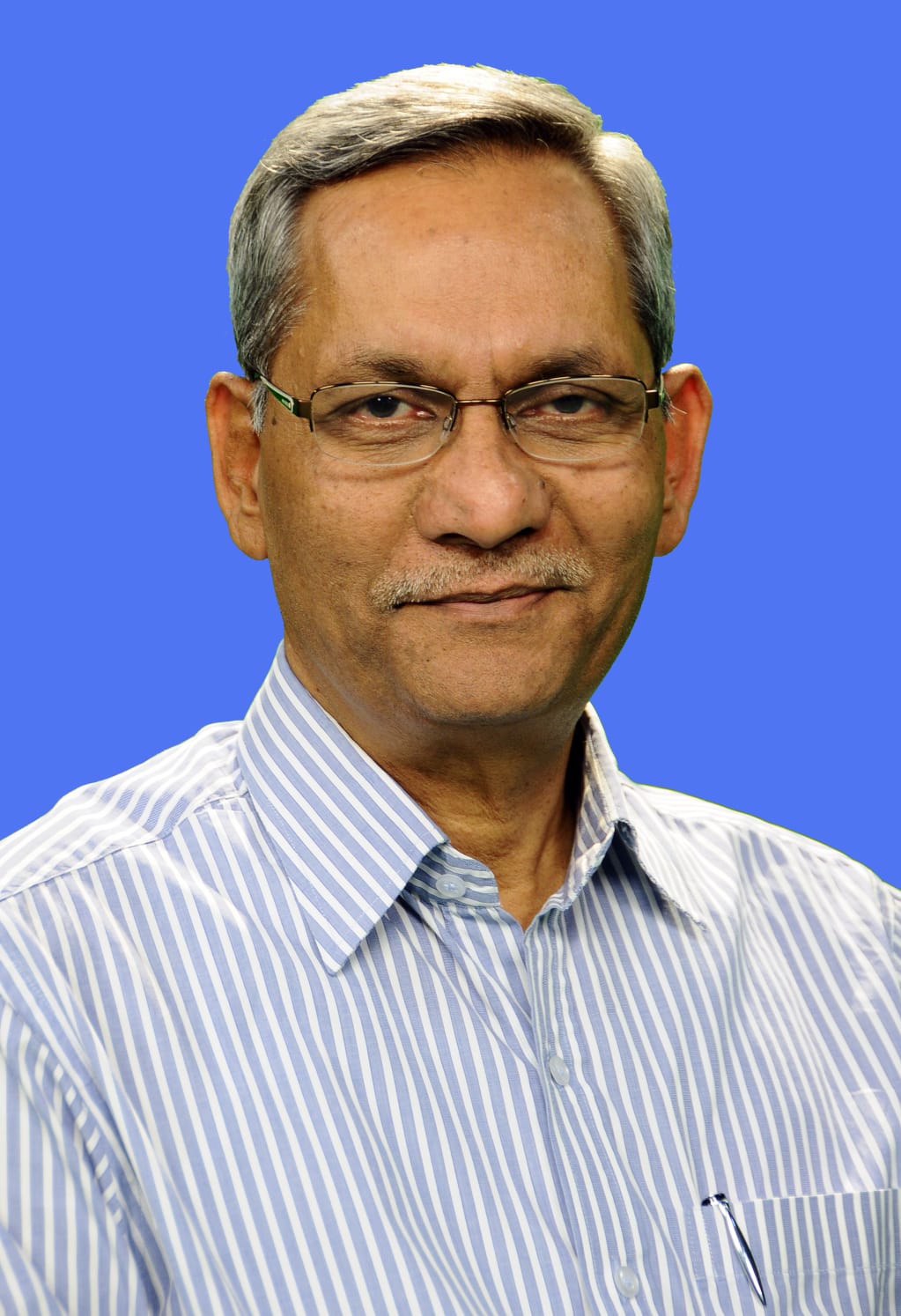
Dr. K. Ramachandra Murthy is a versatile journalist with a distinguished career. Dr. Murthy began his extensive career with Andhra Prabha of The Indian Express group in Bengaluru. He was editor of Udayam, Vaartha and Andhra Jyothy. Dr. Murthy founded and edited HMTV news channel and The Hans India, an English newspaper. He was also editorial director of the Telugu newspaper, Saakshi. He was awarded Ph. D for his research work in rural reporting. Dr. Murthy’s five decades in journalism showcases his influential roles across both print and electronic media. He wrote the political biography of NTR published by Harper Collins.
Email: murthykondubhatla@gmail.com
Mobile: 9908002211
As said by Sri K. Ramachandra Murthy Gaaru, prominent journalist, “from public service to corporate capture”. It appears to be same as media now a days is not much working for people’s problems as media is always after political leaders like MP and MLAs for their advantages to set a business deal instead of working for poor people problems. It is a worthy Sankaran Memorial Lecture by Sri K. Ramachandra Murthy Gaaru, prominent journalist.