- Salim-Javed and the Language of the Underdog
- The Moral Compass: Sumitra Devi’s Silent Rebellion
- The Urban Jungle: Mumbai as a Character of Conflict
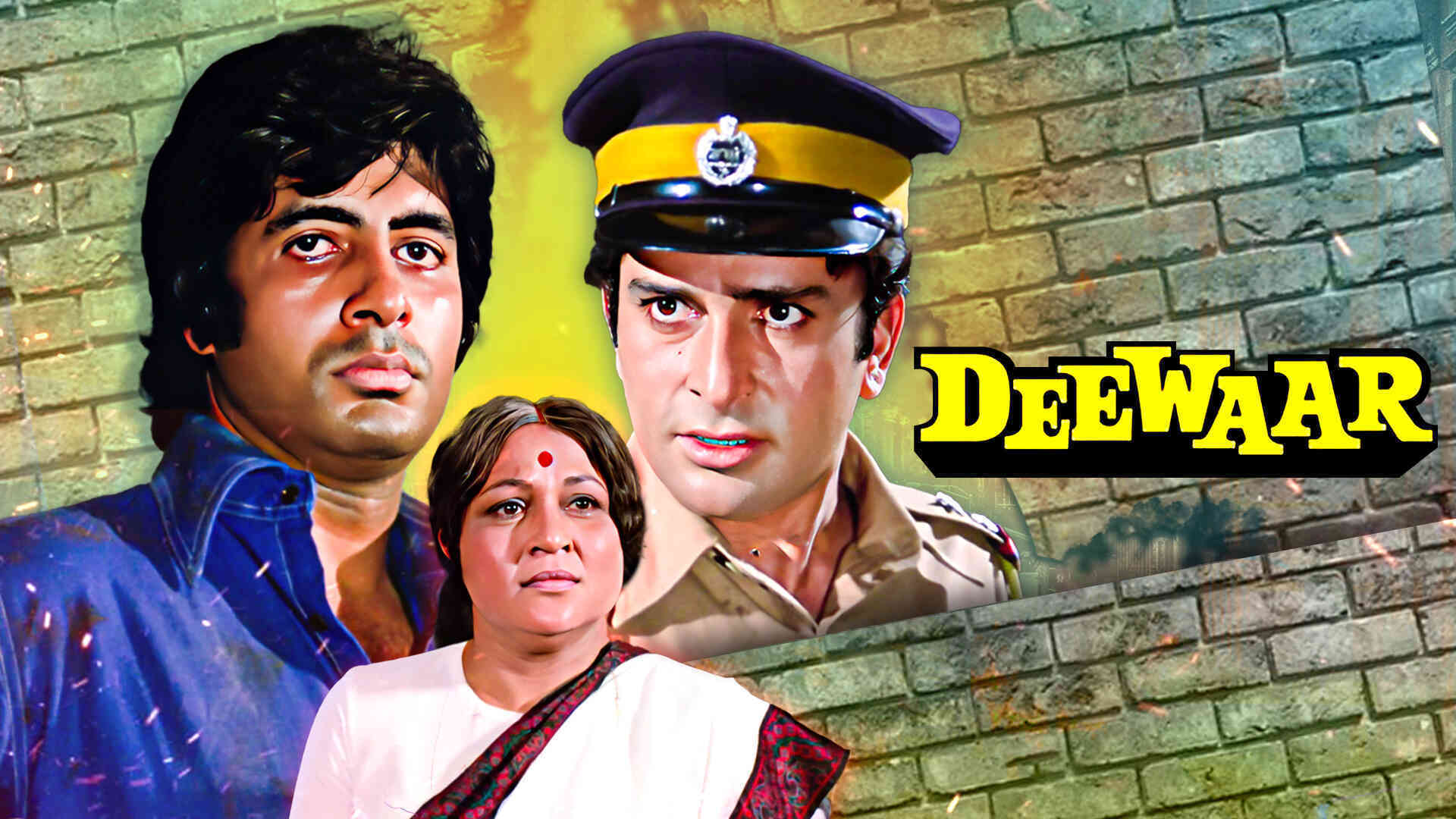
Deewaar, directed by the legendary Yash Chopra, stands as a towering pillar of Indian cinema. Released in 1975, it did more than just break box-office records; it defined the “Angry Young Man” persona that catapulted Amitabh Bachchan to superstardom. At its heart, the film is a gripping sociopolitical drama penned by the iconic duo Salim-Javed, whose sharp dialogues and structural storytelling created a blueprint for the “anti-hero” archetype.
The Architect of Angst: Vijay Verma (Amitabh Bachchan)
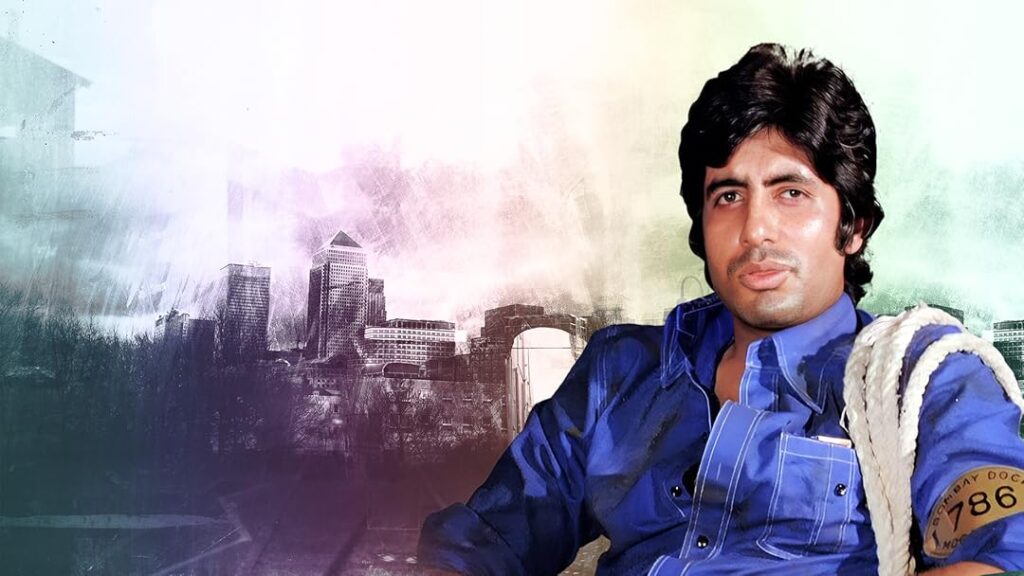
Vijay is a character forged in the fires of trauma and injustice. After his father, a union leader, is humiliated and branded a thief, Vijay bears the literal and figurative marks of society’s cruelty—manifested in the tattoo on his arm: “Mera baap chor hai” (My father is a thief).His journey is defined by a rejection of a system that failed his family. Watching his mother, Sumitra Devi, break her back lifting bricks to raise them, Vijay decides that the only way to protect her is through the acquisition of wealth and power, regardless of the means. He joins the underworld led by Anees (Iftekhar), seeing smuggling not as a crime, but as a tool for retribution. Vijay’s tragedy lies in his belief that money can buy back the dignity his mother lost, culminating in his purchase of the very skyscraper she once helped build.
The Pillar of Principle: Ravi Verma (Shashi Kapoor)
Ravi serves as the moral compass of the film. Unlike Vijay, who internalizes his trauma as rage, Ravi channels his struggles into education and law enforcement. He represents the idealistic youth of the 1970s who still believed in the sanctity of the “system,” despite its flaws. The conflict reaches its zenith when Ravi, now a police officer, is tasked with capturing his own brother. Shashi Kapoor brings a nuanced vulnerability to the role, standing firm against Vijay’s materialistic taunts. While Vijay measures success in bungalows and bank balances, Ravi measures it in integrity.
‘Mere Pass Maa Hai’ -The Epicenter of Emotion
The confrontation under the bridge in Deewaar is perhaps the most defining moment in Indian cinematic history. It is a masterclass in writing by Salim-Javed, where the “wall” between the two brothers is finally solidified. Vijay (Amitabh Bachchan), fueled by the bitterness of his impoverished childhood, presents a materialistic ledger of his success. He flaunts his silk suits, his palatial bungalow, and his massive bank balance, essentially asking Ravi (Shashi Kapoor) what his honesty has earned him besides a meager salary and a uniform.
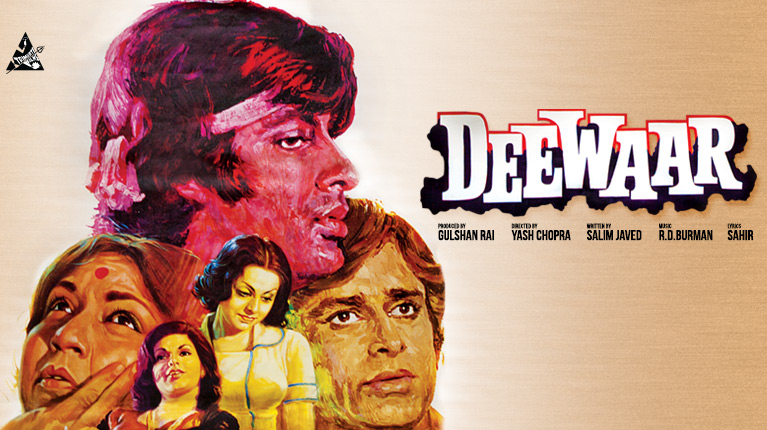
Nirupam Roy’s portrayal of the mother is the soul of Deewaar. She is the “bridge” between the two brothers. While she loves Vijay deeply, her moral fiber prevents her from accepting the fruits of his “black money.” The film’s most iconic moment occurs under a bridge a callback to their days of poverty—where Vijay boasts of his riches and asks Ravi what he has achieved. When Ravi calmly replies, “Mere Paas Maa Hai” (I have Mother), the power dynamic shifts instantly. In those four words, the weight of their mother’s morality tips the scales. Vijay, despite his millions, realizes he is spiritually bankrupt. Nirupa Roy’s character had already chosen Ravi’s path of integrity over Vijay’s ill-gotten wealth, and this dialogue gave a voice to her silent conviction. For the audience, it wasn’t just a line; it was a profound emotional truth that resonated with the Indian ethos—reminding viewers that no amount of gold can substitute for a mother’s blessing and a clear conscience.
Redemption and the Final Reckoning
The final act of the film explores Vijay’s brief hope for a “normal” life. His relationship with Anita (Parveen Babi) offers him a glimpse of domesticity and a chance to leave the underworld, especially upon learning of her pregnancy. However, the cycle of violence he initiated claims Anita’s life, leading Vijay on a path of vengeance against the villainous Samant (Madan Puri). In a powerful climax, a wounded Vijay seeks refuge in a temple—a place he had shunned his entire life. His monologue to God, demanding his mother’s life in exchange for his own, remains one of the most emotive performances in cinematic history. Ultimately, Vijay’s journey ends in his mother’s arms, finding the peace in death that he could never find in his pursuit of power.
Conclusion: A Legacy of Dialogue and Direction
Deewaar succeeded because it was a perfect synchronization of talent. From R.D. Burman’s atmospheric score to Yash Chopra’s masterful pacing, every department excelled. However, it is the character-driven conflict—the wall (Deewaar) built between two brothers by their differing ideologies—that ensures the film remains a timeless masterpiece of world cinema.
Principal Correspondent, Prime Post
Vidya Sagar Chaturvedula is a passionate film enthusiast whose four-decade career spans multiple sectors, including media and industry. Fluent in Telugu, Hindi, and English, he has a deep appreciation for cinema, particularly films in those three languages. His passion goes beyond simple viewing; he enjoys analyzing directional skill, the emotional depth of actors’ performances, and the profound meaning embedded in dialogue. Mr. Sagar is known for his ability to clearly articulate and narrate his insightful film analyses after watching a movie.
Email: sagar.chaturvedula@gmail.com
Mobile: 9030702917





Deewar was a very good film and as rightly said Amitabh an angry young men and another actor Shashi Kapoor acted well. This was a message oriented and family bonded as well work or duty is important than the relation. Very good narration.
As the characters analysed in this story ‘Deewar’ appears to be apt title for the film. The elderly son overwhelmed with love, affection, and bonding of the family experiences bitter with the humiliation of a scar left on his hand. Despite his struggle to survive as an ordinary man in the society. The pain he suffer turns him to be a rebellion. On the converse, younger son silently suffering the injustices elects to become a police officer which in itself is a clever way to punish the criminal. In the backdrop mother’s love for her children is always immense and the same is expressed in a dignified way in this film. Perhaps to be honest one must be stringent in their own perspective and the differences that arise are to be ignored! Very good action movie. Yash Chopra awesome. Nice review. Thanks for the post.
Amitab i role of angry young man acted well.
Iconic movie and excellent review…
One of the Yash Chopra s best movie. Amitabh Bachchan as Vijay lives the role, his body language and dialogues are extraordinary. Shashi Kapoor, Nirupama Roy, Parvin Babi, Neetu Singh all them performed well.
Very well narrated.
THE WAR
between right and wrong.
Long standing and probably eternal.
The performances were good and the songs ok. What usually passes mention is the brief romance of Vijay. The heroine ‘s killing results in the climactic turning point.
Action thriller movie. ‘Mere Pass Ma Hai’ super hit dialogue.
Nice review 👌
Epic movie. Amitabh at his prime. Good review
Deewar movie made Amithab Bachman a superstar with a title of Angry young man beautiful script by Salim Javed combined with excellent performances by Amithab and Shashi Kapoor it paved the way for new cult of cinema
“Deewar” film which explores personal and ideological conflict between the criminal brother and the law-abiding brother,
Nice review uncle..!
Very nice review.In olden days even in films propogated victory of honesty over evil.Amitabh established as Angry youngman .