
Issue of Human Dignity
On December 26, 2025, the Supreme Court of India issued nationwide suo motu directions on stray-dog management. This was not a Public Interest Litigation (PIL). The Court directed that stray dogs must be sterilised and vaccinated and then shifted to designated shelters in accordance with the Animal Birth Control (ABC) Rules, 2023.
The Court issued specific directives identifying “hotspots” for 2025–2026 and ordered the removal of stray dogs from key public places, including:
- Educational institutions
- Hospitals (public and private)
- Sports complexes
- Bus stands and depots, including interstate terminals
- Railway stations

Municipal bodies and administrative authorities were directed to immediately remove stray dogs from these premises. Critically, the Court prohibited releasing the removed dogs back into the same locations, holding that such release would “frustrate the very purpose” of making these places dog-free.
Duties Placed on the State
The Supreme Court reiterated that the ABC Rules, framed under the Prevention of Cruelty to Animals Act, 1960, already impose statutory duties on municipalities to sterilise and vaccinate stray dogs. The Court’s order builds upon these duties while modifying their application in sensitive institutional contexts. The Court warned that lapses in stray-dog management would be viewed seriously and that officials could be held personally responsible for non-compliance.
Constitutional Foundations
Article 21: Right to Life with Dignity: Article 21 guarantees every person the right to life with dignity, which includes safety, health, and bodily integrity. The Court treated recurring dog-bite incidents as a preventable hazard and held that failure to secure public institutions against such risks reflects administrative apathy and systemic failure. Such failure amounts to a breach of the State’s constitutional duty to protect life. Equality and Uniform Protection: By issuing uniform nationwide directions, the Court sought to ensure that children, patients, commuters, and other users of public facilities enjoy equal protection. Although not expressly citing Article 14, the reasoning aligns with its principles by avoiding uneven or ad hoc enforcement across states.
Institutional Accountability
Responsibility was placed squarely on municipal and administrative authorities to ensure safety in schools, hospitals, and transport hubs—particularly for children, patients, and the elderly. The Court emphasised periodic inspections, fencing, and the appointment of nodal officers to institutionalise safety rather than allow public places to remain accident-prone.
Integrating Human and Animal Interests

The Court directed that dogs be sterilised and vaccinated before relocation, reflecting a humane and scientifically recognised model of stray-animal management. This aligns with constitutional commitments against cruelty and the objectives of the ABC Rules. However, under the ABC Rules, the standard practice is “catch, sterilise, vaccinate, and release back to the original location.” The Court’s direction not to release dogs back, even after sterilisation, has drawn criticism. Animal welfare advocates argue that this creates an exception without clear legislative backing and may undermine the core ABC methodology.
Practical and Ethical Concerns
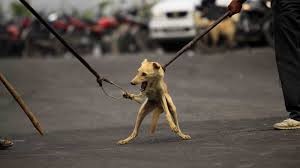
India has a large stray-dog population and a chronic shortage of shelters. Many municipal bodies lack adequate land, funds, and trained personnel. Orders that do not sufficiently account for these ground realities risk implementation failure, administrative gridlock, or humane concerns. While public safety is paramount, permanently relocating dogs to shelters may lead to overcrowding, disease, or neglect. Critics argue that justice must protect both human life and animal welfare, and that an approach prioritising one at the cost of the other cannot be considered fully just.
Enforcement and Consequences
The Supreme Court warned of contempt proceedings against individuals or organisations obstructing removal, sterilisation, or vaccination drives. It also indicated that “heavy compensation” could be imposed on states and municipal authorities for dog-bite injuries or deaths resulting from non-compliance.
Nationwide Applicability
Recognising that the problem extends beyond Delhi-NCR, the Court extended its directions nationwide, reinforcing the applicability of the ABC Rules, 2023 across India. This ensured that state or local apathy could not be used as a shield against constitutional and statutory responsibilities. The Court’s intervention seeks to balance public safety with animal welfare by foregrounding the State’s constitutional duty to protect life and dignity. Whether this balance succeeds in practice will depend on humane implementation, adequate infrastructure, and sustained administrative accountability.

Law professor and eminent columnist
Madabhushi Sridhar Acharyulu, author of 63 books (in Telugu and English), Formerly Central Information Commissioner, Professor of NALSAR University, Bennett University (near Delhi), presently Professor and Advisor, Mahindra University, Hyderabad. Studied in Masoom Ali High School, AVV Junior College, CKM College, and Kakatiya University in Warangal. Madabhushi did LL.M., MCJ., and the highest law degree, LL.D. He won 4 Gold Medals at Kakatiya University and Osmania University.
Email: cicsridhar@gmail.com
Mobile: 8447651505




It’s worthy write up. It has become nightmare with the stray dogs. It’s not in one place. People come across problem with stray dogs, particularly in the night time while going on two wheelers. They chase and bite which caused life threat. I had my own experience in this regard. Government should take action in this regard and see that commuters should go on roads without any fear.