If You Can, Conquer Anger
This is no small matter. In the 8th pāśuram of the Tiruppāvai, Godā Devi explains the need to conquer anger. People say, “I don’t have anger.” But if you ask, “Hasn’t your anger gone even ten times already?”, they flare up and say angrily, “How many times should I say it?” Such is anger.
Muṣṭikāsura is one who, no matter how much he eats, still wants more—one whose desires are never satisfied. Chāṇūra is the embodiment of anger. Desire (kāma) and anger (krodha) must be conquered.
Meaning of 8th Pashuram in English explanation.
kīḻ = in the eastern direction
vāṉam = the sky
veḷḷu = became white (dawn broke)
eṉṟu = saying that
erumai = buffaloes
śiṟuvīḍu = little fodder
meyvān = to graze
parandanagāṇ = spread everywhere
mikkulḷa = remaining
piḷḷaigaḷum = calves also
pōvān = for the purpose of going
pōgiṉṟārai = those who are going
pōgāmal = without letting them go
kāttu = stopping
uṉṉai = you
kūvuvān = in order to call
vandu = having come (to the front of your house)
niṉṟōm = we are standing
kōdukalam uḍaiya = one who arouses even Krishna’s curiosity
pāvāy! = O young maiden!
eḻundirāy! = Wake up!
pāḍi = singing
paṟai = the percussion instrument called paṟai
koṇḍu = receiving from Him
mā = of the demon Keśi
vāy = mouth
piḷandānai = the one who split open
mallarai = the wrestlers
chāṇūran, muṣṭikan = the wrestlers Chāṇūra and Muṣṭika
māṭṭiya = who crushed them to dust
devādidevanai = the Lord of all gods, Sri Krishna
śeṉṟu = going near
nām = we
śevittāl = if we bow in reverence
āvāvenṟu = “Oh! Have you exerted yourself?” thus
ārāyndu = enquiring compassionately
aruḷ = will bestow grace
ēlōr empāvāy = this indeed is our great vow.
When He Shrinks, He Is Vāmana; When He Expands, He Is Trivikrama
He is the one who killed the demon Keśi who came in the form of a horse. While Krishna was playing, an asura came disguised as a horse and opened his mouth wide. Krishna placed his hand inside that open mouth. Being just a little child, He joyfully expanded. He can contract Himself; He can also expand. When He contracts, He becomes Vāmana; when He expands, He becomes Trivikrama. He merely expanded His hand. That expanded hand could not be accommodated within the body; unable to bear that magnitude, the horse-demon’s mouth failed.
Those mouths that open only to swallow out of selfishness, that remain closed in ignorance, that foolishly refuse to open for praising the Lord—He forces such mouths to open. Keśava means: Ka—the form of the Supreme Brahman, A—the form of Vishnu, Īśa—the form of Rudra. Keśava is the confluence of the Trimurtis.
The five senses are like horses yoked to the chariot called the body, dragging us in five different directions. If the reins called the mind are placed in the hands of the charioteer called intellect (buddhi), the chariot moves in the right path. Otherwise, it will be shattered—thus warn the Upanishads. God does not destroy the senses; rather, He explains how to restrain them, bring them under control, and transform them.
Chāṇūra and Muṣṭika—Symbols of Anger, Rage, and Sin
Even before crossing adolescence, Balarama and Krishna confronted and defeated the fearsome expert wrestlers Chāṇūra and Muṣṭika. Chāṇūra is the symbol of anger, rage, and sin. To get rid of desire and anger, the grace of the Guru is necessary.
They were heroes who effortlessly destroyed Chāṇūra and Muṣṭika. After fighting the intoxicated elephant Kuvalayāpīḍa, from whose temples flowed streams of musth, killing the mahout, and wrenching out the elephant’s two tusks to carry them on their shoulders, both Rama and Krishna entered Kamsa’s court and crushed the wrestlers to dust.
While the kings seated on the platforms watched in astonishment and fear, Krishna went straight to Kamsa’s throne, pulled him down in a single motion, and killed him with blows of His fists. At that time, Krishna was not even a youth—still in early adolescence, with barely a sprouting moustache.
Muṣṭikāsura is one who, however much he eats, still wants more—one whose desires are never satisfied. Chāṇūra is the embodiment of anger. Desire and anger must be conquered. For that, God must bestow His grace through the Ācārya (spiritual preceptor).
In this context, the Aṣṭākṣarī Mantra of Rāmānuja is explained. Rāmānuja declares:
“By his compassion alone, we have become Vaishnavas in this world! Because of him alone, the jewel upon our eyes—Lord Tirumāl—has become known to us!”
– Madabhūshi Sridhar
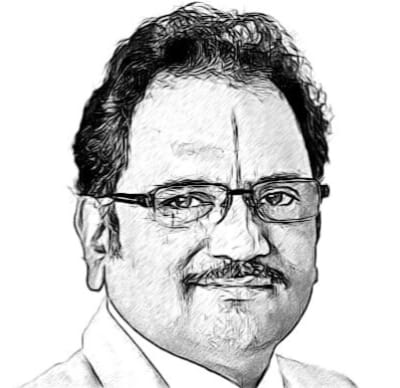
Law professor and eminent columnist
Madabhushi Sridhar Acharyulu, author of 63 books (in Telugu and English), Formerly Central Information Commissioner, Professor of NALSAR University, Bennett University (near Delhi), presently Professor and Advisor, Mahindra University, Hyderabad. Studied in Masoom Ali High School, AVV Junior College, CKM College, and Kakatiya University in Warangal. Madabhushi did LL.M., MCJ., and the highest law degree, LL.D. He won 4 Gold Medals at Kakatiya University and Osmania University.