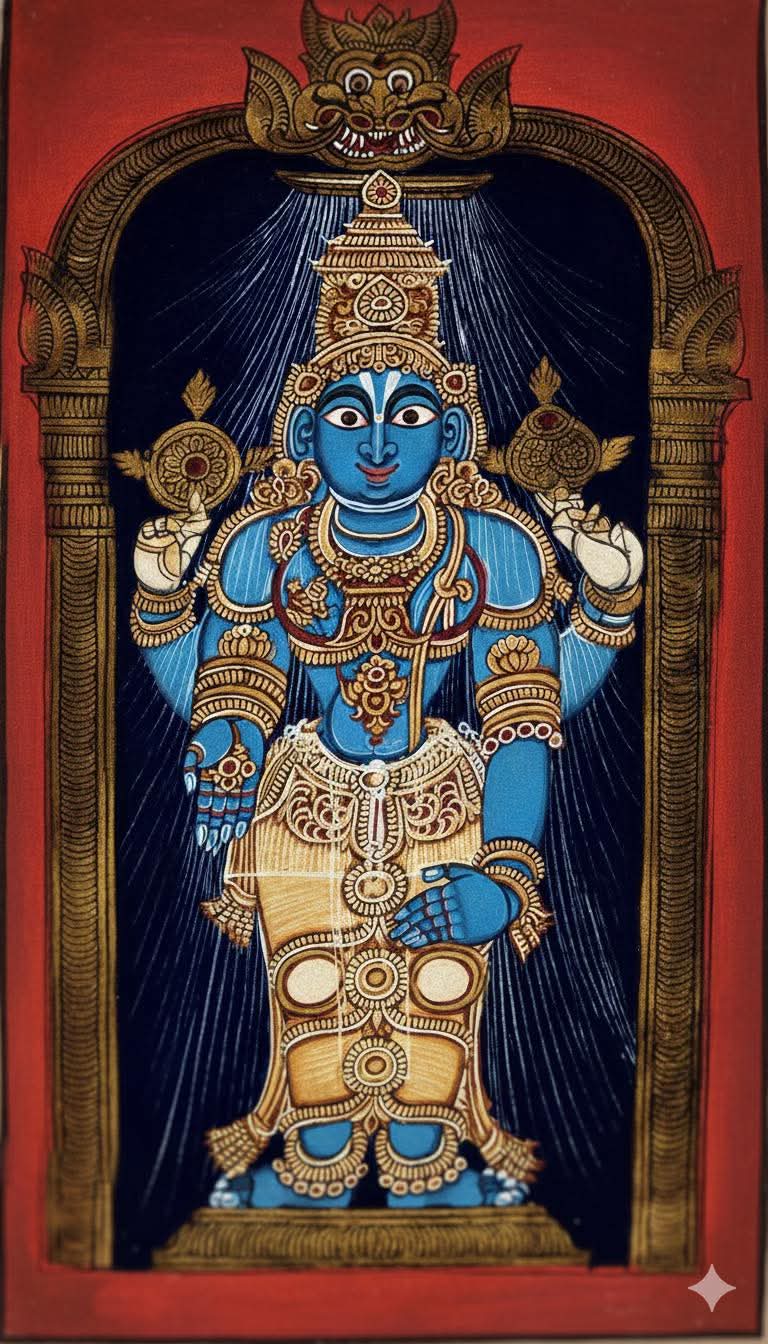
Cows are not property, but as the family.
Tiruppavai by Godadevi from Tamil
Karavaigall Pinshendru Kaanam Serndhu Unbom
Arivondrum Illadha Aaykkulathu Undrannai
Piravi Perundhanai Ppunniyam Yaamudaiyom
Kuraiv Ondrum Illadha Govinda! Undrannodu
Uravel Namakk Ingu Ozhikkav Ozhiyadhu
Ariyaadha Pillaiygalom Anbinal Undrannai
Chiruper Azhaiththanavum Seeri Yaruladhe
Iraivaa, Nee Thaaraay Paraiy el or empaavai
English Translation by Madabhushi Sridhar
Cattle lead us to forests for grazing, and we eat with them,
We, cowherds, know nothing but eat and roam around,
But we are blessed to have the Bliss called Krishna among us,
Govinda, the completeness without any blemish
The incessant relationship with you
No worldly wisdom, does not know how to call,
Please be kind and not angry for calling small names,
O, Lord, give us love, boons, and blessings.
Prati-pada Artha (Simple, Direct Meaning) Karavaigall Pinshendru Kaanam Serndhu Unbom
We go behind the milking cows, enter the forests, and eat what is available. Arivondrum Illadha Aaykkulathu Undrannai
You were born among us, the cowherd community, who have no learning or knowledge. Piravi Perundhanai Ppunniyam Yaamudaiyom
The great merit we possess is your very birth among us. Kuraiv Ondrum Illadha Govinda! Undrannodu
O Govinda, who has no lack or defect whatsoever, Uravel Namakku Ingu Ozhikkav Ozhiyadhu
the relationship we have with you can never be destroyed or removed. Ariyaadha Pillaiygalom Anbinal Undrannai
We are ignorant children; out of affection, Chiruper Azhaiththanavum Seeri Yaruladhe
we called you by small names—please do not get angry at that. Iraivaa, Nee Thaaraay Parai El Or Empaavai
O Lord, please grant us the boon we seek—listen to our request.
This is the essence of Goda’s 28th Paasuram
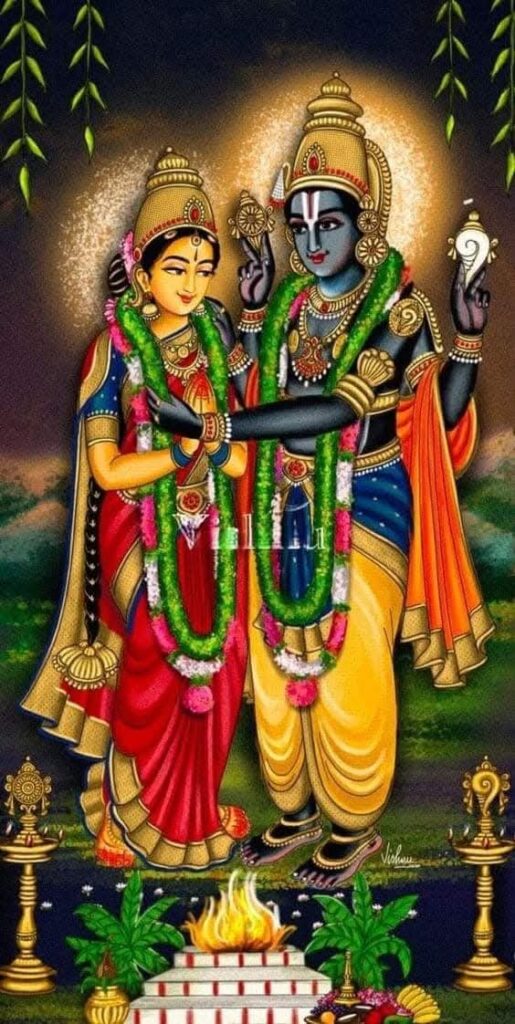
When Krishna Walks Behind the Cattle
The innocent cowherd women say about their lives:
“We wake up for the cattle.
They graze, and we eat.
They rest, and we rest.
They walk, and we follow.”
There is no pride in these words, no complaint either. It is simply how life is lived. They do not speak of rituals, learning, or discipline. They speak of animals, forests, milk, food, and togetherness. Their entire existence moves in harmony with nature. Sri Krishna was born among such simple people. They say, “Our only fortune is that you were born among us. You live with us, eat with us, speak with us. You give us what we deserve, though we do not even know what to ask for.” This is not ignorance. It is freedom from self-importance. They do not claim virtue, effort, or entitlement. They place everything at His feet, including their helplessness.
We have an incessant relationship with you.
The cowherds love cows not as property but as family. Milk is life itself, first given by the mother, then by the cow. Cows are mothers too. Forests are homes. Animals are companions. There is no urge to accumulate or dominate. They do not worry about ritual purity or formal discipline. They eat simply, sleep peacefully, and harm no one. Contentment is their wealth.
That is why Krishna chose them.
When He came as Rama, generations were refined to prepare a noble family. But when He came as Krishna, He did not wait for refinement. He chose an ordinary cowherd’s home. Born to one mother, raised by another, He erased all boundaries of status and eligibility.
The secret of divine love
A poet once wondered, “Is He the father of the creator, or the son of a cowherd? Is He the Supreme, or a butter thief?” That contradiction is not a flaw. It is the secret of divine love.
A Gentle Conversation
In the early morning, as the cowherd women stand before Krishna, a quiet conversation unfolds.
Krishna asks, “Did you follow disciplined action for years? Did you practice devotion or knowledge?”
They reply honestly, “We know only cattle and forests. That is all our knowledge.”
He asks, “Did you stay in sacred places or perform austerities?”
They answer, “Wherever the cattle graze, that is sacred for us. When they rest, we rest. When they walk, we follow. We eat leftover food without waste. If this counts as discipline, we unknowingly did it.”
This absence of ego is their strength
Their lives had no sense of ‘I am doing’. Everything flowed naturally. This absence of ego is their strength.
Krishna then speaks of wisdom and devotion. They listen quietly and say, “Wisdom is like a mountain. We are at the bottom of the sea. Devotion requires awareness. We do not even know how to begin.”
And then comes their boldest confession:
“We cannot reach you by our effort. You alone must become the way.”
Turning Helplessness into Strength
Krishna asks, “Without effort, how can I help you?”
They say, “We feed you milk and food. If there is any goodness in us, it must be from your grace or from our ancestors. We ourselves know nothing.”
When He warns that such people should be abandoned, they respond without fear:
“Our ignorance cannot become your weakness. If you do not protect the helpless, how will your fullness shine?”
This is not an argument. It is trust.
They remind Him of His own life: how He lived with them, grew with them, lifted the mountain for their cattle, and chose to be called Govinda, the protector of cows, rather than by grand cosmic titles.
“You yourself told us to give up all other supports and take refuge only in you,” they say. “We have done exactly that.”
Love That Takes Liberty
They admit their mistakes: calling Him casually, teasing Him, using familiar words. Like Arjuna later realized on the battlefield, they too understand now that they treated the Supreme as one of their own.
Yet their repentance is not fear-driven. It is born out of love. “Govinda is dearer to us than all lofty names,” they say softly.
The Final Surrender
Krishna suggests that there should be at least some effort from their side. They reply, “We belong to you as hands and feet belong to the body. Will the body punish its own limbs? Your own belongings have come searching for you. Will you abandon yourself?”
At this, Krishna smiles. That smile is the answer.
The Simple Path Made Clear
A great teacher once summarized this path in very simple terms:
- Accept that you did nothing to earn grace
- Accept that you are unworthy on your own
- Believe that any goodness is His kindness
- Remember that your relationship with Him is eternal
- Ask forgiveness for past mistakes
- Know that there is no refuge other than Him
The cowherd woman made liberation simple. She removed fear, complexity, and pride. She replaced them with trust, humility, and relationship.
That is why her song still wakes the world.
Inner, Spiritual Meaning: Paramaartha Complete surrender This verse is one of the clearest declarations of complete surrender. 1. “We go behind the cows… and eat”: This is not about poverty or rustic life.
It means: We have no independent path, no self-made discipline, no chosen spiritual method. Just as they follow the cows, they do not claim leadership over their spiritual life.
There is no ego of “I am doing”. 2. “You were born among the unlearned cowherds.” This is not self-condemnation. It is a rejection of pride in knowledge, caste, or qualification. The deeper meaning is: You did not come to the learned because we became worthy;
you came to us because you are compassionate. Sri Krishna’s choice, not human worthiness, is highlighted. 3. “Your birth among us is our greatest merit” This is a powerful statement. They do not say: we earned you we deserved you we achieved you They say: Even our merit is not ours. It is your decision. Grace is made the cause, not the reward. 4. “Govinda, you have no shortcomings.” Here, they subtly make a theological point: If God refuses the unqualified, that refusal itself would become a limitation. So, they say: Your perfection is proved only by protecting the imperfect. 5. “Our relationship cannot be destroyed.” This is the heart of the verse. They are not asking for a new connection.
They assert an already existing bond. Like a child and mother: it can be ignored,it can be forgotten,but it cannot be cancelled. 6. “We are ignorant children; we called you casually.” This is a confession, not fear. They admit: teasing Himusing familiar wordstreating Him as one among them But this familiarity arose from love, not disrespect. They ask forgiveness without withdrawing closeness. 7. “Please do not be angry.” This line shows the balance of intimacy and reverence. They do not run away from Him in fear.
They stay close and ask gently. 8. “Please grant us the Parai.” Parai is not merely a drum or a reward. It symbolises: acceptance by Himeternal servicelife lived under His carefreedom from fear and self-effort They are not asking for heaven.
They are asking for belonging. Essence of the Verse In one voice, the Gopikas say: We have no meansWe have no meritWe have no knowledgeWe have no claim But we have you.
And you have us.
That bond alone is enough. This verse teaches that: The shortest path to God is not effort, but trust.
Not qualification, but relationship.
Not fear, but love.

Law professor and eminent columnist
Madabhushi Sridhar Acharyulu, author of 63 books (in Telugu and English), Formerly Central Information Commissioner, Professor of NALSAR University, Bennett University (near Delhi), presently Professor and Advisor, Mahindra University, Hyderabad. Studied in Masoom Ali High School, AVV Junior College, CKM College, and Kakatiya University in Warangal. Madabhushi did LL.M., MCJ., and the highest law degree, LL.D. He won 4 Gold Medals at Kakatiya University and Osmania University.