- Threshold of Surrender (śaraṇāgati).
- Madabhushi Sridhar
Tiruppavai by Godadevi from Tamil
Yetra Kalangal Ethir Pongi Meedalippa
Maatraadhe Paal Soriyum Vallal Perum Pasukkal
Aatra-p-padaithaan Magane! Arivuraai!
Uttramudayaai! Periyaai! Ulaginil
Thotramaai Ninra Sudare! Thuzhilezhaai!
Maatraar Unakku Valithulaindhu un Vaasarkann
Aatraadu Vandhu Unnadi Paniyummaa Poley
Pottriyaam Vandhom Pugazhndu-elo Rempaavaai
English Translation by Madabhushi Sridhar
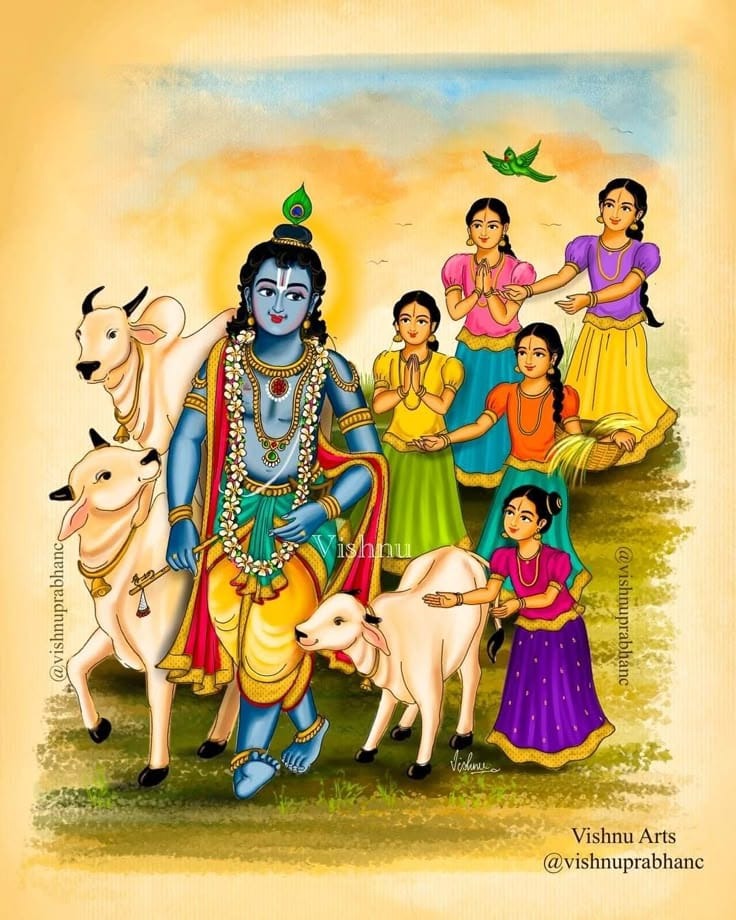
O Son of Nanda Gopala, Owning Many Large Cows that
Generously yield Milk Incessantly; Awake!
Known through Veda; Even Vedas fail to explain You,
Your strength, Resplendent source of Conscience
Embodiment of Entire Light, for the Whole Universe.
Devoid of their strength, Your Enemies Lost pride in battle
Surrendered at Your Feet and Gate, Helpless and Praising
Similarly, We Came over to Sing Mangalam For You.
Analysis
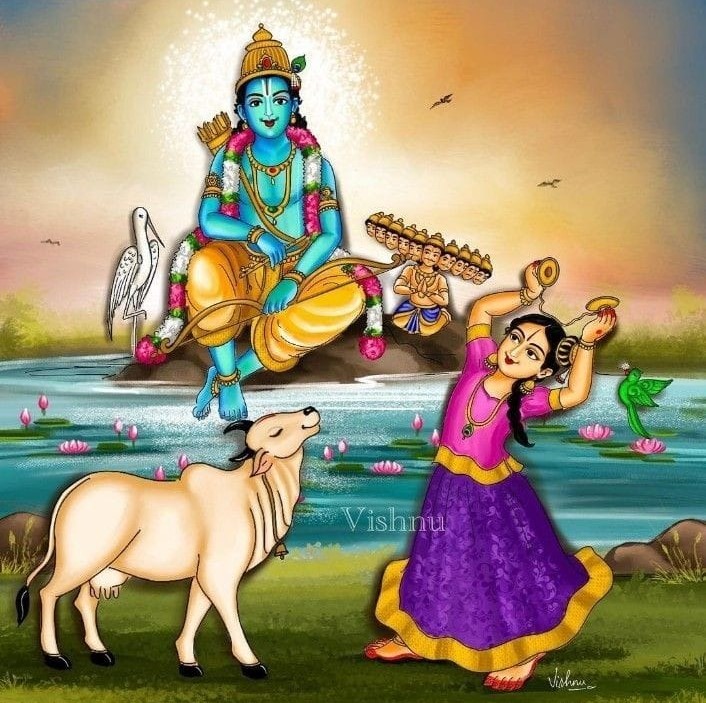
1. From Inner Purification to Complete Surrender
In the spiritual progression of Tiruppāvai, the 21st pāśuram marks a decisive turning point. After the inner cleansing, ego-shedding, and awakening of divine awareness in the earlier pāśurams—especially the 20th—Gōdā Devī now places the jīva unmistakably at the threshold of surrender (śaraṇāgati). This pāśuram is not merely a poetic wake-up call to Lord Krishna; it is a profound theological statement on total dependence, humility, and praise as the language of surrender.
Here, the gōpikās no longer argue, negotiate, or demand. They come like defeated enemies who have lost all strength, standing at the Lord’s door, praising Him and seeking refuge.
2. Bhagavān pours grace
The pāśuram begins with a vivid pastoral image: “Yetra kalangaḷ ethir pongi meedhaḷippa…”
The large vessels overflow with milk, poured effortlessly by generous cows. In ancient Dvāpara society, such cows were the true wealth. In Nanda Vraja, these cows are special—they have grown under the loving, divine touch of Sri Krishna. His compassion has shaped their very nature. This image becomes the core metaphor of the pāśuram:
Just as cows pour milk without being squeezed, Bhagavān pours grace without being asked.
3. Sri Krishna’s wealth, power, compassion, and grace are to protect.
Krishna is addressed as: “Ātrappadaithān maganē!”
O Son of Nandagopa, endowed with abundant resources!
Nandagopa’s wealth is not hoarded; it exists to nourish others. The gōpikās subtly remind Krishna that He inherited this very nature of generosity. His wealth—divine power, compassion, and grace—is meant for protection, not for silent sleep.
This becomes a gentle theological assertion:
Divinity fulfills itself only by responding to the helpless.
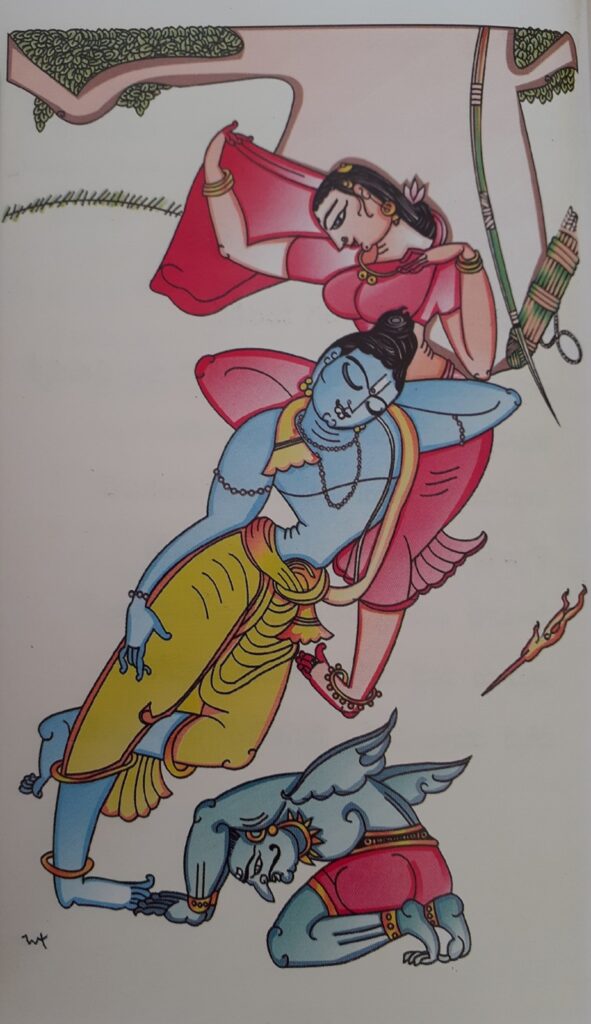
4. Krishna Vedas: Known Yet Unknowable
The gōpikās declare: “Arivurāy!” – You are known through knowledge, yet… Krishna is: #Proclaimed by the Vedas, #Yet not fully comprehensible even to them, #Beyond word, voice, and mind. And still—paradoxically—He is accessible. He stands as pure Light (Sudare!), illuminating the universe and dwelling in temples, homes, and hearts. This pāśuram thus holds a central Vedāntic tension: The unknowable Absolute becomes intimate through grace.
5. Defeated Enemies and the Model of Surrender
A striking comparison appears: “Mātrār unakku valithulaindhu…”
Your enemies, having lost all strength, surrender at Your gate. The gōpikās say:
“Just as Your enemies, stripped of pride, stand helplessly at Your door—we too have come.” This is crucial. Surrender here is not a virtue displayed from strength, but from utter incapacity. The ego is renounced. Pride is dissolved. Praise alone remains.
6. Four Types of Devotees and the Supremacy of the Jñāni
Drawing from the Bhagavad Gītā, this pāśuram implicitly includes all four types of devotees:
- Ārta – seeking relief from suffering
- Jijñāsu – seeking knowledge of the Self
- Arthārthī – seeking material prosperity
- Jñānī – seeking only service to God
All are accepted by God. Yet, as Krishna Himself declares, the Jñānī is dearest, because he asks for nothing but nearness and service. The gōpikās place themselves firmly in this fourth category.
7. The Pot beneath the Flowing Milk: Role of the Seeker
Grace flows automatically, like milk from Nanda’s cows. Yet one condition remains: The pot must be placed beneath the flow. This pot symbolizes: #Turning towards God, #Approaching the Ācārya, #Cultivating longing (icchā). Bhagavān gives even without being asked, but receiving requires readiness.
8. Acharya Interpretation: Nandagopa as the Ideal Guru
Sri Bhāṣyam Appalacharya interprets Nandagopa’s qualities as those of an Ācārya:
- Deep concern for Bhagavān’s welfare (Maṅgalāsāsanam)
- Leadership in sharing divine experience
- Bestowal of sustaining mantras (Tirumantra)
- Strength to overcome elephant-like inner enemies
- Training disciples who spread divine experience
Thus, Krishna Himself becomes bound by the Guru, responding to those who approach through rightful surrender.
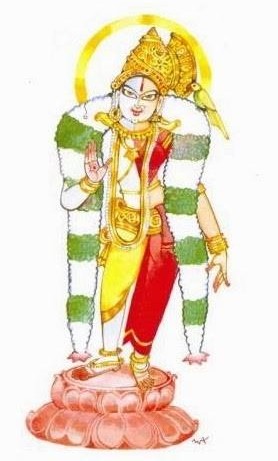
9. Purushakāra Tattva: Compassion through the Mother
Lakshmi is Anapāyinī—never separated from Him—yet she says she cannot exist without Him. She becomes the mediator of mercy.
This truth is illustrated powerfully through the story of Kākāsura. Even when the offender deserves destruction, compassion intervenes. Punishment remains, but life is protected. This is Purushakāra—grace through intercession.
10. Govardhana Episode: Crushing Ego without Violence
The Govardhana episode embodies the pāśuram’s essence. Krishna does not destroy Indra; He destroys Indra’s pride. Holding the mountain on His little finger, He shelters the helpless—humans and cows alike.
When Indra surrenders, Krishna accepts him. Ego is the enemy; surrender is the victory.
This is why Krishna cherishes the name Govinda—the protector of cows, Earth, and surrendered souls.
11. Philosophical Core of the 21st Pāśuram
- Grace flows like milk—effortless and abundant
- Ego blocks reception; humility opens the gate
- Surrender is standing helpless yet praising
- God does not feel He is helping others—it is His nature
12. Conclusion: Standing at the Door with Praise Alone
The 21st Tiruppāvai pāśuram teaches that true śaraṇāgati is not dramatic renunciation, but quiet, total dependence. The gōpikās do not claim merit. They do not demand rewards. They stand at the Lord’s door, emptied of pride, filled with praise.
This pāśuram thus becomes the gateway between inner purification and eternal service—a doorway where the soul waits, confident not in itself, but in the overflowing compassion of Govinda.
“Pottriyām vandhōm pugazhndu – elo rempāvāy.”
We came only to praise. We came only to surrender.

Law professor and eminent columnist
Madabhushi Sridhar Acharyulu, author of 63 books (in Telugu and English), Formerly Central Information Commissioner, Professor of NALSAR University, Bennett University (near Delhi), presently Professor and Advisor, Mahindra University, Hyderabad. Studied in Masoom Ali High School, AVV Junior College, CKM College, and Kakatiya University in Warangal. Madabhushi did LL.M., MCJ., and the highest law degree, LL.D. He won 4 Gold Medals at Kakatiya University and Osmania University.